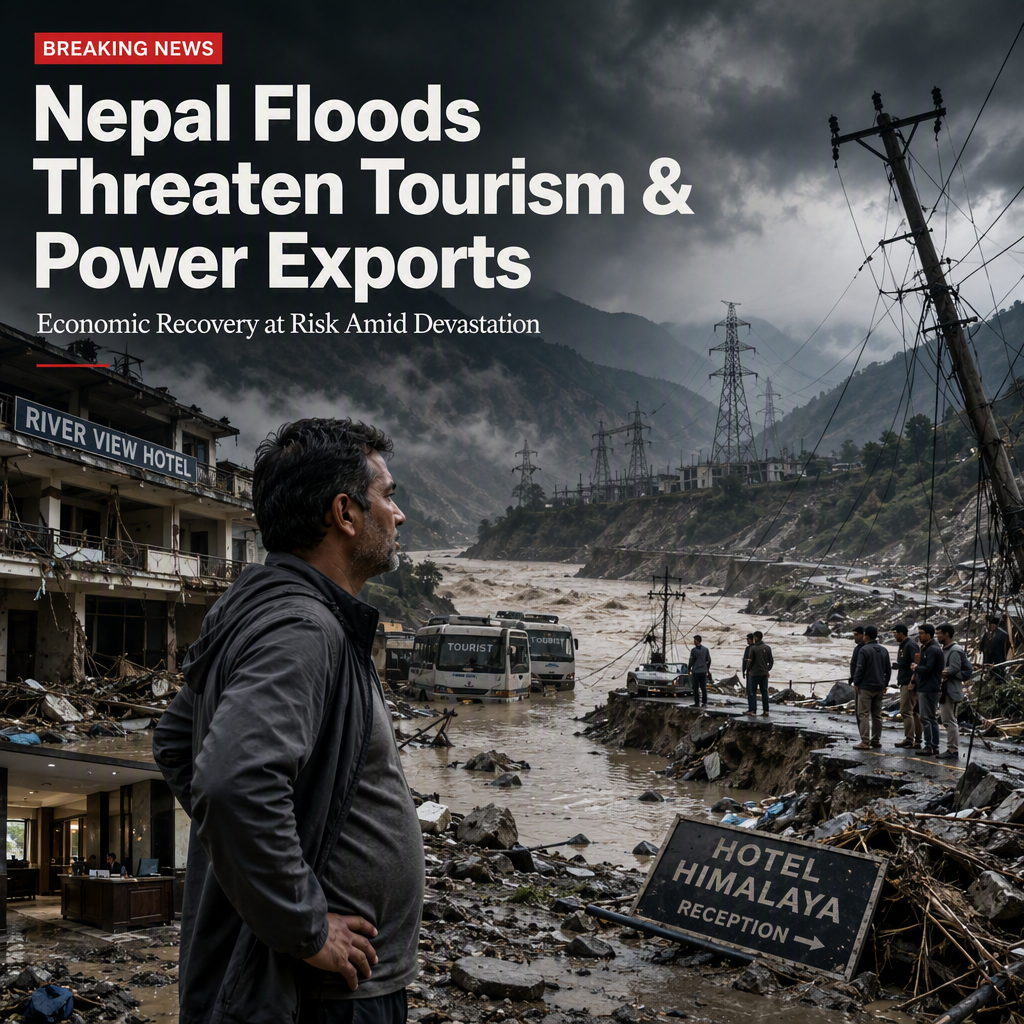
Devastating floods swept through northern Nepal in late August, causing widespread destruction to towns, roads, hotels, and power plants. The disaster has severely impacted both the tourism industry and electricity exports, two critical sectors for Nepal's economy [1]. According to industry estimates, up to 30% of autumn bookings could be canceled, a significant blow during what is typically a peak tourist season. Tourism accounts for 38% of Nepal's service exports, underscoring the magnitude of the loss [1].
Local businesses, such as hotels owned by Milan Shrestha, have suffered total losses, with infrastructure destroyed and uncertainty surrounding missing persons in the affected regions [1]. The financial challenges extend beyond tourism, as the destruction of power plants has reduced Nepal's capacity to export electricity to neighboring countries. This reduction in electricity exports is expected to negatively impact foreign exchange earnings and further strain the Nepalese economy [1].
Industry experts caution that unless swift action is taken to restore infrastructure and reassure travelers, Nepal could face even deeper financial losses as it enters another high season with diminished capacity and confidence [1].
CONCLUSION
The floods in northern Nepal have caused severe disruption to both tourism and electricity exports, sectors vital to the country's economic stability. With up to 30% of autumn bookings at risk and reduced electricity export capacity, Nepal faces significant financial challenges. Rapid recovery efforts are essential to mitigate further losses and restore confidence in the affected industries.