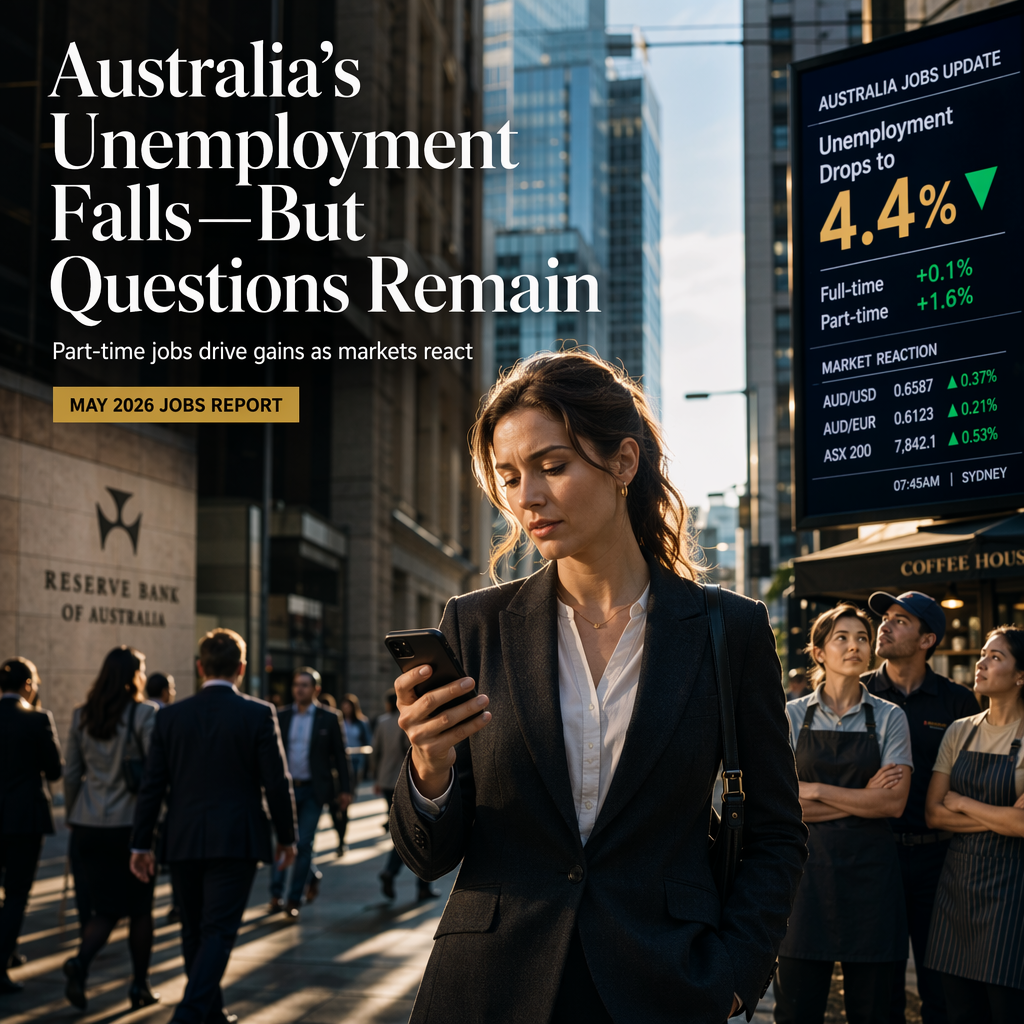
Australia's labor market showed a notable rebound in May 2026, with the unemployment rate dropping to 4.4%, reversing the previous month's decline [1]. While the headline figures indicated a strong recovery, a closer look revealed that most of the employment gains were in part-time positions, and total hours worked actually decreased [1]. The Australian Bureau of Statistics highlighted that ongoing methodology changes in its Labor Force Survey collection system could have introduced some noise into the reported figures [1].
Despite these mixed signals, market participants interpreted the results as broadly supportive of the Reserve Bank of Australia's (RBA) current tightening policy stance [1]. The forex market reacted to the headline beat, with traders positioning themselves based on the perceived strength of the labor market and the implications for future monetary policy [1].
No specific analyst opinions or forward-looking statements were provided in the article, but the overall market response suggests that investors remain focused on headline employment data as a key driver for RBA expectations [1].
CONCLUSION
Australia's May employment report delivered a headline beat with a lower unemployment rate, but underlying data such as part-time job dominance and reduced hours worked tempered enthusiasm. Markets, however, viewed the results as supportive of the RBA's tightening path, leading to a positive but cautious reaction.