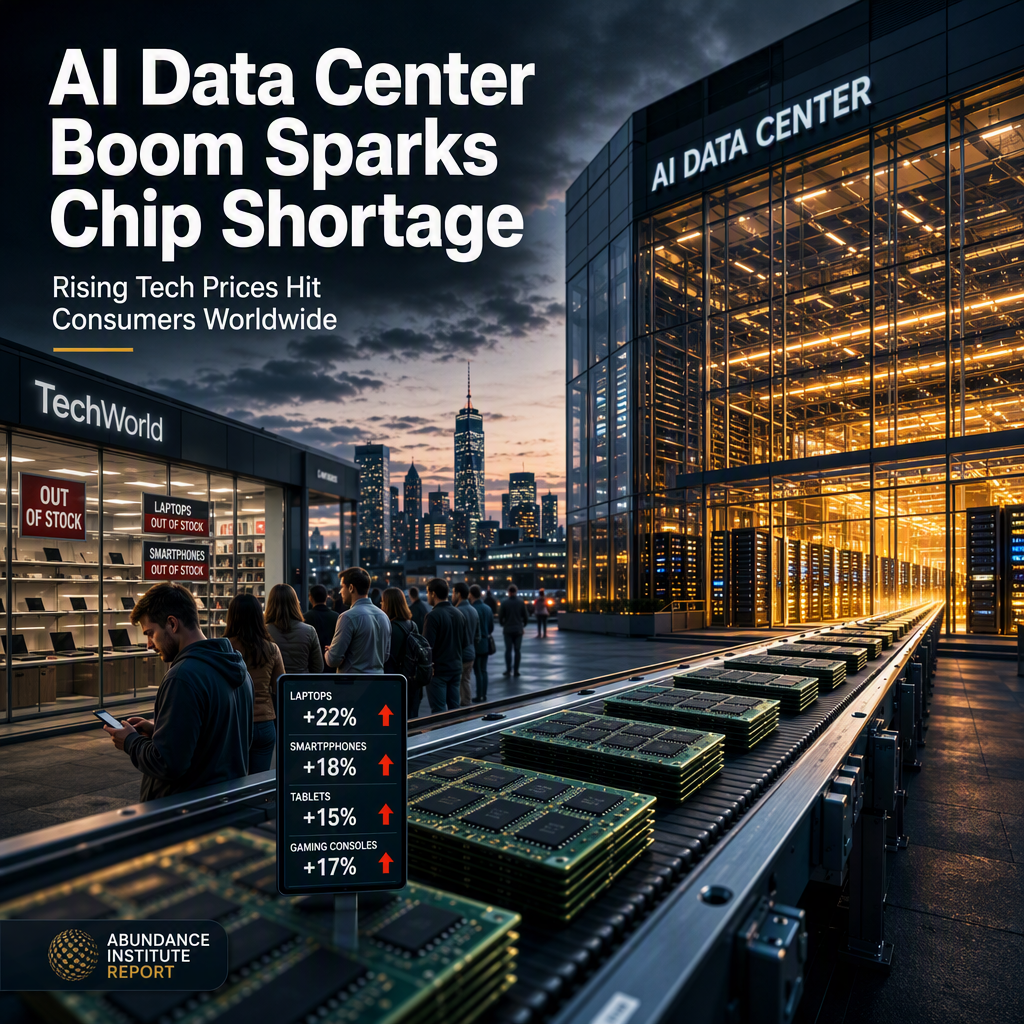
A new policy report published by the Abundance Institute warns that the rapid expansion of AI data centers is straining the supply of memory chips, which could lead to higher prices for consumer electronics such as laptops, smartphones, and cars [1]. The report, first viewed by Fox News Digital, highlights that chip manufacturers are reallocating scarce memory-chip capacity toward high-bandwidth memory (HBM) for AI applications, thereby constraining the supply of conventional DRAM used in everyday devices [1].
Former Rep. Patrick McHenry, R-N.C., commented on the report, stating that the shift toward advanced chipsets for AI is tightening overall production and complicating the supply chain, ultimately affecting consumers through increased prices for technology products [1]. The report distinguishes the current memory-chip shortage from the COVID-era semiconductor crunch, noting that this time, the shortage is primarily driven by surging demand from AI data centers rather than pandemic-related disruptions [1].
The report warns that American consumers may experience higher prices, longer wait times for products, and persistent supply shortages, with these affordability concerns potentially lasting for years [1]. McHenry also noted that efforts to de-risk supply chains from China are contributing to higher costs in the short term, as shifting production capacity leads to increased consumer prices during the transition period [1].
To address these challenges, the report argues against imposing new tariffs or trade restrictions, suggesting that such measures could further tighten supplies and exacerbate affordability issues for households and policymakers [1].
CONCLUSION
The AI-driven surge in demand for advanced memory chips is creating supply constraints for conventional chips used in consumer electronics, leading to higher prices and potential product shortages. Policymakers are urged to avoid new trade restrictions, as ongoing supply chain adjustments and AI data center growth are expected to keep upward pressure on tech costs for the foreseeable future.