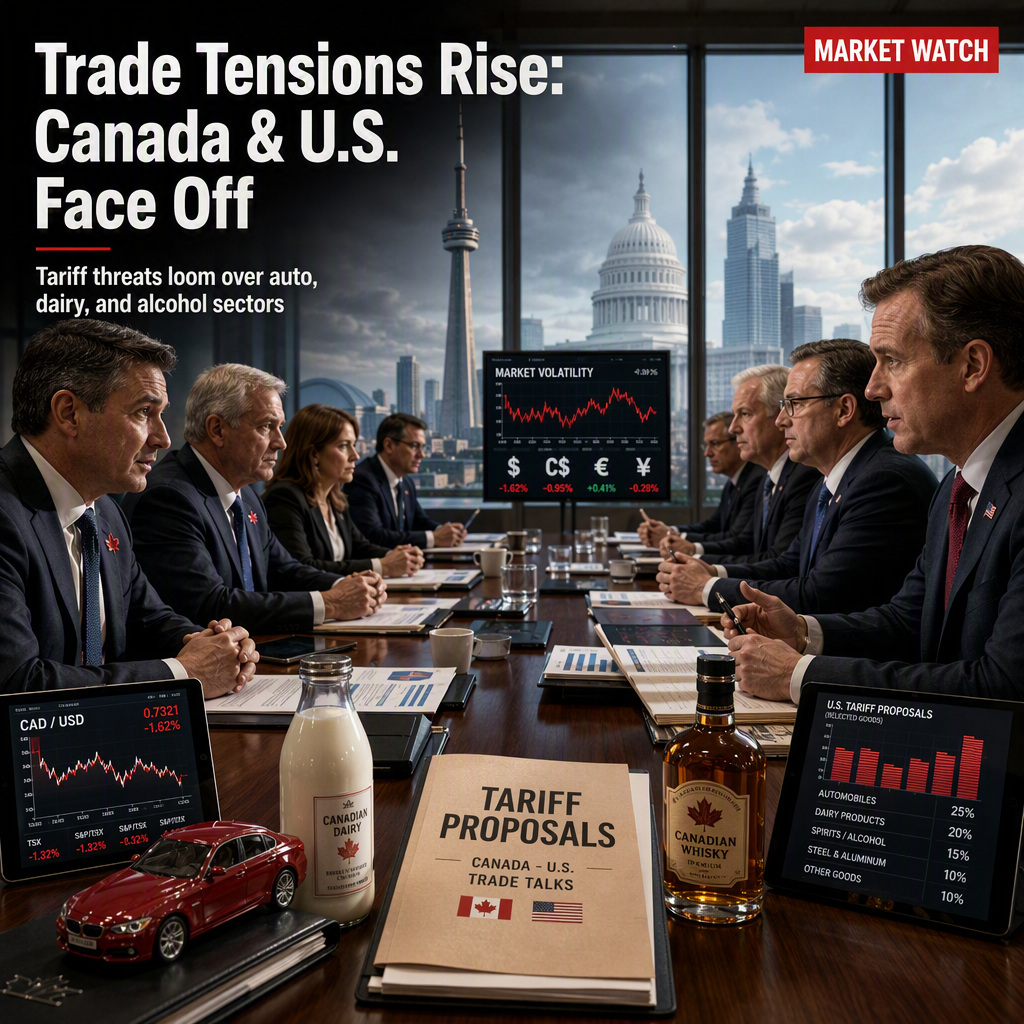
The Canadian government has resumed trade negotiations with the United States as the Trump administration prepares to implement a new wave of tariffs targeting Canadian exports. The tariffs are set to affect major sectors including dairy, alcohol, and automobiles, with some tariffs reportedly reaching as high as 50% on select products [1]. These measures are expected to have a significant impact on both Canadian exporters and American importers, potentially raising consumer prices and exerting pressure on supply chains [1].
Market analysts are closely monitoring the ongoing negotiations, as both countries aim to mitigate the potential economic fallout. There are concerns that the situation could escalate further if Canada responds with retaliatory tariffs, which could intensify the trade dispute and have broader implications for North American markets [1].
Financial experts have warned that the introduction of these tariffs could contribute to rising inflation and negatively affect GDP growth in both Canada and the U.S. The uncertainty surrounding the negotiations and potential escalation has already been reflected in currency fluctuations and sector-specific stock movements, particularly among companies with significant cross-border operations [1].
Canadian officials have reiterated their commitment to achieving a negotiated solution, while U.S. representatives have emphasized the importance of protecting American industry. Investors are being advised to closely monitor developments, as further announcements could influence market sentiment and drive volatility in the affected sectors [1].
CONCLUSION
The resumption of trade talks between Canada and the U.S. comes amid the Trump administration's plans for significant new tariffs on Canadian exports. With high stakes for both economies and the potential for market volatility, investors and analysts are watching closely for outcomes that could shape the broader North American market landscape.