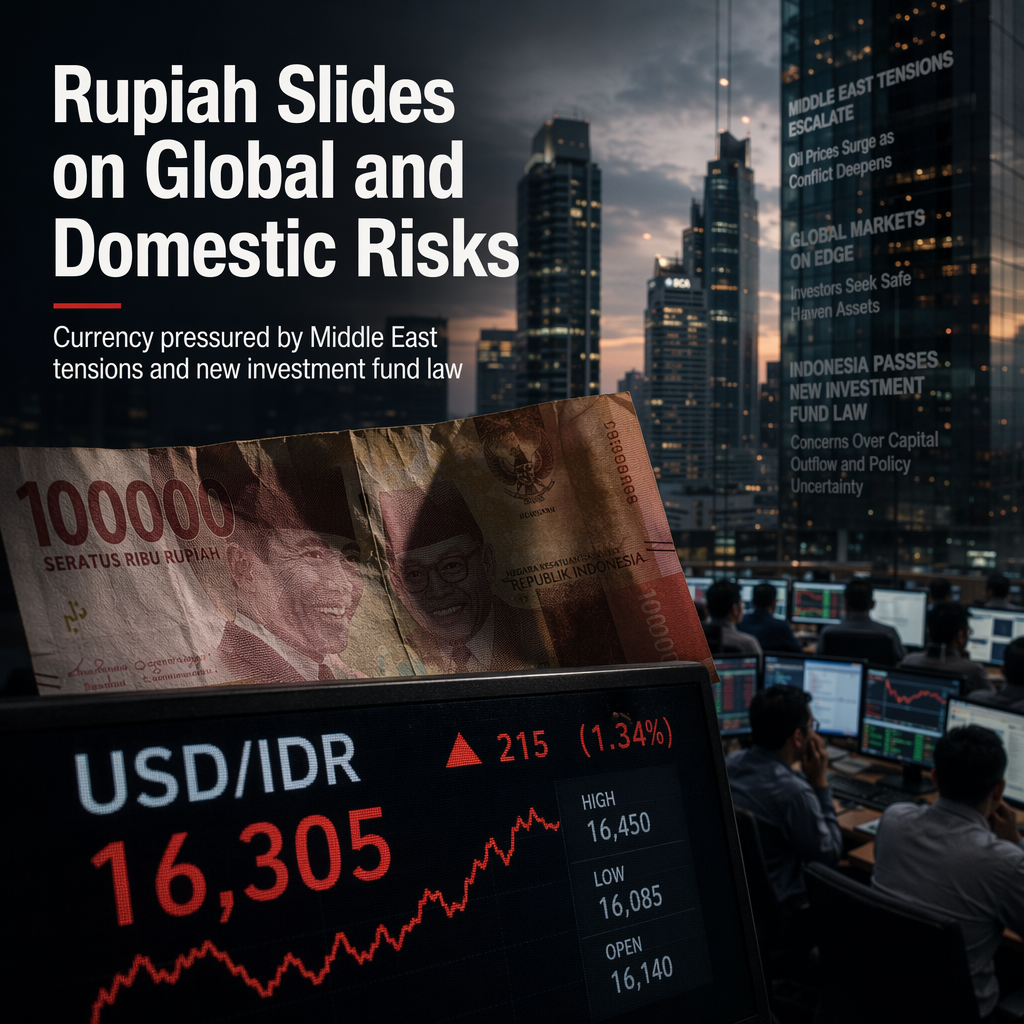
The Indonesian Rupiah (IDR) depreciated against the US Dollar (USD), with the USD/IDR pair trading around 17,900 during Asian hours on Monday after two days of losses for the dollar. This movement is attributed to increased market caution stemming from uncertainty in the Middle East, following recent military clashes between the United States and Iran and a temporary truce between the two nations. The situation escalated after an unidentified projectile struck a cargo vessel on Thursday, leading both countries to accuse each other of violating an interim ceasefire established on June 17. However, a temporary truce was agreed upon ahead of peace talks in Doha, which helped to ease some geopolitical anxieties that had unsettled global markets [1].
Investors are also closely monitoring Indonesia's upcoming economic data releases scheduled for Wednesday, including the Manufacturing Purchasing Managers’ Index (PMI), trade balance, and inflation figures. The June inflation data is particularly anticipated, as May's headline inflation reached 3.08%, approaching the upper limit of Bank Indonesia's 1.5%–3.5% target range, driven by rising food and energy costs [1].
Additionally, investor sentiment has been negatively affected by governance and transparency concerns after new legislation granted blanket legal immunity for purchases of bonds issued by the state investment fund, Danantara. This development has added to the headwinds facing the Rupiah, as market participants weigh the implications for Indonesia's investment climate [1].
The US Dollar remains resilient as traders react swiftly to developments in the Middle East, reassessing the region's stability and its broader impact on global risk sentiment [1].
CONCLUSION
The Indonesian Rupiah's recent weakness reflects a combination of external geopolitical risks and domestic policy concerns. Market participants are expected to remain cautious ahead of key economic data releases and ongoing developments in the Middle East, which continue to influence risk sentiment and currency movements.