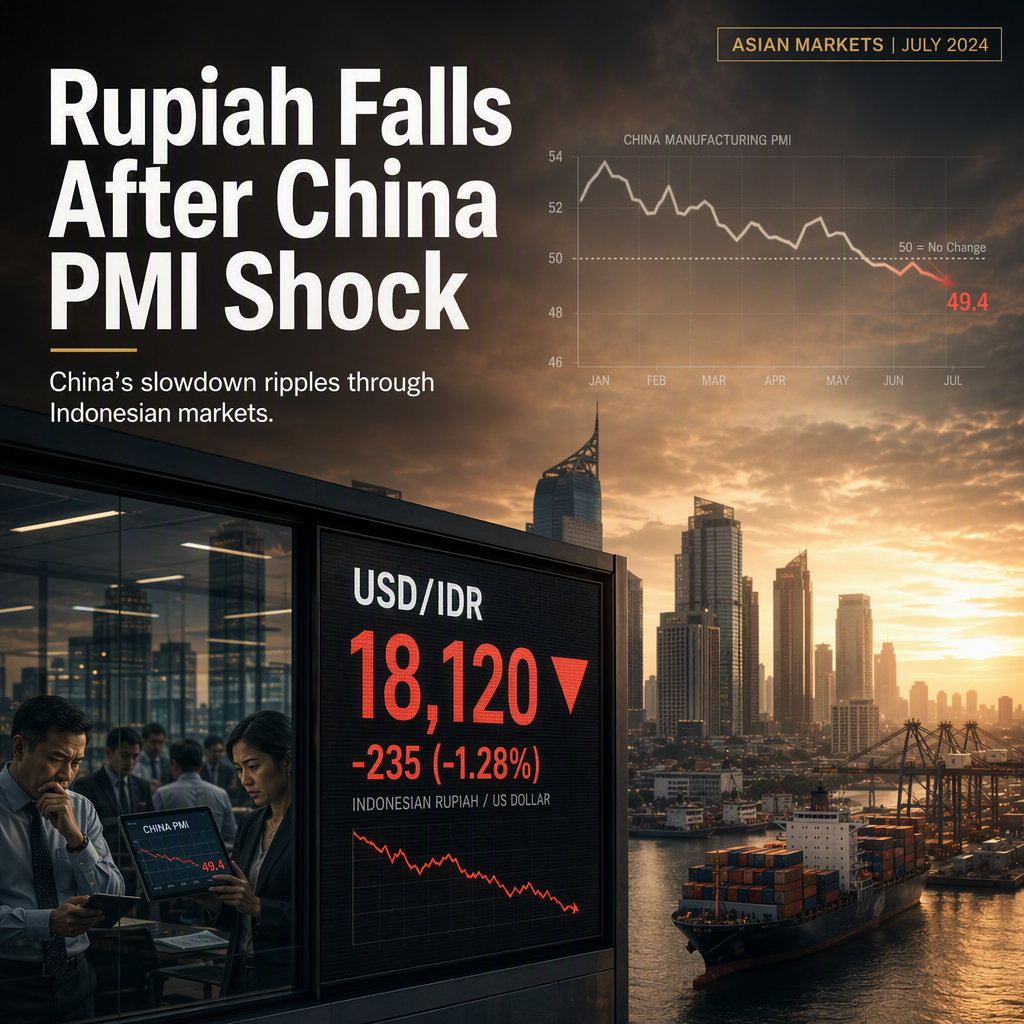
The Indonesian Rupiah (IDR) depreciated against the US Dollar (USD), with the USD/IDR pair trading around 18,120 during Asian hours on Friday, following the release of weaker-than-expected Purchasing Managers' Index (PMI) data from China, Indonesia’s largest trading partner [1]. China’s NBS Manufacturing PMI fell into contraction territory at 49.2 in July, down from 50.3 previously and below market estimates of 50.0. The Non-Manufacturing PMI also declined to 49.0, missing expectations of 50.0 [1].
The disappointing Chinese PMI data signaled a slowdown in business activity, which is considered bearish for the Chinese Renminbi (CNY) and, by extension, negative for the Indonesian Rupiah due to close trade ties between the two countries [1]. The US Dollar gained support against the Rupiah as traders adopted a cautious stance amid prevailing hawkish sentiment regarding the Federal Reserve’s policy outlook [1].
Analysts at HSBC noted that the US Federal Reserve left interest rates unchanged for a fifth consecutive meeting, with a 9-3 vote revealing significant internal debate within the FOMC about the future path of policy [1]. Despite the current support for the USD, the article highlights that the currency could face challenges if safe-haven demand eases, especially as global risk aversion declines due to positive diplomatic developments, such as progress in US-Iran negotiations and a historic agreement announced by US President Donald Trump regarding the disarmament of Hamas and withdrawal of Israeli forces from Gaza [1].
The market implications center on the IDR’s vulnerability to Chinese economic data and the evolving outlook for US monetary policy. The PMI readings below 50 indicate contraction in China’s manufacturing and non-manufacturing sectors, which could weigh on regional currencies like the IDR [1].
CONCLUSION
The Indonesian Rupiah weakened following disappointing Chinese PMI data, reflecting concerns about regional economic growth and trade. While the US Dollar is currently supported by hawkish Fed sentiment, easing geopolitical tensions could temper safe-haven demand. The market remains attentive to further developments in both Chinese economic indicators and US monetary policy.