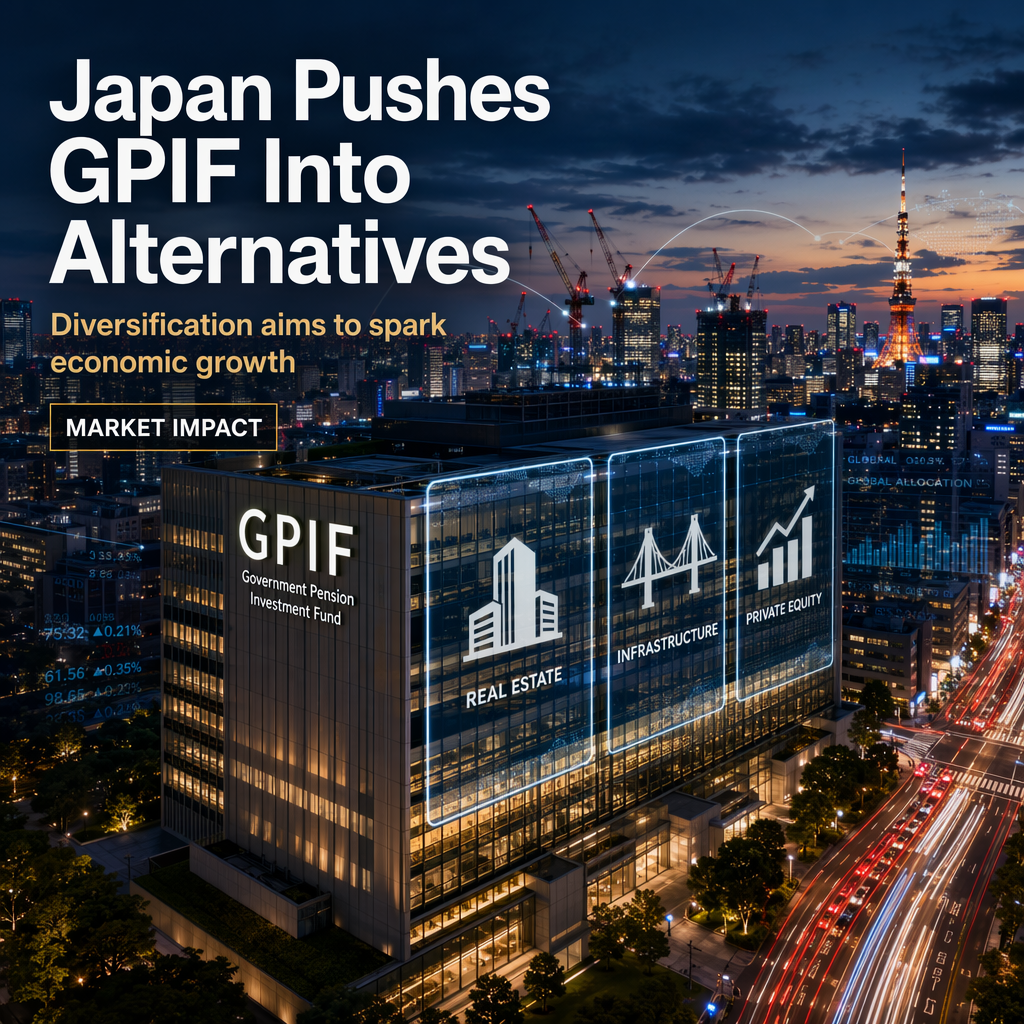
Japan's government is encouraging the Government Pension Investment Fund (GPIF), the world's largest pension fund, to increase its allocation to alternative assets as part of a broader strategy to harness capital for economic growth [1]. Although GPIF began investing in alternatives such as real estate, infrastructure, and private equity in fiscal 2013, the fund remains well below its 5% portfolio ceiling for these investments [1]. The government's strategy specifically calls for GPIF to utilize more of this 5% allocation, aiming to diversify the fund's portfolio, boost returns, and stimulate sectors critical to Japan's long-term growth [1].
Market participants are closely monitoring potential shifts in GPIF's allocation policy, as even minor changes can have significant impacts due to the fund's massive scale [1]. The push for increased alternative investment comes amid ongoing discussions about capital utilization and pension sustainability in Japan, driven by demographic challenges and persistently low yields [1].
While the government's initiative signals a greater appetite for risk and diversification, GPIF's historically cautious approach reflects its focus on risk management [1]. Market sentiment is generally positive regarding the potential for higher returns, but there are ongoing concerns about liquidity, transparency, and risk associated with alternative asset classes [1]. Observers recommend monitoring GPIF's allocation announcements, as increased investments could drive capital flows into real estate, infrastructure, and private equity markets both domestically and internationally [1].
CONCLUSION
Japan's government is actively encouraging GPIF to make greater use of its alternative investment allocation, with the goal of supporting economic growth and diversifying returns. Market participants are watching closely, as changes in GPIF's strategy could have notable ripple effects across alternative asset markets.