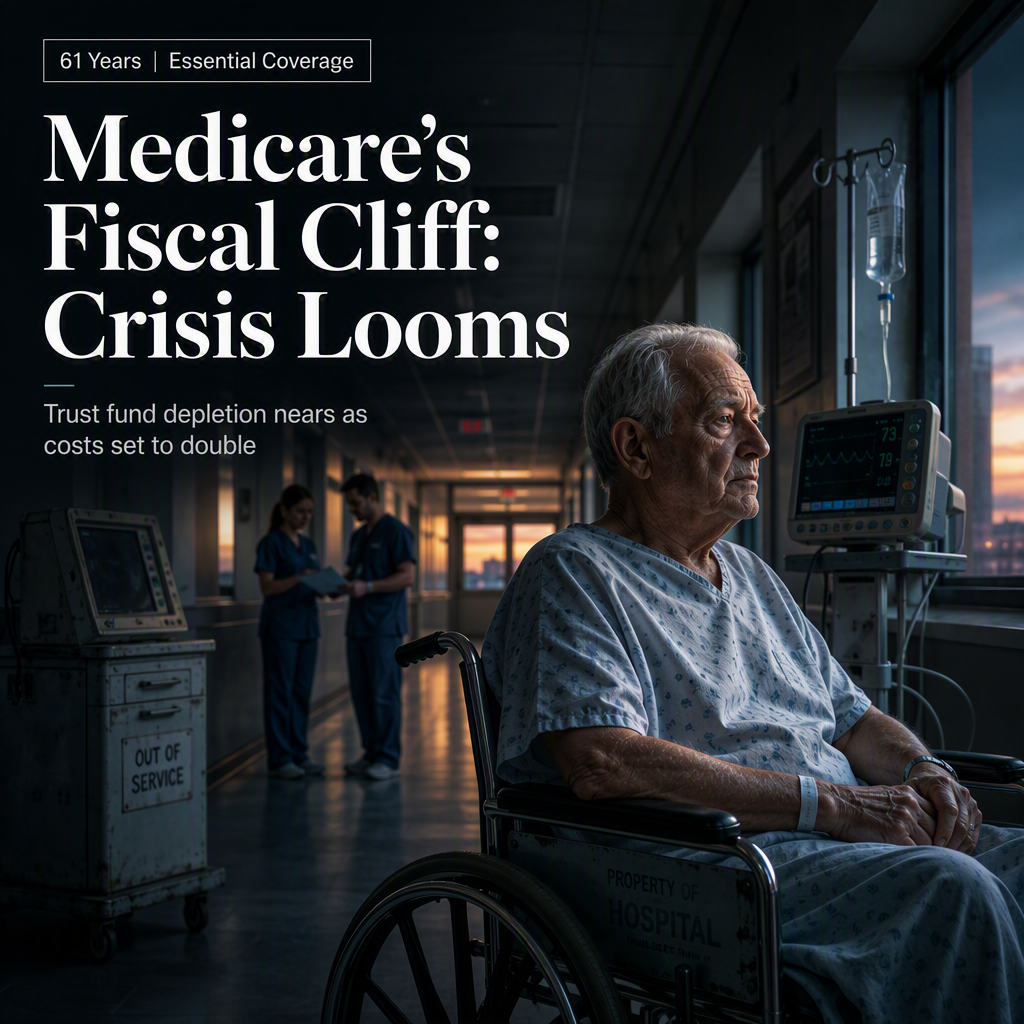
Medicare, which marks its 61st anniversary this month, is celebrated as one of America's most successful government programs, now providing coverage to 69 million people and achieving near-universal insurance for older Americans—a stark contrast to the situation before its inception in 1965, when only about half of Americans over 65 had hospital insurance and nearly a third lived in poverty [1]. However, the program faces significant fiscal challenges. The Hospital Insurance trust fund, which finances Medicare Part A through payroll taxes, is projected by trustees to be depleted in the second quarter of 2033, while the Congressional Budget Office estimates depletion by 2040 [1]. Upon depletion, incoming payroll taxes would only cover 89 percent of scheduled Part A benefits, resulting in an immediate 11 percent cut in payments to hospitals, not to seniors' benefits directly [1].
The article highlights that hospitals, especially those in rural and underserved areas already operating on thin margins, would be most affected by these cuts [1]. To restore 75-year solvency, the trustees suggest options such as raising the Medicare payroll tax from 2.9 to 3.46 percent, cutting Part A provider reimbursements by 12 percent, or a combination of both, noting that delaying action will only increase the difficulty and cost of these measures [1].
Additionally, Medicare's overall costs are projected to rise sharply, from $1.2 trillion last year to approximately $2.5 trillion by 2035, increasing its share of the U.S. economy from 3.9 percent today to a higher, unspecified percentage [1]. The article also clarifies a common misconception: payroll taxes, premiums, and other dedicated receipts cover only about half of Medicare's costs, with the remainder funded largely by general revenue, much of which is borrowed [1].
No specific market reactions or analyst opinions are provided in the article, but the outlined fiscal challenges and potential for automatic cuts signal significant implications for healthcare providers, government finances, and potentially the broader economy [1].
CONCLUSION
Medicare's financial outlook is increasingly precarious, with trust fund depletion looming as early as 2033 and program costs set to double by 2035. Without prompt policy action, automatic cuts to hospital payments could threaten healthcare access, especially in vulnerable communities, and place further strain on federal finances.