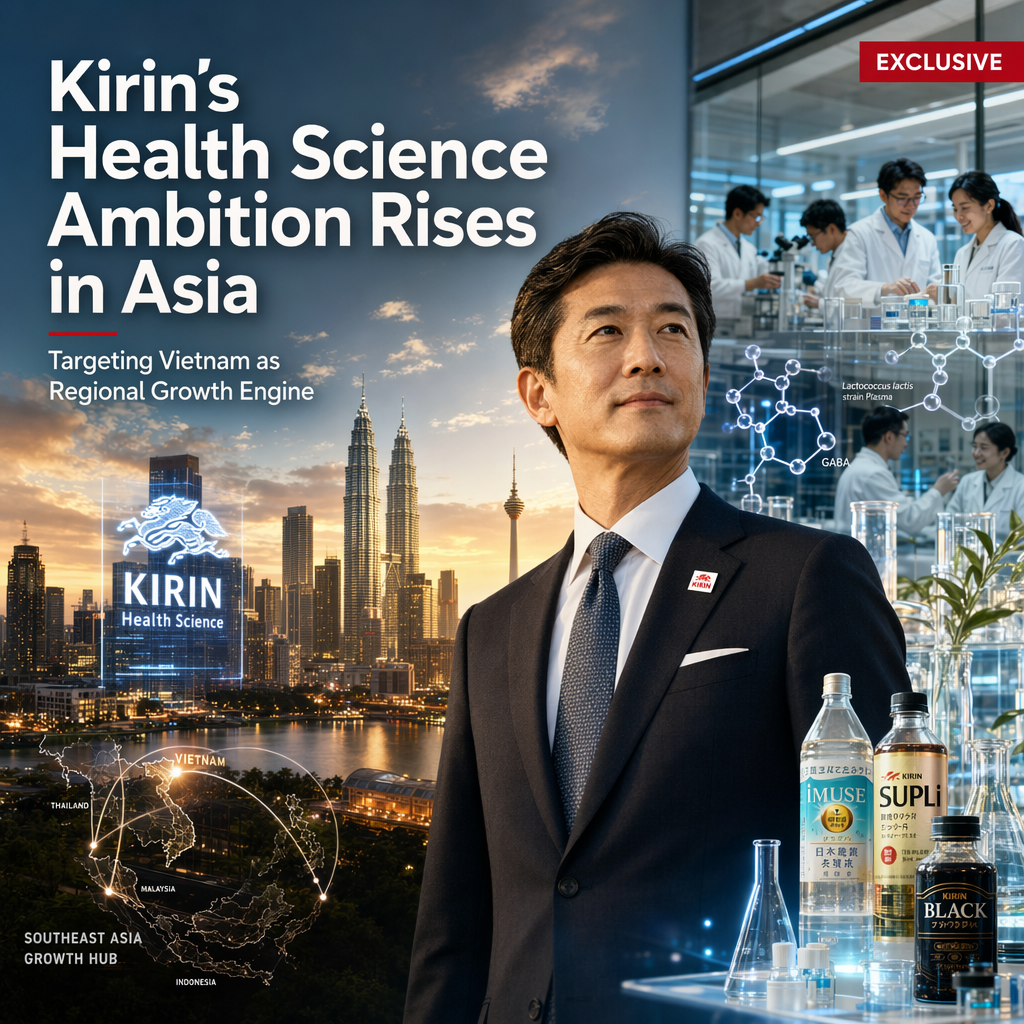
Kirin Holdings announced this week that it is accelerating the expansion of its health science business across the Asia-Pacific region, aiming to become one of the largest players in the sector [1]. According to Alastair Symington, President of Kirin Health Science International, the company is developing a portfolio of brands tailored for health-conscious consumers through its new subsidiary, with a particular focus on Vietnam as a significant growth opportunity [1].
Kirin's strategy includes leveraging its expertise in beverages and health science, expanding its portfolio through acquisitions and partnerships, and establishing new headquarters and R&D facilities in Southeast Asia, specifically highlighting Malaysia and Vietnam as strategic locations [1]. The company is also opening new laboratories in the region to enhance its R&D capabilities in food and health, and is targeting the skin health market in collaboration with its subsidiary Fancl [1].
This expansion is driven by rising demand for health-conscious products in Asia, fueled by demographic changes and increased wellness awareness [1]. Kirin is positioning itself as a key player in the health science market, with ambitions to become one of the largest regional providers [1]. While the article does not disclose specific financial details regarding investments, acquisitions, or revenue targets, it notes Kirin's previous portfolio management activities, such as the planned sale of Four Roses bourbon for up to $775 million, as evidence of its focus on growth in new business areas [1].
Kirin's move reflects a broader trend among Japanese beverage makers seeking growth in Southeast Asia amid shifting consumer preferences and competitive pressures in their domestic market [1]. The company expresses confidence that its health science business will serve as a new growth engine as it builds a portfolio aimed at health-conscious consumers in Asia [1].
CONCLUSION
Kirin Holdings is making a strategic push into the Asia-Pacific health science market, with a focus on Vietnam and Southeast Asia, as part of its efforts to diversify and capture rising demand for wellness products. While financial specifics remain undisclosed, the company's expansion underscores its commitment to becoming a major regional player and reflects broader industry trends among Japanese beverage makers.