
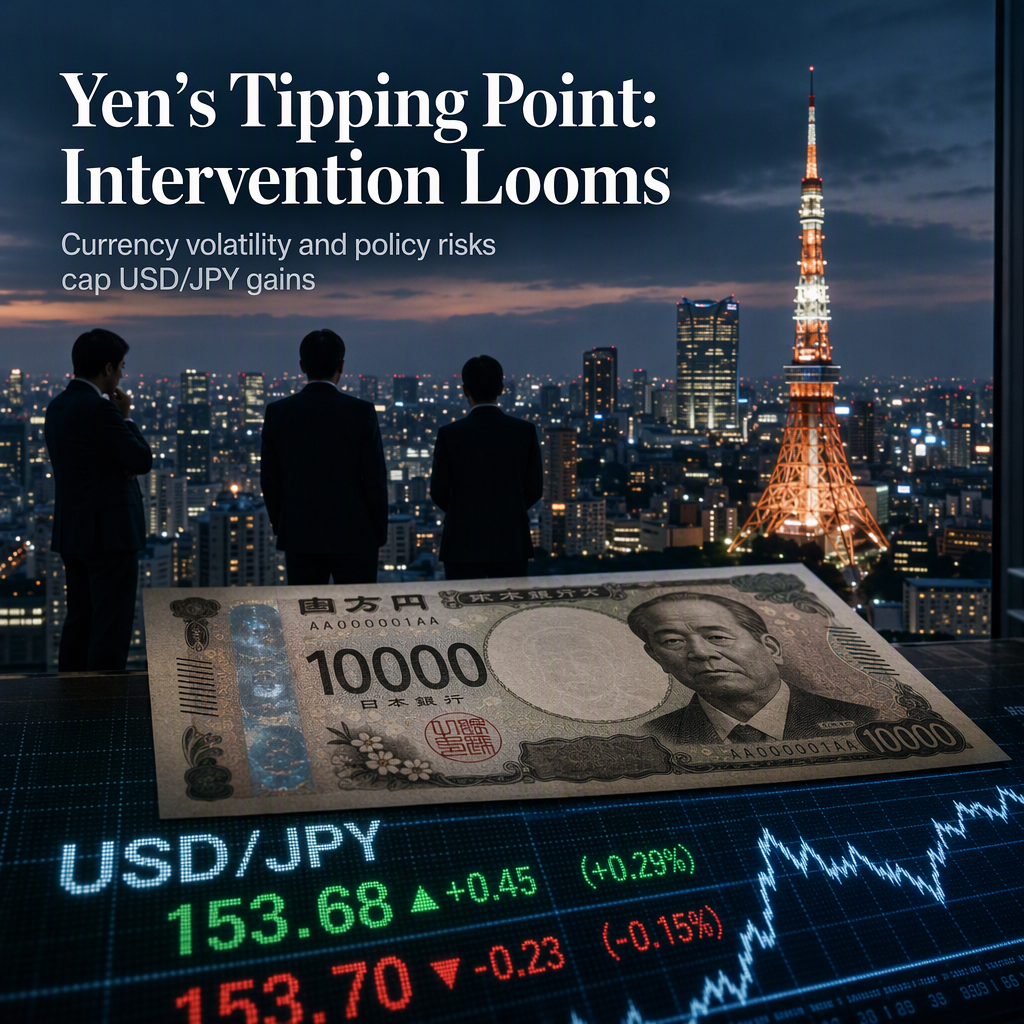
OCBC strategists Sim Moh Siong and Christopher Wong characterize the USD/JPY pair as a 'patience trade,' noting that its recent sideways to slightly higher movement since October has been supported by rising US Treasury yields and elevated energy prices [1]. Despite these supportive factors for the US dollar, the upside for USD/JPY is limited due to the Japanese Yen's extreme undervaluation and increasing risks of official FX intervention as the pair trades in the 158s [1].
Recent reports indicated that Japan's Government Pension Investment Fund (GPIF) did not discuss asset allocation changes at its September meeting, which disappointed some JPY bulls who had anticipated a shift toward increased domestic bond allocations that could bolster the Yen [1]. However, OCBC strategists view this as a postponement rather than a rejection of the broader repatriation narrative, suggesting that the potential for Yen appreciation remains intact over the longer term [1].
The strategists maintain a constructive outlook for the JPY, citing its deep undervaluation on several metrics and the prospect of sustained higher domestic yields gradually making Japanese assets more attractive to local investors [1]. While there is no evidence of an imminent shift in GPIF's investment strategy, OCBC expects gradual Yen appreciation over time as repatriation and higher yields take effect [1].
CONCLUSION
The Japanese Yen's depreciation is currently limited by intervention risks and its undervaluation, with upside momentum for USD/JPY constrained despite broad USD strength. Although immediate asset allocation changes from GPIF are absent, OCBC strategists anticipate gradual Yen appreciation in the longer term as domestic yields rise and repatriation trends persist.