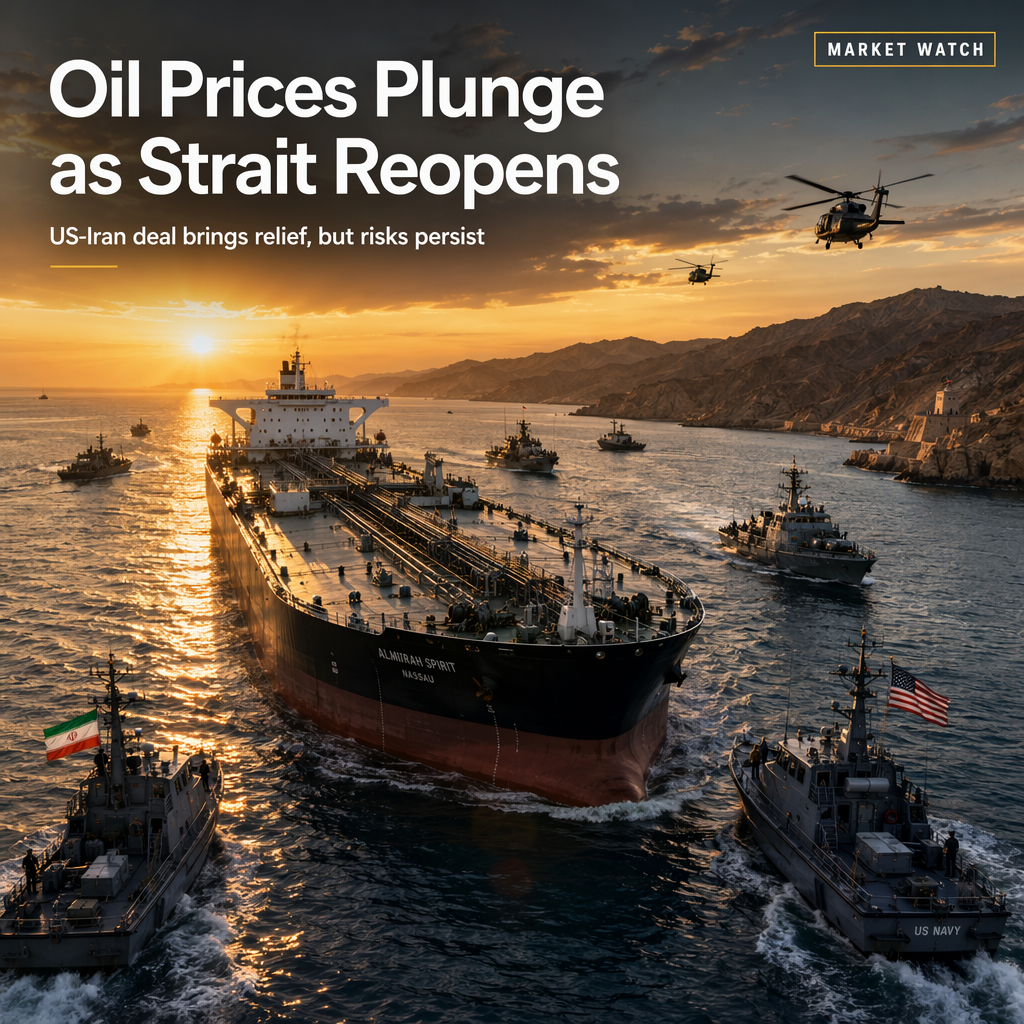
Brent crude oil prices have returned to near $80 per barrel, while West Texas Intermediate (WTI) trades close to $77, effectively erasing almost all of the premium built up over nearly four months of open conflict with Iran [1]. This price reversal follows the signing of a US-Iran memorandum, which the market has interpreted as a finished peace agreement: the blockade is lifted, the Strait of Hormuz is reopening, and Iranian oil barrels are cleared to sell. US equities have reached record highs, with the President publicly celebrating falling pump prices and strong market performance [1].
Since hostilities began on February 28, Brent and WTI prices surged more than 45%, with dated Brent cargoes peaking above $120 as Hormuz traffic halted and Gulf oil loadings collapsed. However, Brent has dropped roughly 8% in the past week alone and is now trading in the low $80s, nearly back to pre-conflict levels [1]. The market's optimism is based on the existence of a signed deal and the resumption of some shipping activity through the Strait of Hormuz [1].
Despite these developments, significant risks remain. The main central channel of the Strait of Hormuz is still closed, with an estimated 80 mines yet to be cleared. Tanker traffic is currently limited to the northern route inside Iranian waters and the southern route near Oman's coast, with US Central Command (CENTCOM) lifting port restrictions and advising ships to use the Omani side to avoid mines [1]. The flow of oil is being tightly controlled by Iran's Islamic Revolutionary Guard Corps (IRGC), which is capping vessel numbers to manage congestion. Furthermore, Iran disputes Washington's claim of a toll-free opening, insisting it will manage the waterway on its own terms, including inspections and security [1].
The memorandum of understanding is a bilateral agreement, signed by President Trump at Versailles and Iranian President Masoud Pezeshk, but does not include all parties involved in the conflict. The market's de-risking may be premature, as the supply relief is being delivered at Iran's discretion and could be reversed at any time [1].
CONCLUSION
Oil prices have fallen sharply as the market prices in a US-Iran deal and partial reopening of the Strait of Hormuz, but significant operational and geopolitical risks persist. The supply relief is contingent on Iran's ongoing cooperation, and the situation remains fluid. Market optimism may be premature given the unresolved issues and potential for renewed disruptions.