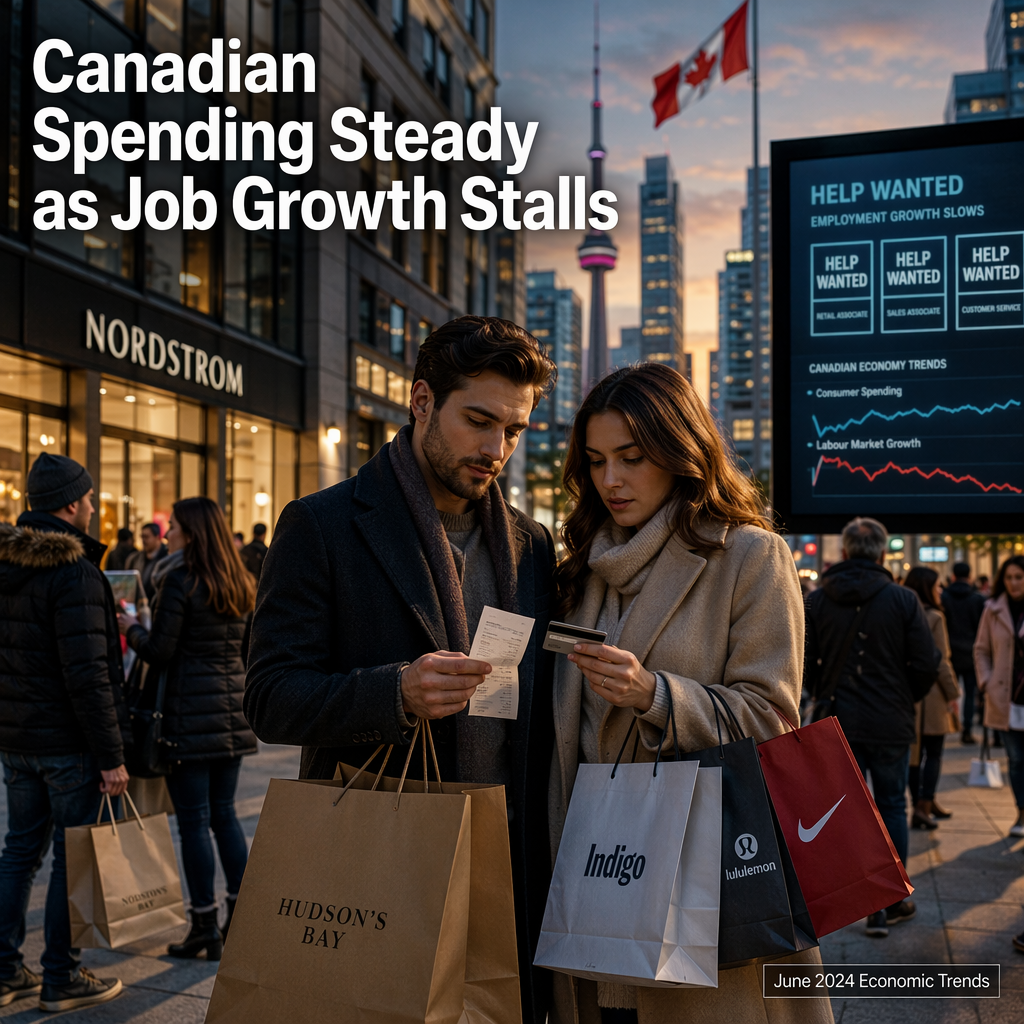
RBC analysts Abbey Xu and Rachel Battaglia report that spending by RBC Canadian cardholders remained relatively stable in June, with core retail sales (excluding gasoline and autos) edging up 0.5% on a three-month average, mirroring May's performance. Discretionary goods led the gains among major categories, while essential spending, excluding gasoline, also rose 0.5% on a three-month average, marking an improvement after earlier signs of easing. The data suggest that households are maintaining a cautiously optimistic outlook heading into the summer, despite higher energy prices and selectivity regarding larger discretionary purchases [1].
Meanwhile, TD Macro Research anticipates a softening in the Canadian labour market for June. They forecast employment to remain unchanged, in contrast to market expectations for a 10,000 job gain and following May's surge of 87,800 jobs. The unemployment rate is expected to hold steady at 6.6%, with a stable participation rate. Monthly business surveys for June have been mixed, with small business hiring intentions pulling back, while S&P PMIs showed a more positive trend. TD notes that mean reversion is likely to drive the softer employment print, as May's job gains were notably higher than the six-month trend of mild job losses. Wage growth for permanent workers is projected to rise modestly to 3.6% year-on-year, only partially reversing May's sharp deceleration [2].
The combination of steady consumer spending and an anticipated pause in employment growth suggests that Canadian households are navigating higher costs with caution. While spending momentum remains positive, the labour market's expected stabilization may temper further gains in consumer activity. No specific market reactions or analyst opinions regarding asset prices were mentioned in the sources [1][2].
CONCLUSION
Canadian consumer spending showed resilience in June, but TD expects the labour market to soften, with employment likely unchanged and wage growth only modestly higher. The overall market takeaway is one of cautious optimism, as steady spending is balanced by a potentially cooling job market.