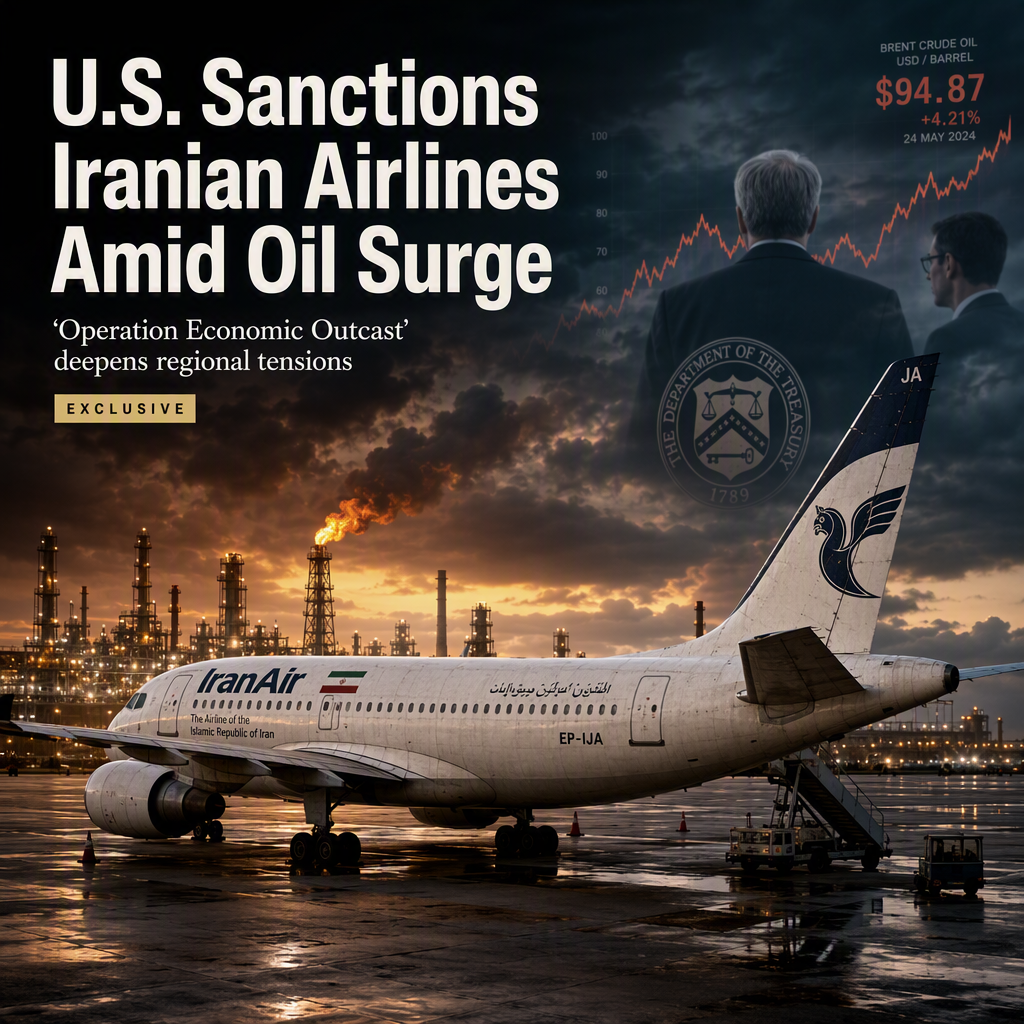
The U.S. Treasury Department announced sanctions on 27 Iranian airlines and several other entities as part of its ongoing strategy to further isolate Iran's economy and increase pressure amid escalating regional conflict. This latest action, under the banner of 'Operation Economic Outcast,' specifically targets all Iranian airlines that had not previously been sanctioned, signaling a comprehensive approach to restricting Iran's aviation sector [1].
The sanctions come in the context of heightened tensions, as Tehran and its proxies have continued to launch attacks in the Strait of Hormuz and surrounding areas. These actions have drawn additional countries into the U.S.'s more-than-six-month war and have contributed to increased volatility in global energy markets [1].
Oil prices experienced an uptick following attacks by Iran-allied militants in Yemen on several energy facilities in Saudi Arabia, which resulted in a temporary halt to some operations. This underscores the broader market implications of the ongoing conflict and the U.S.'s efforts to curtail Iran's economic activities [1].
Treasury Secretary Scott Bessent issued a warning to international businesses, stating, 'Let this be a warning to anyone doing business with Iran's remaining airlines, all of which we sanctioned today: You are at risk of being cut off from the global financial system' [1].
CONCLUSION
The U.S. has intensified its economic pressure on Iran by sanctioning all remaining Iranian airlines, a move that coincides with rising oil prices and increased regional instability. The sanctions are expected to further isolate Iran's economy and could have significant repercussions for global energy markets.