
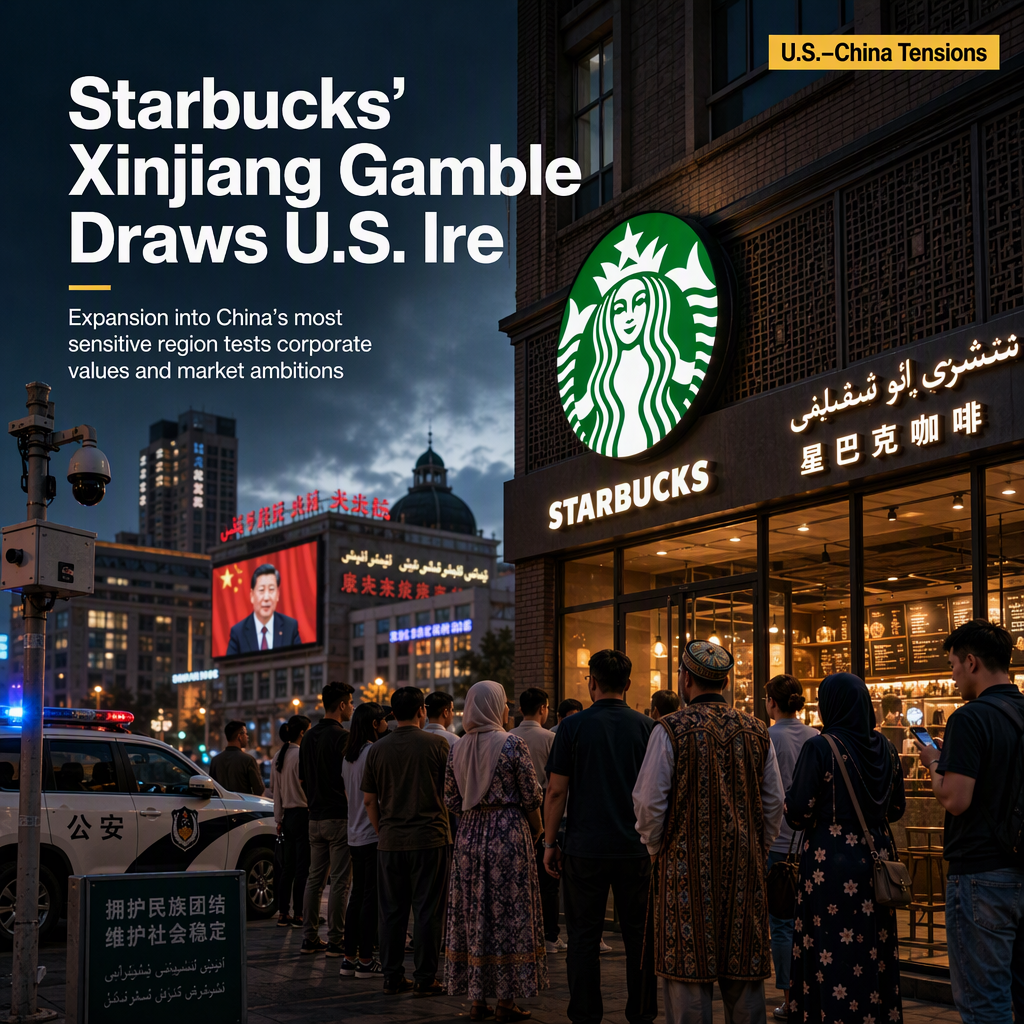
Starbucks Corporation has expanded its presence in China by opening two stores in Urumqi, Xinjiang, a region where Western governments have accused Beijing of widespread human-rights abuses and where the U.S. restricts imports over forced-labor concerns [1]. This move comes after Starbucks completed the sale of a 60% controlling stake in its China operations to Boyu Capital, a Hong Kong-based private-equity firm, in April [1]. The venture aims to grow from roughly 8,000 stores to as many as 20,000, with Xinjiang representing a bold and controversial first step [1].
The decision has sparked significant backlash in the United States. The U.S. House Select Committee on China labeled Starbucks' expansion into Xinjiang as "shocking and morally bankrupt" for "a company that prides itself on social responsibility," and demanded the stores close. Chairman Rep. John Moolenaar (R-Mich.) issued a statement headlined "Starbucks Serves Up Venti-Sized Genocide" [1]. In contrast, China's Foreign Ministry rejected the criticism, calling U.S. claims of genocide "a blatant lie" and asserting that Xinjiang has achieved "social stability, economic prosperity, ethnic unity and religious harmony" [1].
Industry observers note that Boyu Capital, which now controls Starbucks' China business, is run by individuals well-versed in Chinese politics. Ivy Yang, founder of Wavelet Strategy, commented that Boyu "understands the sensitivity of Xinjiang as well as anyone," and believes the firm weighed Washington's reaction but prioritized domestic commercial opportunity [1]. More than a dozen American brands have entered Xinjiang before Starbucks, but few have drawn comparable criticism from Washington, highlighting the intensifying U.S.-China rivalry [1].
The market implications are significant, as Starbucks' move tests the climate for American companies operating in China amid heightened geopolitical tensions. The controversy underscores the risks for U.S. firms navigating local priorities and international scrutiny, especially as Starbucks aims for aggressive expansion in its second-largest market [1].
CONCLUSION
Starbucks' entry into Xinjiang has triggered strong criticism from U.S. lawmakers, while Chinese officials and its local partner defend the move as commercially driven. The event highlights the escalating geopolitical risks for American companies in China and signals that Starbucks is prioritizing domestic growth opportunities despite international backlash. The market takeaway is that U.S.-China tensions are increasingly shaping corporate decisions and public reactions.