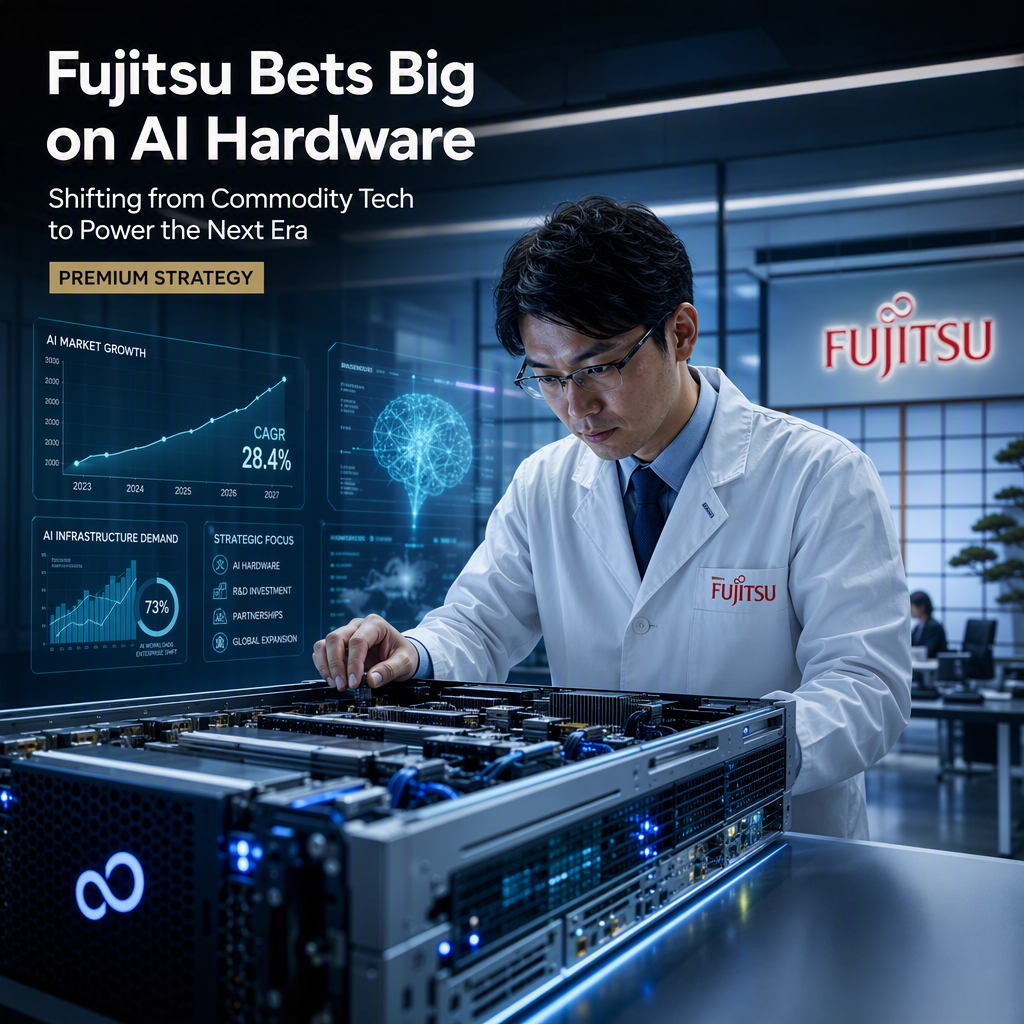
Fujitsu, the Japanese technology group, is experiencing robust earnings driven by increased system investment at client companies, which has boosted demand for its information technology services [1]. Chief Financial Officer Takeshi Isobe revealed that the company is reevaluating its hardware manufacturing strategy, stating, 'We are unlikely to keep making commodity-grade products. Our focus is shifting towards hardware for AI applications, which represents a higher value-added segment' [1]. This strategic pivot may involve transferring or exiting operations that no longer align with Fujitsu's new direction [1].
The company sees significant growth potential in providing hardware optimized for artificial intelligence workloads, leveraging its expertise in computing and IT infrastructure [1]. Investments are being prioritized in areas supporting this transition, including research and development for AI hardware and forming strategic partnerships [1]. Isobe emphasized that Fujitsu's capital allocation priorities are dividends, growth investments, and stock buybacks, aiming to balance shareholder returns with long-term growth as the company positions itself in the competitive AI market [1].
Fujitsu is closely monitoring market sentiment, noting increased interest from client companies in AI-driven solutions [1]. Technical analysis by the company suggests that hardware for AI is becoming a strategic differentiator, with price levels and demand expected to rise as more enterprises adopt advanced computing platforms [1]. Isobe also referenced support and resistance in the current market environment, indicating that Fujitsu's stock has maintained stable performance amid sector volatility [1]. The CFO confirmed ongoing evaluations of trading advice and market sentiment as part of Fujitsu's broader strategy to maximize shareholder value and capitalize on emerging trends in AI technology [1].
CONCLUSION
Fujitsu's strategic shift towards AI hardware signals a move away from commodity-grade products, with the company prioritizing investments in high-value segments and shareholder returns. Market sentiment is positive, with stable stock performance and rising demand for AI solutions. This transition positions Fujitsu to capitalize on emerging opportunities in the artificial intelligence sector.