
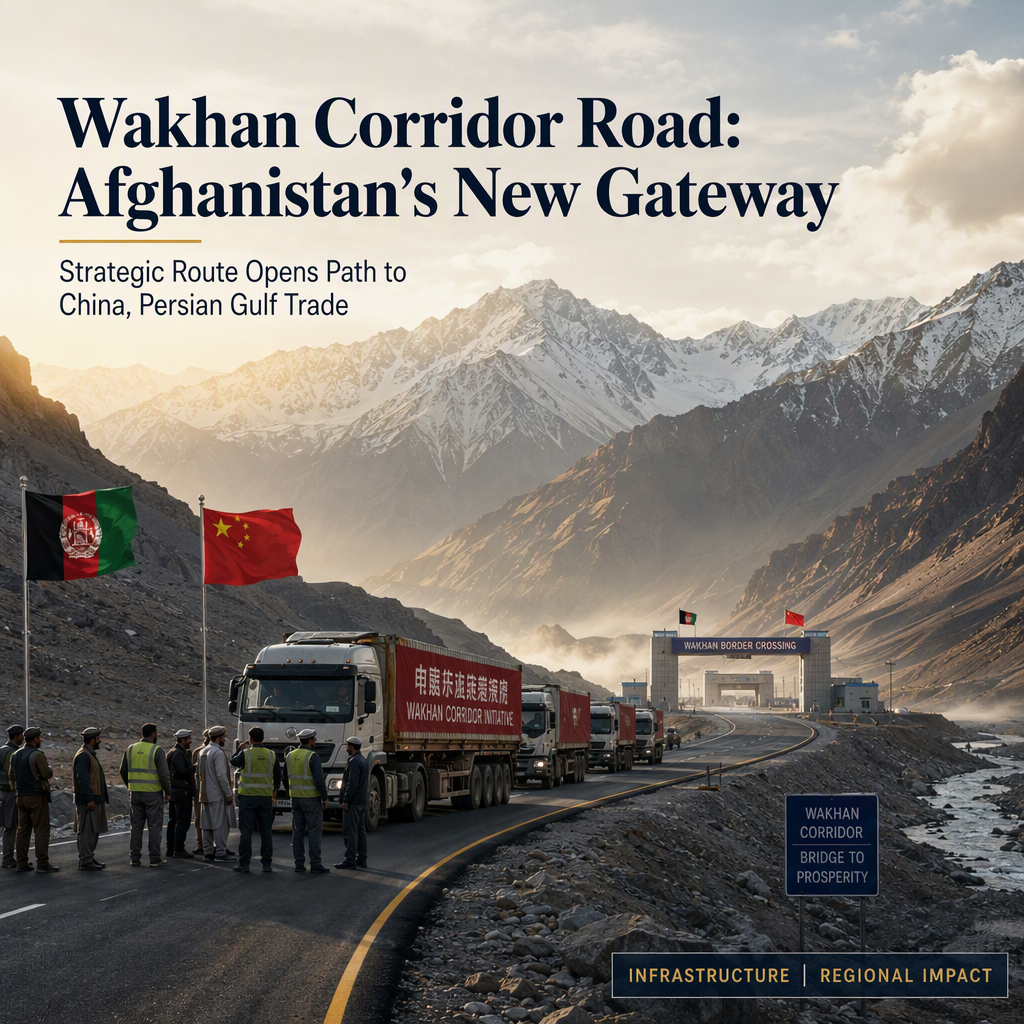
The Taliban government of Afghanistan has recently inaugurated a road through the Wakhan Corridor, a narrow strip of land in the northeastern Badakhshan province, aiming to establish a direct trade route with China [1]. This development is positioned as a strategic move that could eventually provide China with a gateway to the Persian Gulf, potentially reshaping regional logistics and supply chains [1].
While the road has been opened, experts cited in the article emphasize that the route is still far from being fully operational [1]. No specific financial values, market analysis, or technical trading data are provided at this stage, as the project remains in its early phases [1]. The article highlights that the initiative signals increasing cooperation between Afghanistan and China under the Belt and Road Initiative, with the potential to significantly impact regional trade dynamics once the route becomes functional [1].
Currently, there are no market reactions, analyst opinions, or forward-looking statements regarding immediate economic or financial impacts, as the focus remains on the geopolitical and infrastructural significance of the new route [1].
CONCLUSION
Afghanistan's opening of the Wakhan Corridor road marks a strategic step toward deeper trade ties with China, though the route is not yet fully operational. While immediate market impacts are limited, the development could have significant long-term implications for regional trade and logistics once completed.