
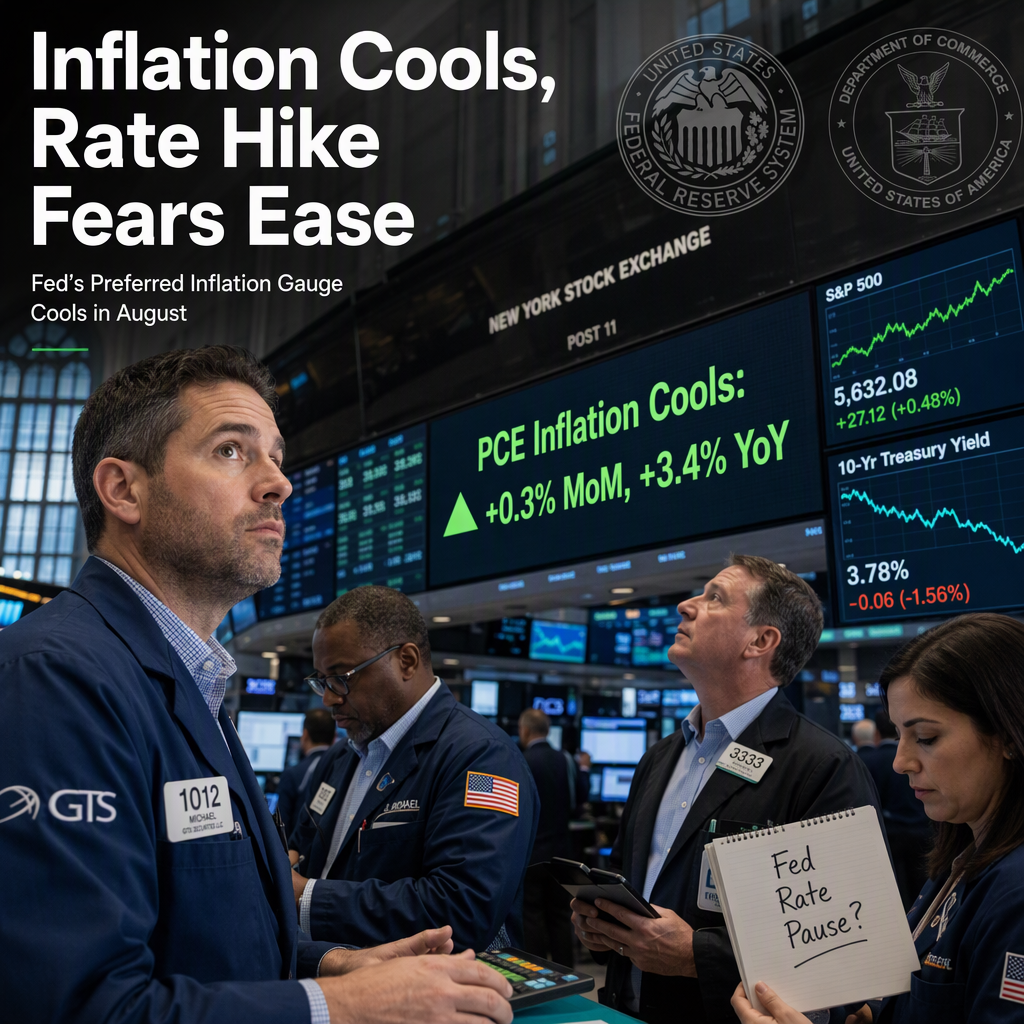
The Federal Reserve's preferred inflation gauge, the personal consumption expenditures (PCE) index, showed signs of cooling in August, according to reports from the Commerce Department. The headline PCE index rose 0.3% month-over-month and 3.4% year-over-year, both figures coming in below economists' expectations of 0.4% and 3.7% as polled by LSEG and Dow Jones, respectively [1][2]. Core PCE, which excludes food and energy, increased 0.2% monthly and 3% annually, also below forecasts of 0.3% and 3.3% [1][2]. Compared to July, headline PCE declined from 3.7% to 3.4%, and core PCE fell from 3.3% to 3% [1].
The Bureau of Economic Analysis adjusted the computation of several index components, though the immediate impact of these revisions on the final numbers was unclear [2]. Energy costs were a significant driver of August's price increases, with gasoline prices jumping 4.4%, transportation services up 1.4%, and energy goods and services rising 2.3% [2]. Both goods and services prices posted 0.3% increases [2].
Market reaction was positive, with stock market futures rising and Treasury yields falling after the report. Traders reduced the probability of a Federal Reserve rate hike in October, shifting expectations for the next increase to December [2]. David Russell, global head of market strategy at TradeStation, commented, "This is good news for investors worried about the recent surge in bond yields, and it bolsters the case for not hiking in October," but noted the data does not reflect September's surge in diesel prices [2].
Personal income rose 0.2% and spending increased 0.9% in August, compared to consensus forecasts of 0.4% and 0.8% respectively [2]. Despite the cooling, inflation remains well above the Fed's 2% target, suggesting the possibility of further rate hikes at the remaining meetings this year [1][2]. The Commerce Department also reported that second-quarter GDP grew at a 2.2% annualized rate, up from the previous estimate of 1.5%, with real final sales to private domestic purchasers rising 4.6% [2]. Inflation measures for the April-June period were revised lower, with headline PCE at 5% and core at 3.3%, both 0.3 percentage points below prior estimates [2].
CONCLUSION
August's PCE inflation report showed cooling price pressures, coming in below expectations and easing immediate concerns about further Fed rate hikes. While markets responded positively, inflation remains above target, leaving open the possibility of additional tightening later this year. Investors and policymakers will continue to monitor upcoming data for signs of sustained moderation.