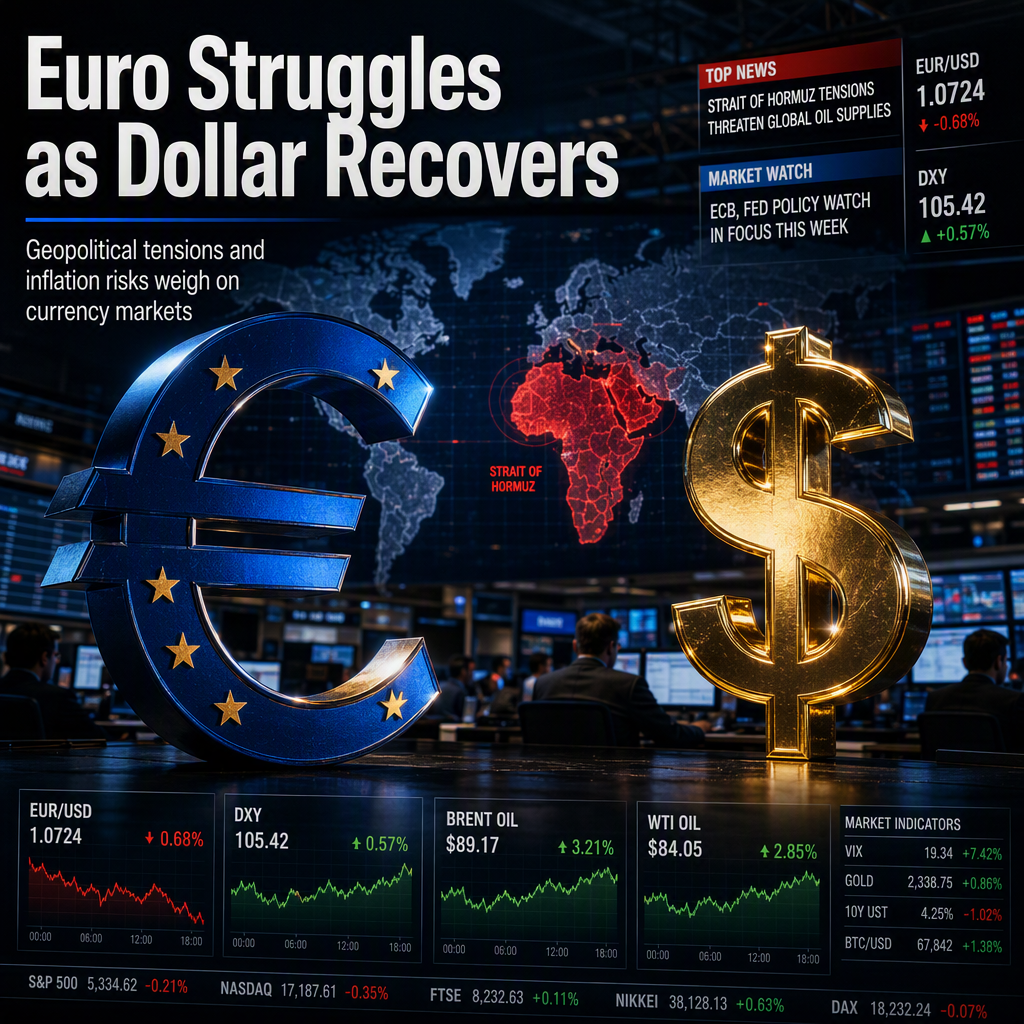
The Euro (EUR) consolidated below its recent two-month high against the US Dollar (USD) on Tuesday, with the EUR/USD pair trading around 1.1578 after retreating from Monday's peak of 1.1614 [1]. The US Dollar steadied, supported by rising US Treasury yields and a muted market reaction to recent economic data, as traders focused on geopolitical developments in the Middle East and their potential impact on monetary policy [1].
In the US, the four-week average of the ADP Employment Change increased to 9.5K for the week ending August 1, up from 8.25K previously [1]. Meanwhile, the Eurozone ZEW Survey indicated a sharp improvement in Economic Sentiment, rising to 31.4 in August from 23.4 and surpassing the market forecast of 25.4 [1]. Despite this positive sentiment reading, the Euro failed to gain momentum due to the firmer US Dollar, which saw its index (DXY) recover to 99.60 after hitting a two-month low of 99.30 on Monday [1].
The US Dollar's strength, however, appears capped in the near term as weaker US economic data has led traders to reduce expectations for further Federal Reserve (Fed) rate hikes. The CME FedWatch Tool shows a 65% probability that the Fed will keep rates unchanged at its next meeting, compared to earlier expectations for a hike [1]. Nevertheless, ongoing tensions between the US and Iran over the Strait of Hormuz have kept inflation risks elevated, with US President Donald Trump stating that Washington is not seeking an extension of the memorandum of understanding with Iran, which expired on Monday. This development has dampened hopes for a peace agreement and the reopening of the key waterway [1].
Elevated oil prices, driven by these geopolitical tensions, increase the risk that inflation will remain above the Fed's 2% target for an extended period, preventing markets from fully ruling out a rate hike later this year [1]. On the European side, the European Central Bank (ECB) is widely expected to raise interest rates in September. ECB Chief Economist Philip Lane commented that Eurozone inflation running “one percentage point above the ECB’s 2% target is a lot” and expects it to “hover around the 3% level for the rest of the year” [1].
CONCLUSION
The Euro remains under pressure despite improved Eurozone sentiment, as a firmer US Dollar and elevated oil prices weigh on the currency. Market participants are closely watching geopolitical developments and central bank policy signals, with both the Fed and ECB's next moves seen as pivotal for currency direction. Inflation risks and interest rate expectations continue to drive market sentiment.