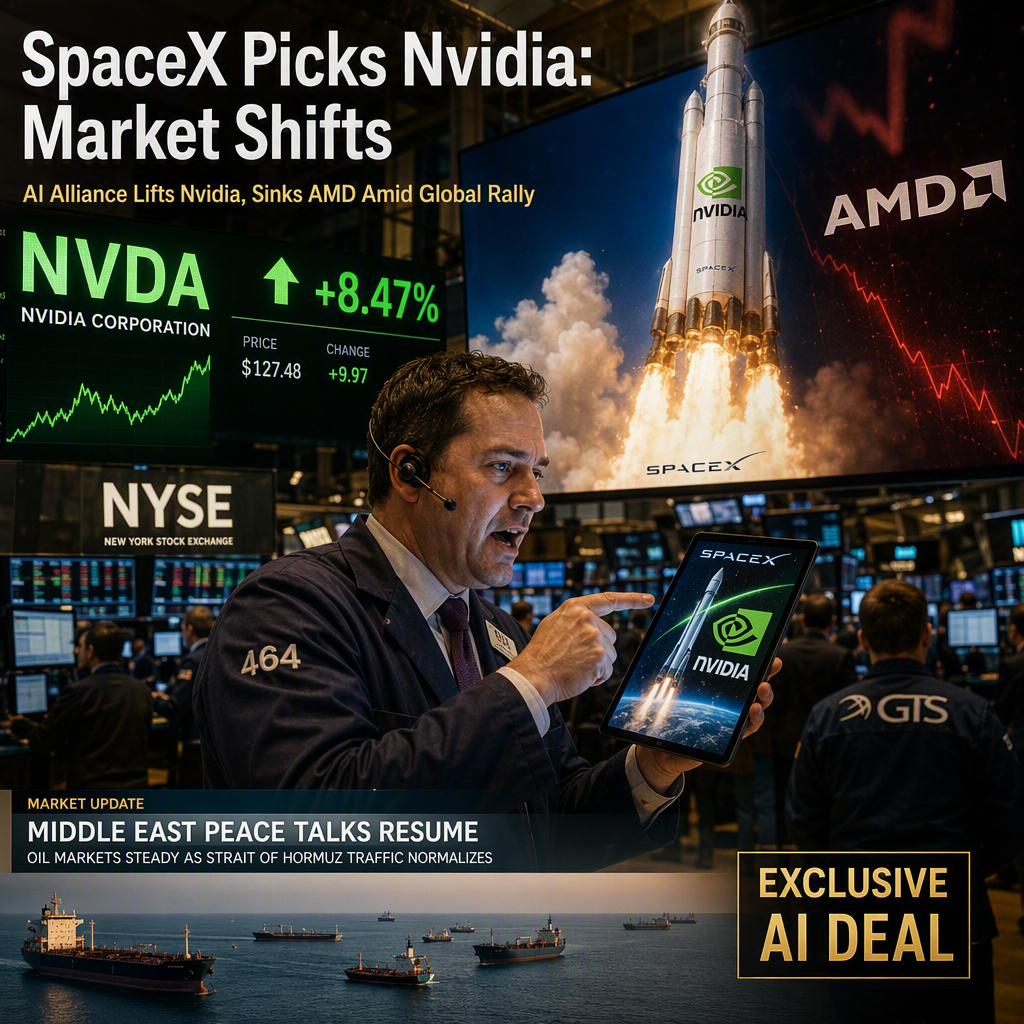
The Dow Jones Industrial Average achieved its fifth consecutive record close, driven by optimism that the five-month conflict in the Middle East may be nearing resolution. This sentiment was fueled by reports that Iran and Oman are close to finalizing an agreement on commercial shipping in the Strait of Hormuz, which would grant Tehran increased control over vessel passage through this critical oil route. President Donald Trump indicated that a U.S. deal to reopen the strait 'could happen' as soon as Wednesday or Thursday, extending a previous deadline suggested by Treasury Scott Bessent. As optimism spread, both Brent and WTI crude futures declined, reflecting market expectations of eased geopolitical tensions [1].
In the technology sector, SpaceX shares dropped 13.6% following a surge in AI-related capital expenditures, which rose sixfold to $18.4 billion, primarily allocated to artificial intelligence. Despite beating quarterly expectations, investor concerns about spending overshadowed positive results. Elon Musk sought to reassure stakeholders by projecting SpaceX would reach $1 trillion in annual revenue by 2030, a year earlier than previously forecast [1].
Musk's announcement that SpaceX will exclusively use Nvidia processors for its AI infrastructure propelled Nvidia shares up more than 3%. He stated, 'We're exclusive to Nvidia.' Conversely, AMD experienced a 7% decline in its stock price, despite reporting robust second-quarter earnings and forecasting data center growth 'well over 100%.' AMD CEO Lisa Su responded to the news by expressing respect for Musk and optimism about future partnerships, but the market reaction was negative [1].
On the monetary policy front, Fed Governor Lisa Cook signaled readiness to act on a rate hike, citing persistent inflation concerns. Traders are now pricing in a 55% probability of a rate hike at the Federal Reserve's September meeting, according to the CME FedWatch tool [1].
CONCLUSION
Market sentiment was buoyed by hopes of a Middle East peace deal and SpaceX's exclusive partnership with Nvidia, which lifted Nvidia shares but weighed on AMD. Despite strong earnings, AMD's stock fell sharply, highlighting the importance of strategic alliances in the AI sector. The overall market impact was high, with investors closely watching geopolitical developments and Federal Reserve policy signals.