
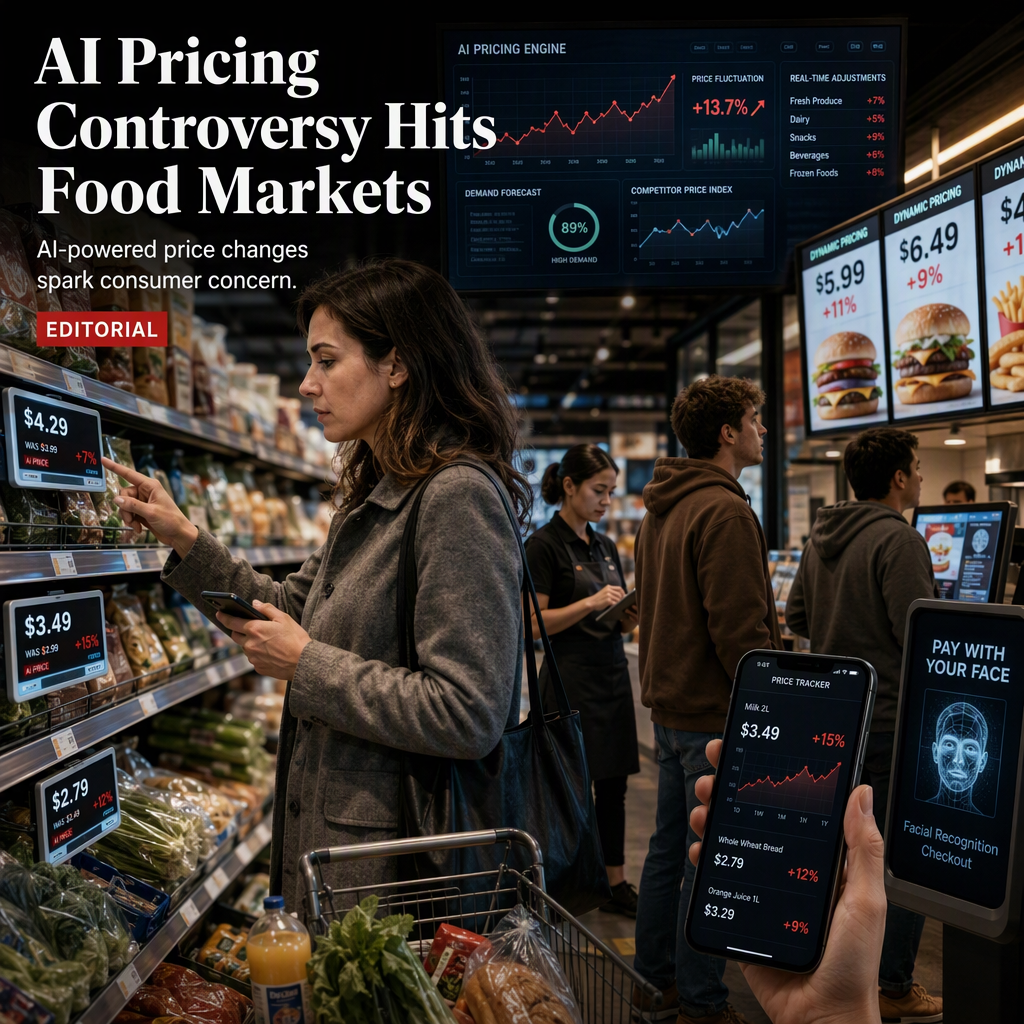
Supermarkets and fast food giants are increasingly adopting artificial intelligence (AI) to digitize their operations, with experts warning that AI-powered dynamic pricing could result in higher costs for shoppers purchasing groceries and fast food items [1]. This week, a federal antitrust lawsuit was filed against McDonald's, alleging that the company uses an AI-powered 'pricing engine' to set menu prices across U.S. locations and overcharge customers for items such as Big Macs and fries. McDonald's has denied using AI to determine what individual customers are willing to pay, stating that it only provides franchisees with 'tools, resources, research and recommendations to help them make informed decisions' [1].
The trend toward AI integration is not limited to fast food. American grocery chain Kroger has implemented an AI platform called FlashFood to mark down perishables nearing the end of their shelf life and market them to shoppers via an app [1]. Electronic shelf labels (ESLs), which display prices on digital screens, are also becoming more common at supermarkets like Kroger, Walmart, and Amazon Fresh. Whole Foods Market, however, stated that it 'does not use dynamic pricing,' emphasizing that digital shelf labels are intended to simplify price changes for employees and reduce paper waste [1].
In the U.K., supermarkets such as Tesco, Morrisons, and Asda are also adopting ESLs. The British Retail Consortium's director of food & sustainability, Andrew Opie, asserted that supermarkets have 'no intention to use dynamic or surge pricing in their stores,' describing digital pricing as a tool for quick price updates and checks rather than for dynamic pricing [1].
Additionally, global financial platform Revolut has trialed facial recognition checkout in select coffee shops, allowing customers to pay using a selfie ID. Revolut clarified that no additional information is collected beyond the standard security checks [1].
Experts caution that as AI becomes more normalized among retailers, the risk of dynamic pricing—frequent, real-time price changes—could increase, potentially impacting shoppers' experiences and costs [1].
CONCLUSION
The growing adoption of AI in retail and fast food is raising concerns about the potential for dynamic pricing to increase costs for consumers. While some companies deny using AI for individualized or surge pricing, experts warn that the normalization of these technologies could make such practices more widespread. Market participants should monitor regulatory and consumer responses as AI-driven pricing tools continue to expand.