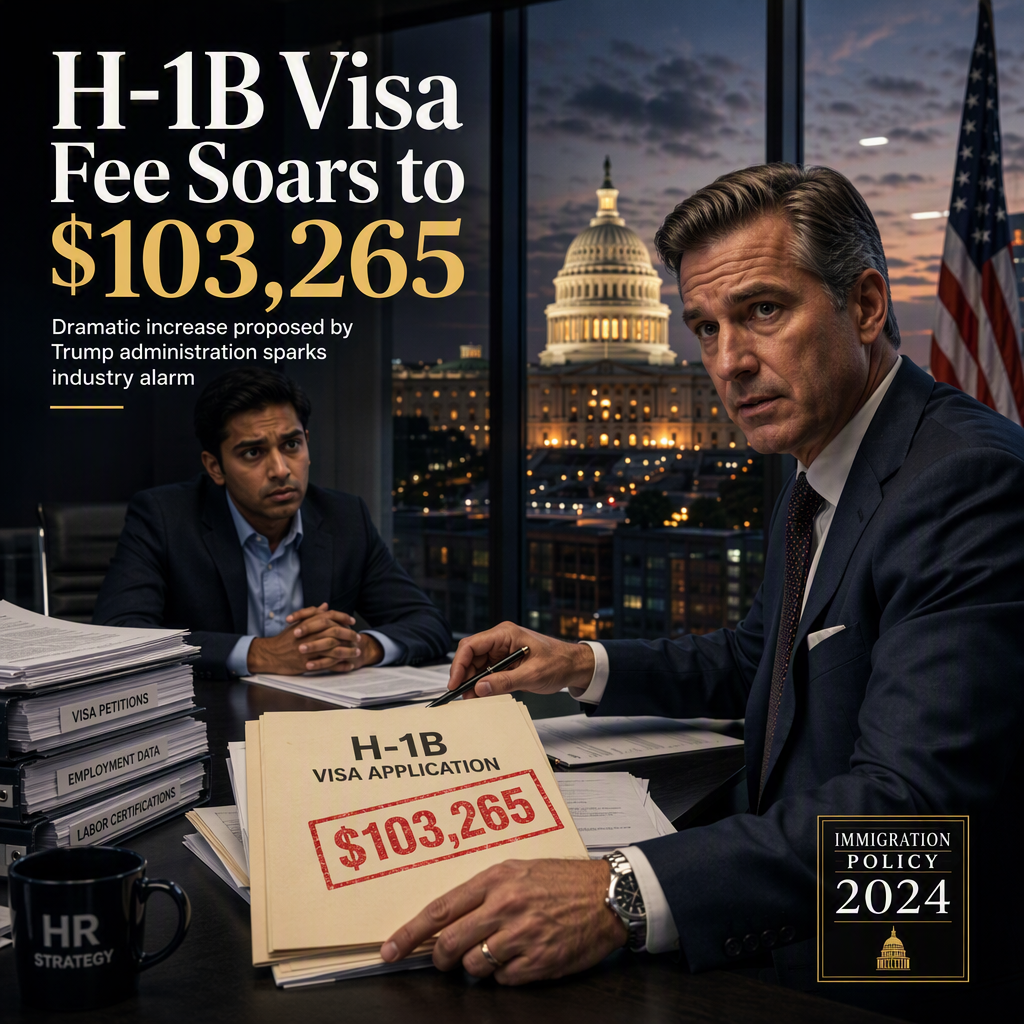
The Trump administration has introduced a proposal to establish a permanent fee of $103,265 for each new cap-subject H-1B visa petition, a significant increase from the previous fee range of $2,000 to $5,000 before the temporary order issued last year [1]. The Department of Homeland Security (DHS) posted the proposed rule for public inspection on Monday, with plans to publish it in the Federal Register on Tuesday. This fee would apply to all cap-subject H-1B petitions, including those eligible for the advanced-degree exemption, but would not affect cap-exempt petitions or routine extensions for current H-1B holders [1].
The H-1B program, which allows U.S. employers to hire foreign workers in specialty occupations, is particularly important to the tech, education, and research industries. Annually, 65,000 visas are offered under the regular cap, with an additional 20,000 available for workers holding a U.S. master's degree or higher [1]. The proposed fee aims to cover the federal government's costs of administering the legal immigration system, including activities by DHS, the Department of Justice, Department of State, and Department of Labor. According to U.S. Citizenship and Immigration Services spokesperson Zach Kahler, the fee is intended to recover costs that would otherwise be funded by taxpayers [1].
The fee was first imposed temporarily by presidential proclamation last year but was blocked by a federal judge in June, preventing the government from collecting the money. The temporary fee increase is set to expire next month, and the proposed rule seeks to make the $103,265 charge permanent, potentially finalizing it by the end of the year. Legal challenges are ongoing, with an appeals court reviewing the judge's decision and another court considering a business group's challenge to the fee [1].
The Trump administration has argued that the H-1B program is often abused by companies seeking to replace American workers with cheaper foreign labor. In contrast, business groups and many U.S. companies maintain that the program is essential for addressing shortages of qualified American workers and enabling firms to bring in necessary talent [1].
CONCLUSION
The proposed $103,265 fee for new H-1B visa petitions marks a dramatic increase in costs for U.S. employers seeking to hire highly skilled foreign workers. If implemented, the rule could significantly impact the tech, education, and research sectors, while ongoing legal challenges and public feedback may influence the final outcome.