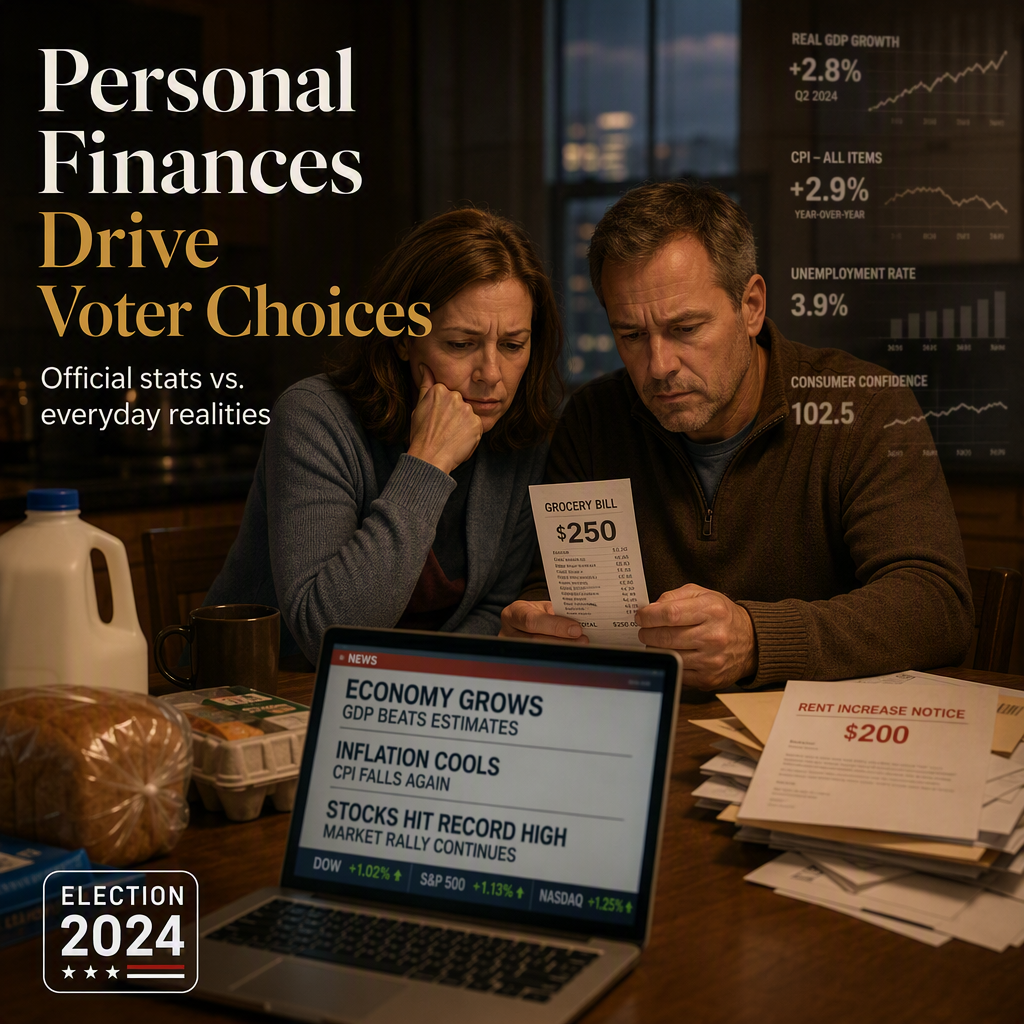
The core event discussed in the article is the disconnect between official economic data and the financial realities experienced by American voters, particularly as elections approach. The article argues that while politicians often focus on macroeconomic indicators such as GDP, inflation rates, job creation, and the CPI Index, these statistics do not necessarily reflect the day-to-day financial pressures faced by individuals and families [1].
Key data points highlighted include the rising cost of groceries, increased rent (with a specific example of a $200 monthly rent hike), and high grocery bills (notably a $250 grocery bill). The article also notes that while inflation may be 'cooling,' this only means prices are rising more slowly, not that they are decreasing, which is a distinction that may not resonate with voters who are still paying higher prices [1].
The article emphasizes that Americans are more concerned with their ability to afford essentials such as groceries, housing, and health insurance, and whether their paychecks are keeping up with their bills. It points out that even if the stock market is performing well or unemployment is low, these factors do not necessarily alleviate personal financial stress if, for example, a family has $200 less left over each month or a first-time homebuyer cannot afford a starter home [1].
No specific market reactions, analyst opinions, or forward-looking statements are provided in the article. The focus remains on the political implications of the gap between economic data and personal financial experience, suggesting that this disconnect could be a decisive factor in upcoming elections [1].
CONCLUSION
The article underscores that Americans base their voting decisions on personal financial experiences rather than official economic statistics. This disconnect between macroeconomic data and individual realities may significantly influence political outcomes, regardless of positive economic headlines.