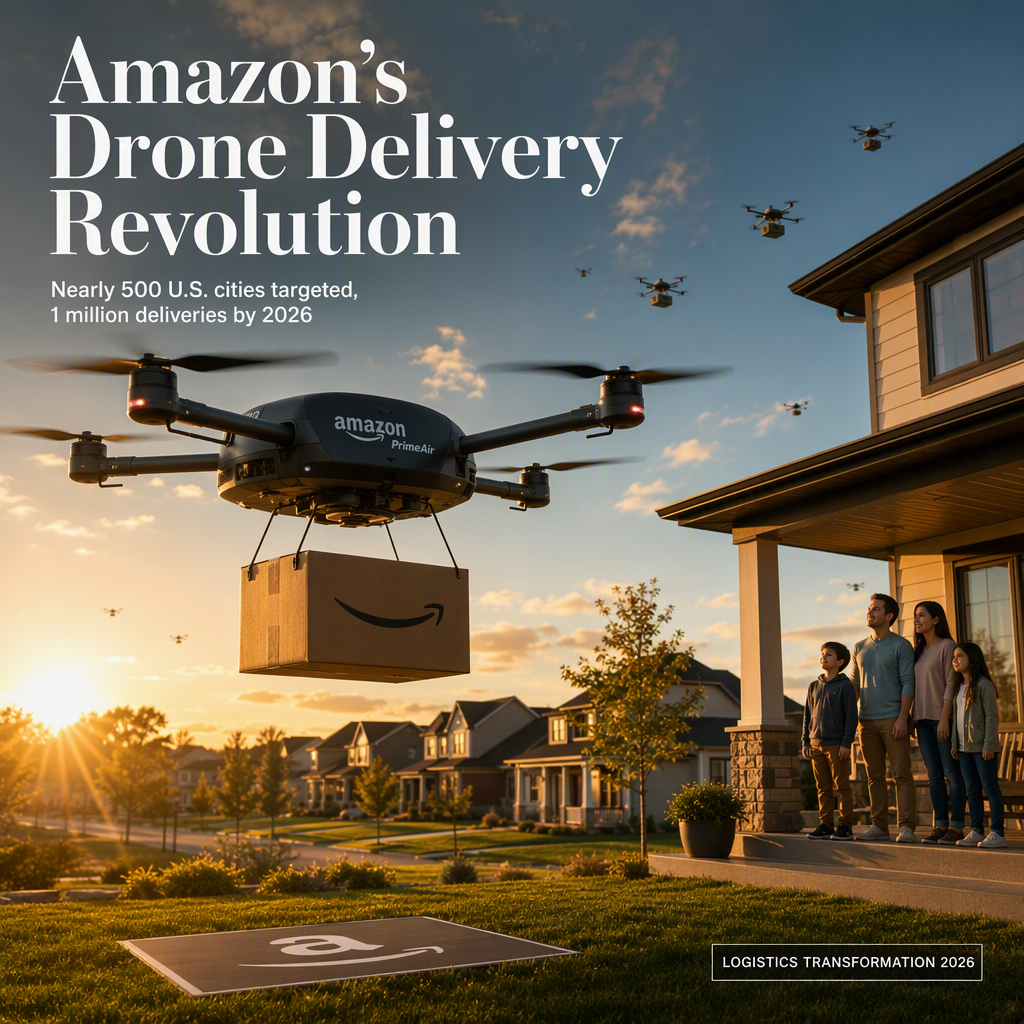
Amazon revealed plans to expand its Prime Air drone delivery service to nearly 500 U.S. cities and towns by the end of 2026, marking a sixfold increase from its current operational footprint. This announcement signals significant momentum for the drone project, which has faced regulatory and technical hurdles since Jeff Bezos first introduced the concept in 2013 [1]. According to David Carbon, vice president of Prime Air, the company aims to complete 1 million drone deliveries this year. Amazon reported that it has already made hundreds of thousands of deliveries in 2026, with thousands occurring daily [1].
The expansion follows a critical regulatory approval in 2024 that allowed Amazon to conduct long-range drone deliveries. Over the past year, the company has grown its service from initial markets near Dallas and Phoenix to 11 metropolitan areas, with six additional locations expected to launch soon. Despite this progress, some residents in new markets have expressed concerns about drone noise, privacy, and potential impacts on property values [1].
Amazon's drone delivery service is designed to deliver packages up to 5 pounds within a 7.5-mile radius of its facilities. The company has also increased the number of items eligible for drone delivery by integrating drone operations with some of its robotic sort centers. Most Prime Air packages arrive in about 60 minutes, with some deliveries completed just minutes after checkout. David Carbon emphasized the ongoing demand for faster delivery times, stating, "Bottom line is we have yet to reach diminishing returns when it comes to how fast we deliver to our customers" [1].
The drone delivery market remains competitive. Alphabet's Wing surpassed 1 million commercial drone deliveries earlier in 2026 and operates in 20 U.S. markets through partnerships with Walmart and DoorDash. Zipline, another competitor, has completed 2 million deliveries across four continents [1].
CONCLUSION
Amazon's aggressive expansion of its Prime Air drone delivery service underscores its commitment to faster, more efficient logistics. With regulatory barriers easing and competition intensifying, the company's goal of 1 million deliveries in 2026 could reshape consumer expectations for ultrafast shipping. Market impact is expected to be high as Amazon scales this innovative service.