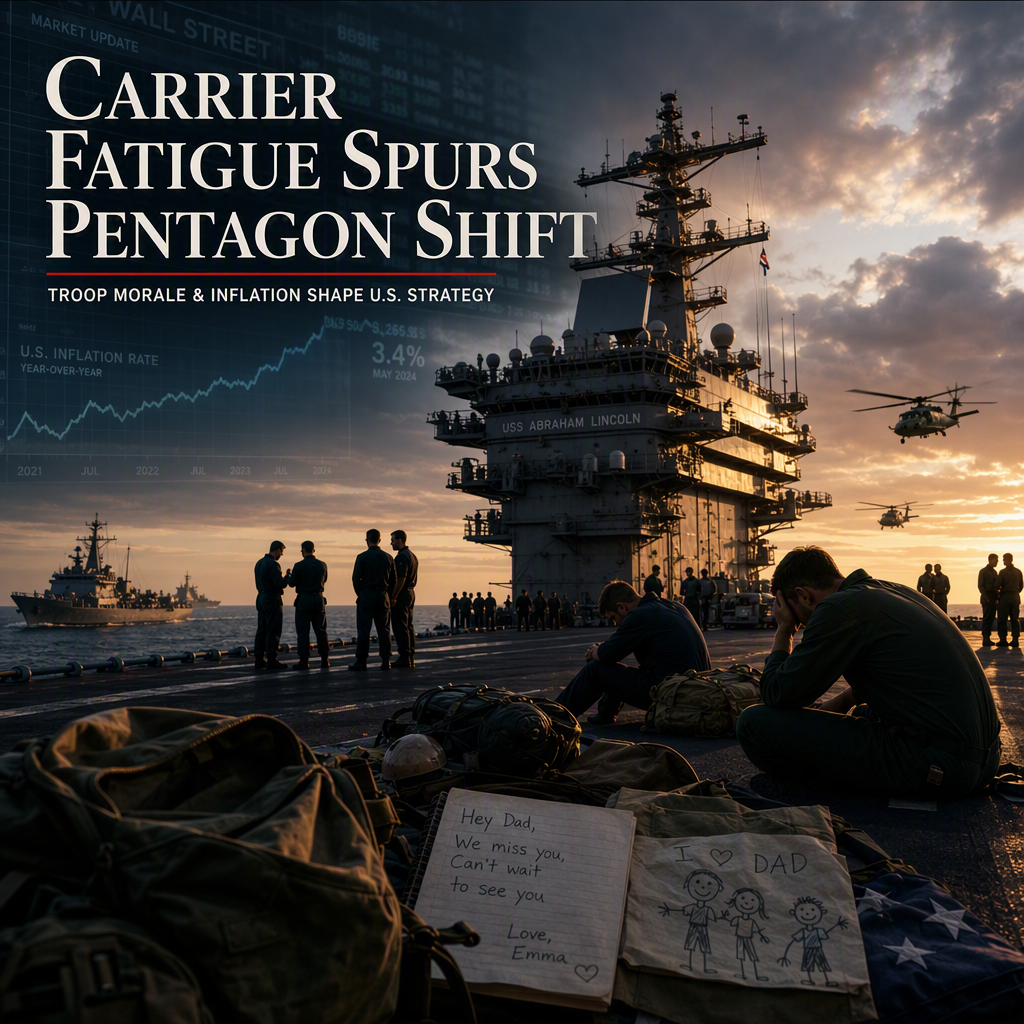
The Pentagon is preparing to replace the USS Abraham Lincoln, one of two aircraft carriers currently deployed in the Middle East, due to deteriorating conditions and low morale among U.S. service members supporting the ongoing war with Iran. According to three U.S. officials, complaints have been mounting from troops and their families regarding the extended deployments and worsening living conditions, particularly for the 5,000 sailors and Marines aboard the Lincoln, who have been at sea for more than nine months—far exceeding the typical six to seven month deployment period with regular port stops for replenishment [1].
On the domestic front, inflation continues to erode U.S. workers' purchasing power. The latest consumer price index report revealed that inflation-adjusted average hourly earnings declined in July by 0.1% month-over-month and 0.2% year-over-year [1]. Despite persistent inflation, Wall Street responded positively to a new business inflation report showing broadly flat prices in July. This fueled optimism that the Federal Reserve may refrain from raising interest rates this year, as evidenced by rising stocks and sharply falling bond yields on Thursday [1].
The article also notes the political gridlock in Congress, referencing the failed attempt to repeal the 16th Amendment. Rep. Warren Davidson's proposal received a majority vote in the House (211-207) but fell short of the two-thirds threshold required for constitutional amendments. This highlights the broader legislative stagnation, with no amendments likely to pass given the current political climate [1].
CONCLUSION
The Pentagon's decision to replace the USS Abraham Lincoln underscores the strain on U.S. forces amid prolonged deployments in the Middle East. Meanwhile, persistent inflation is impacting American workers, though recent business inflation data has boosted market optimism about the Federal Reserve's rate policy. Political gridlock remains, with little chance of constitutional amendments advancing in Congress.