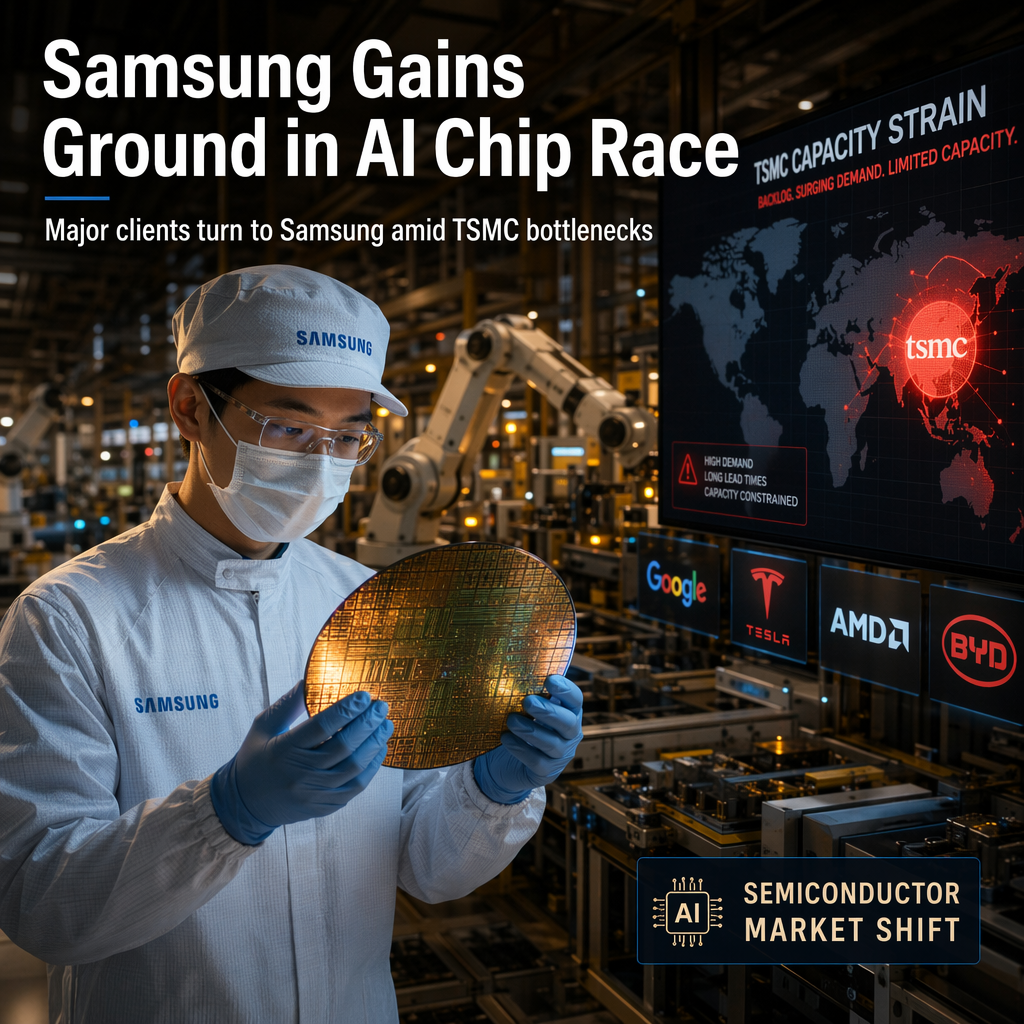
A surge in demand for AI chips is prompting leading technology and automotive companies such as Google, Tesla, AMD, and BYD to increase their chip production requests with Samsung, according to sources cited in the report [1]. This shift comes as TSMC, a dominant player in semiconductor fabrication, faces increasing strain on its manufacturing capacity due to a flood of orders from major industry players [1]. As a result, companies are seeking alternative suppliers to ensure a steady and timely supply of advanced chips necessary for AI-driven products and autonomous vehicle technologies [1].
Market analysts interviewed in the episode highlight that Samsung's advanced manufacturing processes and investments in next-generation semiconductor nodes have positioned the company as an attractive alternative for firms encountering bottlenecks with TSMC [1]. The intensifying competition among chipmakers is a direct response to the rapid expansion of the global AI market, with reliable access to high-performance chips becoming a critical factor for success [1].
The report further notes that Samsung is leveraging its technological strengths to capture a larger share of the semiconductor market, particularly as demand for AI chips continues to accelerate [1]. This trend is expected to influence chip pricing, supply chain dynamics, and future innovations within the AI sector [1].
No specific financial figures, contract values, or percentage shifts in market share are provided in the article. However, the strategic moves by these major companies underscore the high stakes and evolving landscape of the semiconductor industry amid the AI boom [1].
CONCLUSION
The growing demand for AI chips is reshaping the semiconductor supply chain, with Samsung emerging as a key beneficiary as companies seek alternatives to TSMC's strained capacity. This development signals heightened competition and potential shifts in market dynamics, pricing, and innovation within the AI and semiconductor sectors.