
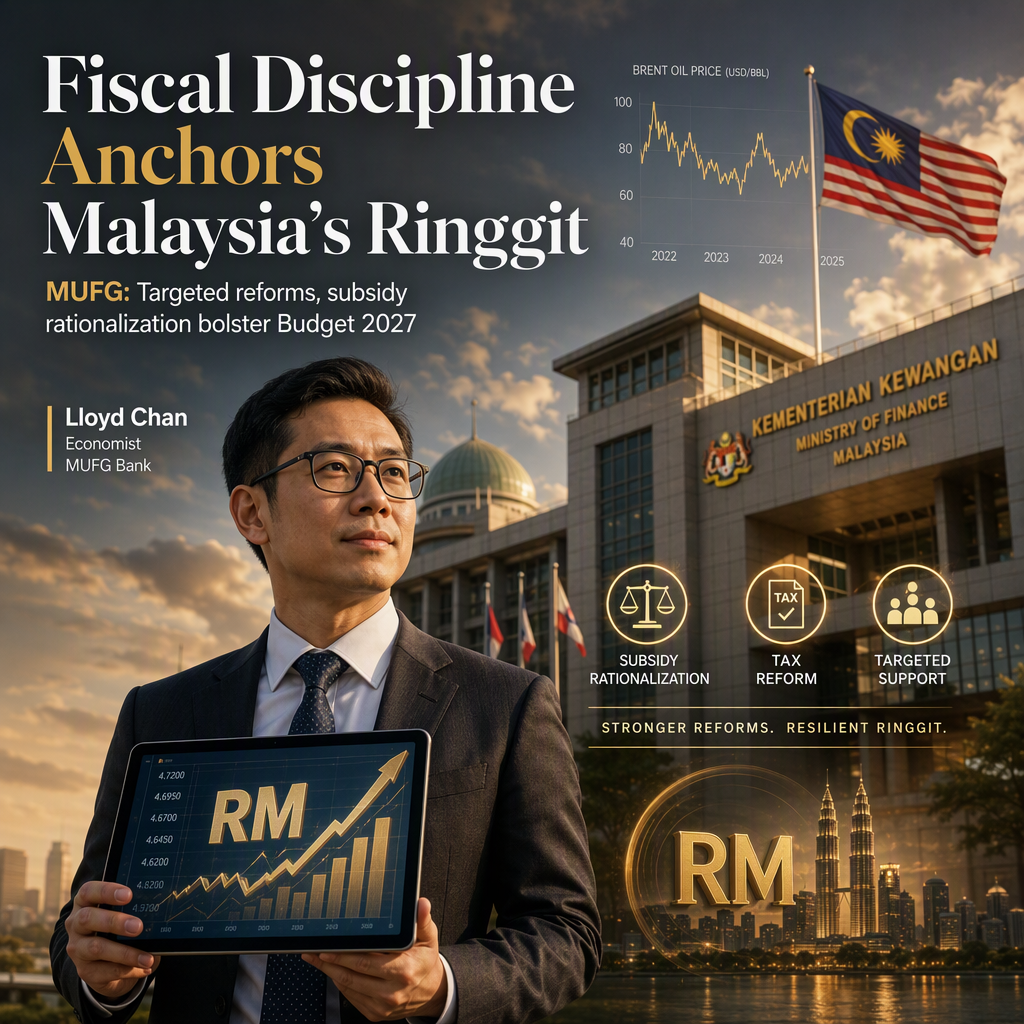
MUFG’s Lloyd Chan has previewed Malaysia’s upcoming Budget 2027, emphasizing that previous fiscal reforms and ongoing subsidy rationalization provide a buffer against higher oil prices, which could otherwise pressure the country’s finances. The report notes that stronger revenues and RM15.5 billion in annual subsidy savings are expected to cushion the impact of increased energy costs, allowing fiscal consolidation to slow rather than reverse [1].
The analysis suggests that Budget 2027 will maintain fiscal discipline, shifting focus from introducing new reforms to executing existing measures. On the revenue side, improved tax collection and the broadening of the Sales and Service Tax (SST) reduce the need for another major tax overhaul, with greater emphasis placed on compliance and collection efficiency. In terms of expenditure, consolidation is expected to rely more on better targeting and efficiency rather than broad austerity measures [1].
Household relief is anticipated to continue, but a return to blanket subsidies is considered unlikely. Instead, support is expected to remain targeted through programs such as BUDI MADANI, STR/SARA, and other measures, which aim to cushion the cost-of-living shock without structurally increasing government expenditure. Protecting development spending is highlighted as crucial for turning the current investment boom into a productivity upcycle, with priorities set around human capital, connectivity, digital and industrial infrastructure, and energy capacity [1].
MUFG argues that fiscal credibility should provide an anchor for Malaysian Government Securities (MGS) and the ringgit (MYR) amid global volatility. The report concludes that if higher subsidies remain a temporary response to the oil shock while fiscal reform and productive investment stay on track, Budget 2027 should reinforce the structural case for Malaysian bonds and the ringgit [1].
CONCLUSION
MUFG’s analysis underscores that Malaysia’s ongoing fiscal discipline and targeted support measures are expected to sustain confidence in the ringgit and government securities, even in the face of global volatility. The structural case for Malaysian assets remains intact, provided fiscal reforms and investment priorities continue as planned.