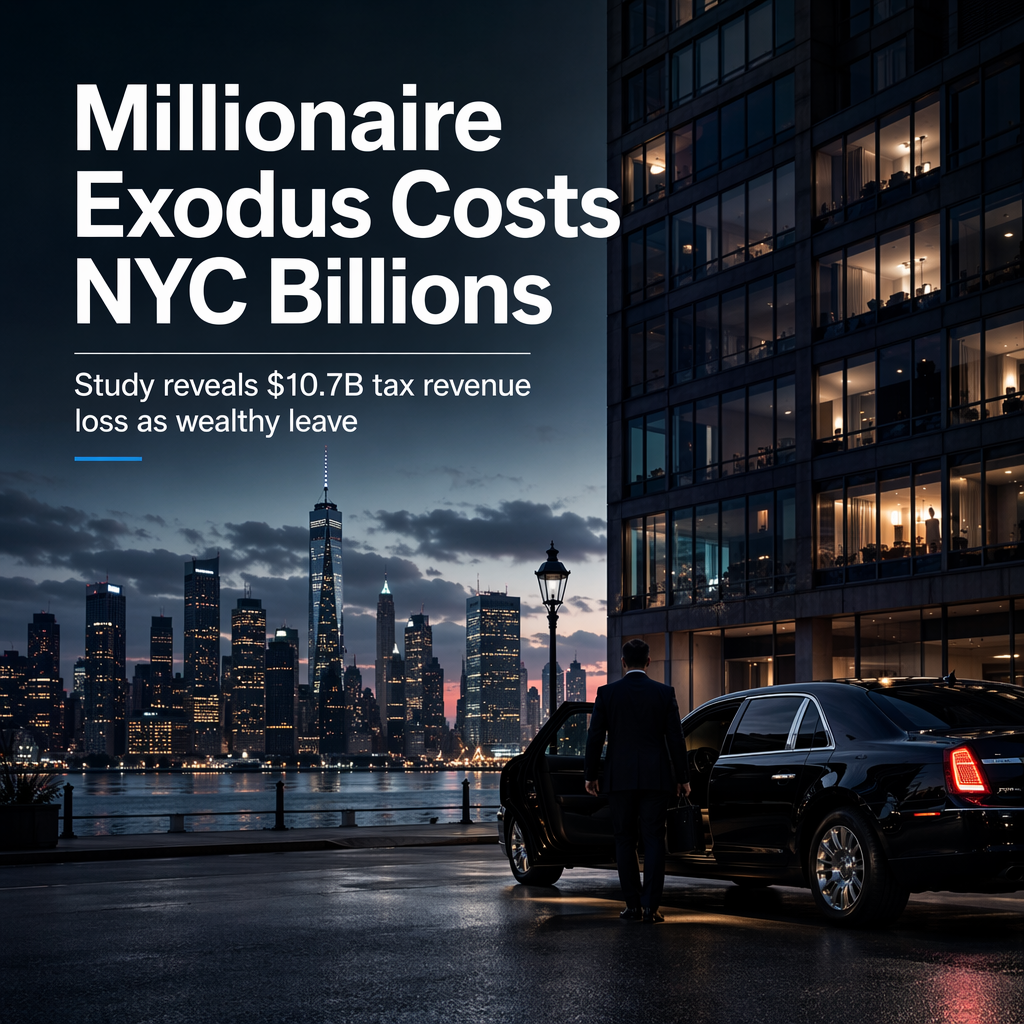
A recent Citizens Budget Commission (CBC) study has highlighted a significant exodus of high-income earners from New York City, resulting in a $10.7 billion loss in tax revenue for the city in 2022 alone [1]. The study found that New York's share of U.S. millionaires declined from 12.7% in 2010 to 8.7% in 2022, with a particularly sharp drop from 12.7% to 8.7% between 2019 and 2022 [1]. This trend has raised concerns about the city's financial stability and its ability to maintain public services [1].
During an interview, New York Governor Kathy Hochul was confronted with these findings and questioned about the city's future fiscal health. She acknowledged that the data reflected the situation as of 2022 and attributed part of the millionaire flight to the COVID-19 pandemic, noting that many wealthy individuals relocated to places like Palm Beach during the crisis [1]. Hochul emphasized her opposition to raising taxes on high-net-worth individuals and businesses, stating, "We should not be raising taxes on the companies that are creating the jobs and generating the revenue that helps us pay for the services that people in New York City come to rely on. So I've taken a different approach. I want to expand the pie" [1].
The CBC report also indicated that while wealthy individuals and families are leaving, single filers—who may be less able to afford the city's high cost of living—are moving in [1]. This demographic shift has contributed to a projected $10 billion budget deficit, with the state having already provided an $8 billion bailout to New York City in the current budget cycle [1].
Concerns were also raised about the luxury housing market, with reports that apartments valued over $10 million are not selling, and worries about the potential impact of a pied-à-terre tax on high-value properties [1]. Hochul responded that such a tax would primarily affect foreign buyers of second homes, such as Russian oligarchs and Saudi princes, and did not indicate immediate plans to implement it [1].
CONCLUSION
The CBC study underscores a substantial loss of high-income residents and tax revenue in New York City, intensifying concerns about the city's fiscal outlook. Governor Hochul has signaled a preference for policies aimed at retaining wealthy individuals and businesses rather than increasing taxes. The ongoing demographic and market shifts present significant challenges for the city's financial stability.