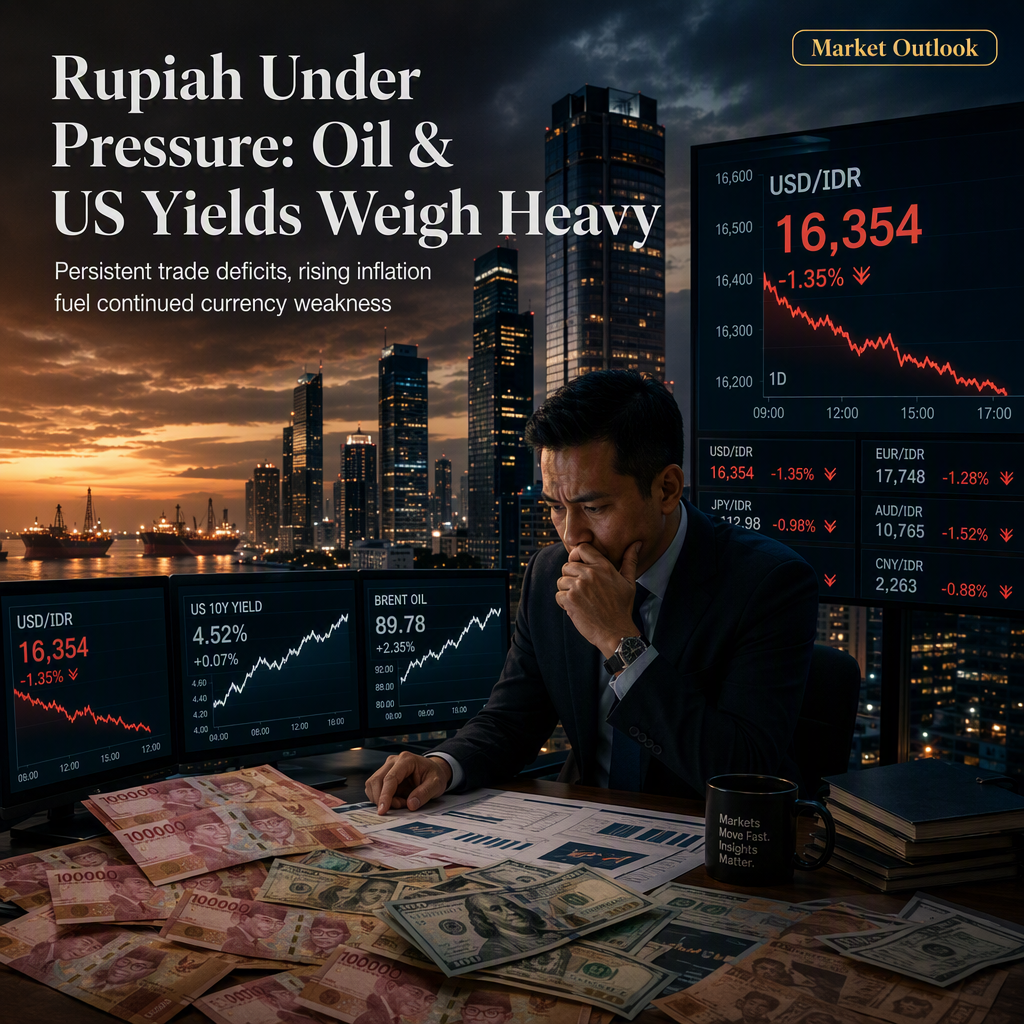
The Indonesian Rupiah (IDR) continues to face depreciation pressures, primarily due to elevated US yields and high oil prices, according to MUFG's Lloyd Chan [1]. While the pace of depreciation may slow, the broader weakening trend is expected to persist. The USD/IDR exchange rate has retraced nearly 500 points from its peak as crowded long positions unwind and some foreign inflows return, but these positive factors are being outweighed by ongoing headwinds [1]. MUFG maintains its forecast for USD/IDR at 18,350 by the end of 2026 [1].
Indonesia's trade balance remains under pressure, with the goods trade balance returning to a modest surplus in July after deficits in the previous two months. However, this surplus is still well below the monthly average recorded in 2025. Surpluses in coal, palm oil, and base metals are only partially offsetting the negative impact of higher oil prices. MUFG estimates that Indonesia's commodity trade balance is adversely affected when Brent crude rises above US$82 per barrel, and with Brent currently above US$90 per barrel, trade-balance pressures are likely to persist, limiting the scope for sustained rupiah appreciation [1].
Portfolio inflows have provided some near-term support for the IDR, with foreign ownership of SRBI rising back to around 27%, close to late-2024 highs. SRBI yields have started to moderate from their June peak, and Bank Indonesia's strategy of raising returns on portfolio capital has helped stabilize USD/IDR. However, the effectiveness of this strategy may be diminishing as US yields and oil prices continue to rise [1].
Additional macro and market risks include MSCI's removal of GoTo from the Indonesia index, which highlights concerns about market accessibility and liquidity. There is also uncertainty regarding the future direction of state-led commodity export reforms under Danantara Sumber Daya Indonesia (DSI). Furthermore, headline inflation has accelerated to 3.19% year-on-year, with core inflation trending higher, raising the possibility of further Bank Indonesia rate hikes if energy and food price pressures persist [1].
CONCLUSION
The Indonesian Rupiah remains under pressure from high oil prices and elevated US yields, with only limited support from portfolio inflows. Persistent trade-balance challenges and rising inflation suggest that the depreciation trend is likely to continue, and further policy tightening by Bank Indonesia may be necessary if inflationary pressures persist.