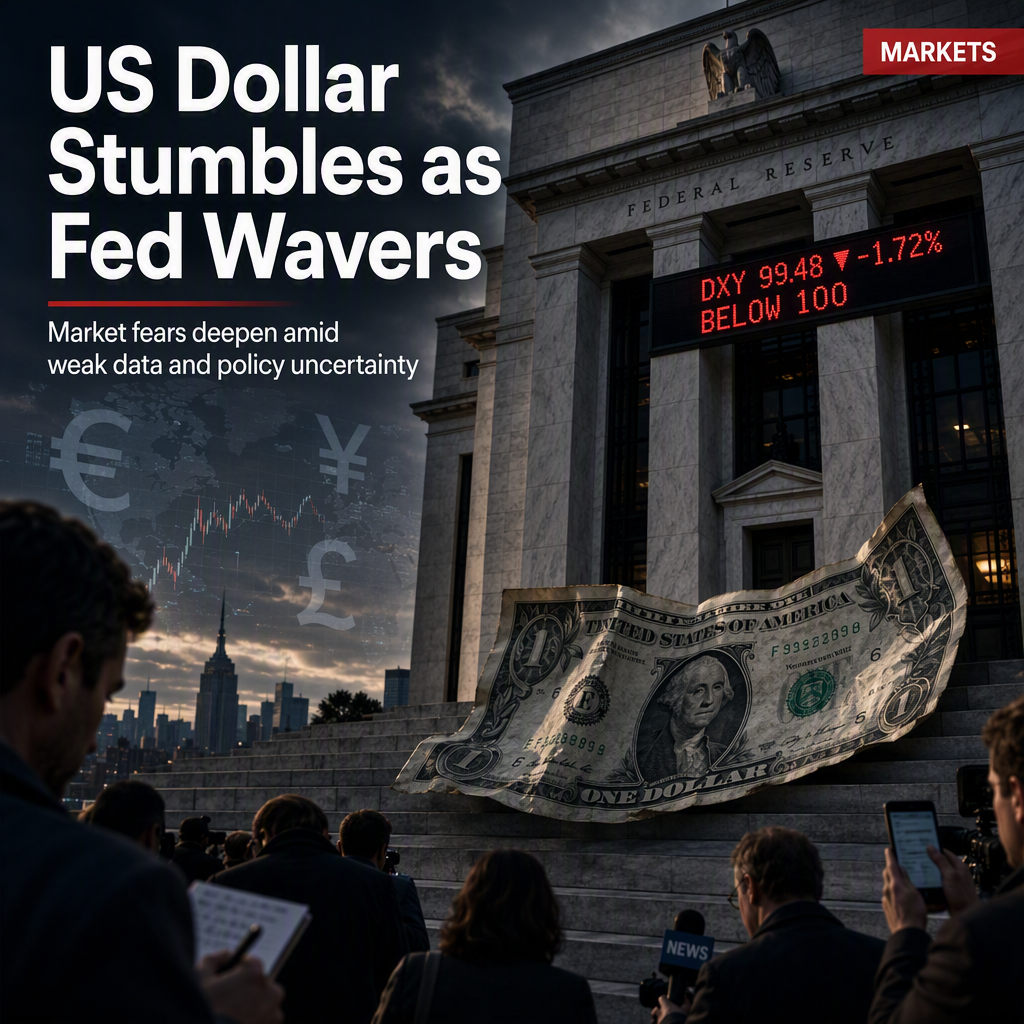
The US Dollar Index (DXY) has experienced a sharp decline, attempting to stay above the 100.00 psychological level after a nearly 1.5% selloff over the past three days. This downturn follows the Federal Reserve's lack of forward guidance at its recent monetary policy meeting, which has raised concerns about the Fed's commitment to fighting inflation. Analysts from ING highlight that the post-FOMC Dollar selloff accelerated due to market worries that the Fed may be reluctant to translate its price stability rhetoric into effective policy tightening, with Fed Chair Kevin Warsh's ambiguity weighing heavily on the USD. The Dollar's summer strength had been largely driven by expectations of Fed rate hikes, but these expectations have now faded [1][2].
ING’s Francesco Pesole notes that the DXY briefly dipped below 100.0, returning to levels last seen after Warsh’s June press conference. Pesole points out that net-long USD positioning versus G9 currencies and large EUR/USD shorts have become stretched, suggesting further USD long-squeezing is possible. He remains reluctant to call a bottom in the Dollar selloff, warning that any disappointment in US economic data could lead to a larger dovish repricing, especially if oil prices come under renewed pressure. The DXY index, where the yen carries a 13.6% weight, was further pressured by JPY intervention, which triggered a more than 3% decline in USD/JPY and spilled over into broader USD sentiment. Position-squaring likely amplified the move, with CFTC data showing the most stretched net-long USD positioning since January 2025 as of 21 July [2].
Commerzbank analysts warn that US Dollar strength is unlikely to prove durable, expecting a decisive policy pivot and pronounced interest rate cuts in 2027 due to political pressure. They argue that the Dollar is vulnerable because it is significantly overvalued based on purchasing power parity. DBS Bank strategists add that the Fed’s softer tone and lack of hawkish signals threaten to keep the greenback under sustained downward pressure, contrasting the Fed’s approach with the European Central Bank, which has been more unified in flagging a September rate hike, giving the EUR a comparative advantage [1].
Looking ahead, ING analysts emphasize that upcoming Fedspeak will be crucial in shaping the next leg for the Dollar. If dissenting votes become more common, off-meeting remarks from individual FOMC members are likely to receive greater scrutiny as markets assess voting intentions ahead of the next meeting [2].
CONCLUSION
The US Dollar is facing significant headwinds due to Fed ambiguity, weak economic data, and stretched positioning, with analysts warning of further downside risk. Market participants are closely watching upcoming Fedspeak and US data releases for signs of a potential bottom or continued selloff. The overall sentiment remains negative, with high market impact expected as the Dollar's vulnerability persists.