
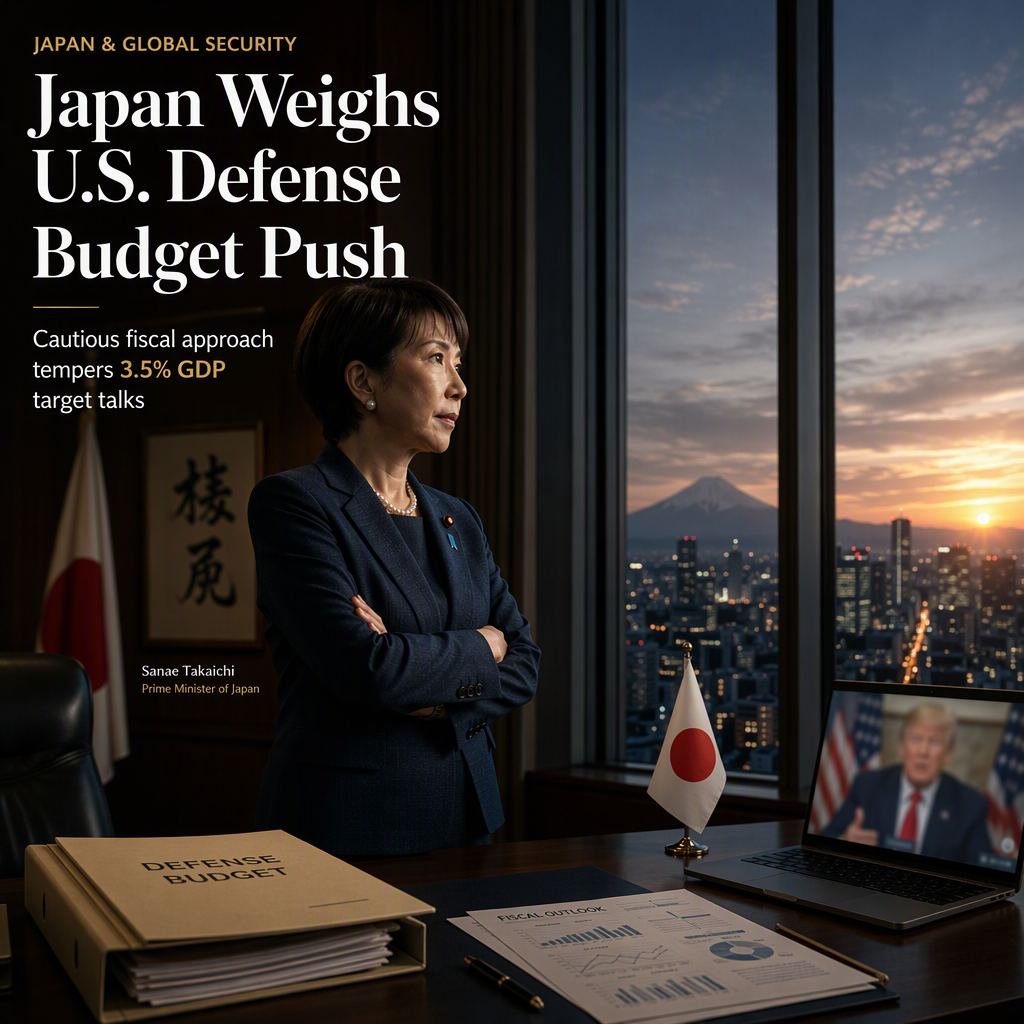
Japanese Prime Minister Sanae Takaichi is expressing caution about setting a defense spending target as a percentage of gross domestic product (GDP), specifically the 3.5% level requested by the U.S. government. This hesitation comes after a meeting in New York between Prime Minister Takaichi and U.S. President Donald Trump, where both leaders agreed to strengthen deterrence and response capabilities [1].
The Trump administration has advocated for Japan to increase its defense budget to 3.5% of GDP, but Japanese officials privately acknowledge that achieving this target within the next five years is unlikely due to substantial financial challenges [1]. Allocating 3.5% of GDP to defense would require a significant increase from current spending levels, raising concerns about the impact on other public expenditures and the country's fiscal health [1].
Policymakers are reportedly considering the risks of setting a fixed medium-term target, citing uncertainty around long-term economic growth and the potential strain on government finances. As a result, Japan is expected to pursue a more flexible approach to defense spending, rather than committing to a rigid GDP-based target [1].
Despite these fiscal concerns, the Japanese government remains committed to enhancing its deterrence and response capabilities, signaling ongoing cooperation with the U.S. on security matters, but without a firm commitment to the specific spending target requested by the Trump administration [1].
CONCLUSION
Japan's reluctance to commit to the U.S.-requested 3.5% GDP defense spending target highlights fiscal constraints and uncertainty about economic growth. While the government remains dedicated to strengthening its defense posture, it is likely to adopt a more flexible budgeting approach. This cautious stance may temper expectations for rapid increases in Japanese defense spending.