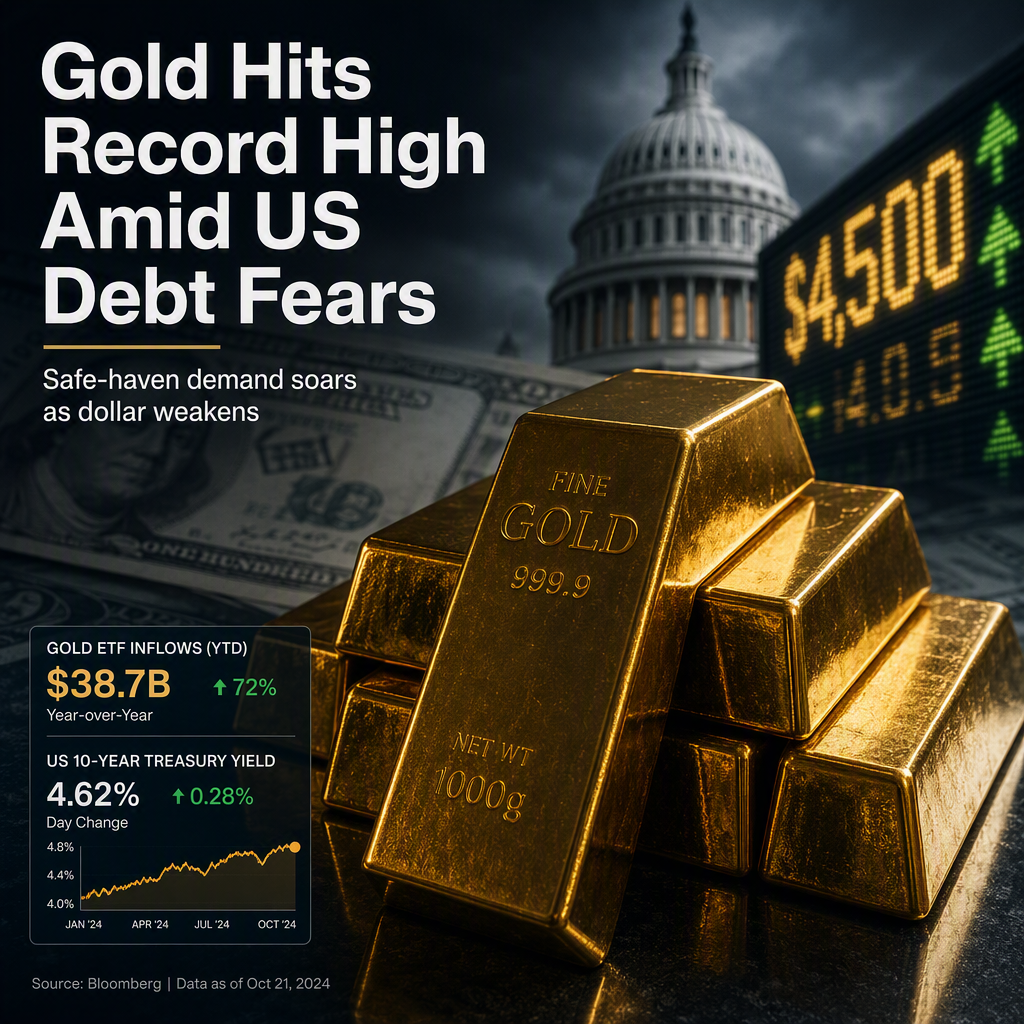
Gold prices experienced a significant rally, surging by more than 4% or approximately USD 180 on Wednesday, marking the sharpest daily increase in six and a half months and breaking above the USD 4,500 per troy ounce level for the first time since early June [1]. This sharp move was triggered by the US Treasury's announcement to more than double the volume of buybacks of long-term US government bonds with maturities of 10 to 30 years, a response to a recent sharp rise in bond yields [1].
The Treasury's intervention calmed the bond market, leading to a decline in yields and a significant depreciation of the US dollar. According to Commerzbank’s Carsten Fritsch, confidence in the US dollar as a safe haven appears to be eroding, as investors are demanding higher yields for US government bonds and the Treasury is compelled to act [1]. Gold emerged as the main beneficiary of these developments, evidenced by strong inflows into gold ETFs. Bloomberg-tracked gold ETFs recorded their strongest daily increase since September 2025, with holdings rising by 18 tons [1].
The surge in gold was interpreted as a sign of stress in the market, with the sharp rise in US bond yields attributed not to changes in Federal Reserve interest rate expectations, but to long-term inflation risks and growing concerns about US debt levels [1]. Notably, US public debt surpassed the USD 40 trillion mark for the first time this week, just four and a half years after exceeding USD 30 trillion. Interest payments on this debt are projected to reach USD 1.1 trillion for the current fiscal year, representing a threefold increase within five years [1].
Looking ahead, Commerzbank notes that while gold's upside momentum has been strong, it may slow if US inflation data remains elevated [1].
CONCLUSION
Gold's sharp rally above USD 4,500 reflects heightened investor anxiety over US debt sustainability and a weakening dollar, with strong ETF inflows underscoring its safe-haven appeal. The market response signals ongoing concerns about long-term inflation and fiscal risks, though future gold gains may depend on upcoming US inflation data.