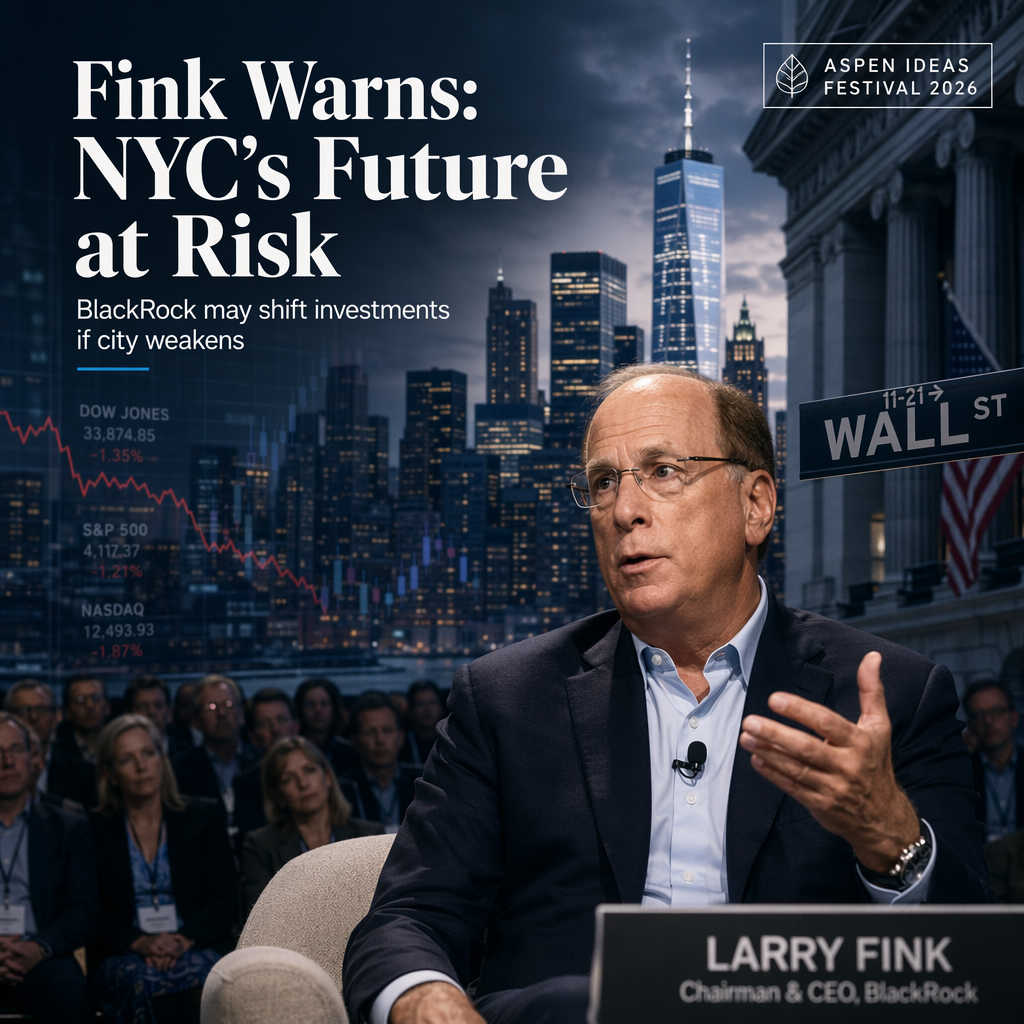
BlackRock CEO Larry Fink expressed significant concerns about the future business environment in New York City under its new Democratic Socialist Mayor, Zohran Mamdani, during remarks at the Aspen Institute's Ideas Festival on Tuesday, June 30, 2026 [1]. Fink stated, "I'm worried about New York," and suggested that BlackRock could consider investing elsewhere if conditions in the city weaken further [1].
Fink highlighted a key statistic, noting that 47% of New York City's tax revenue comes from the top 1% of earners. He warned that losing just 5,000 of these high-income individuals could offset the benefits of any new policies introduced by the current administration, adding, "the look of it, we're gonna lose the 5,000 or more" [1]. Fink criticized what he described as "13 years of weak administrations," naming Michael Bloomberg as "the last best mayor" and lamenting the decline in quality of life in the city [1].
Discussing the city's tax system, Fink compared it unfavorably to the Netherlands, where high earners pay 50% in taxes but receive free medical care and education. He argued that in New York, "mismanagement is the issue," and that the services provided do not match the tax burden [1]. Fink emphasized the need for economic growth over tax policy, warning that persistent deficits and a declining value proposition could lead to severe issues for the U.S. economy [1].
When asked if BlackRock was considering moving jobs out of New York, Fink clarified that while the company has about 8,000 employees in the city out of a global workforce of 25,000 to 26,000, they would consider deploying more U.S. resources to other locations if the environment in New York continues to deteriorate [1]. Mayor Mamdani's office did not respond to requests for comment [1].
CONCLUSION
Larry Fink's remarks signal growing unease among major financial firms regarding New York City's policy direction under Mayor Mamdani. While no immediate relocation is planned, BlackRock may shift future investments and job growth to other regions if conditions worsen, potentially impacting the city's financial sector stability.