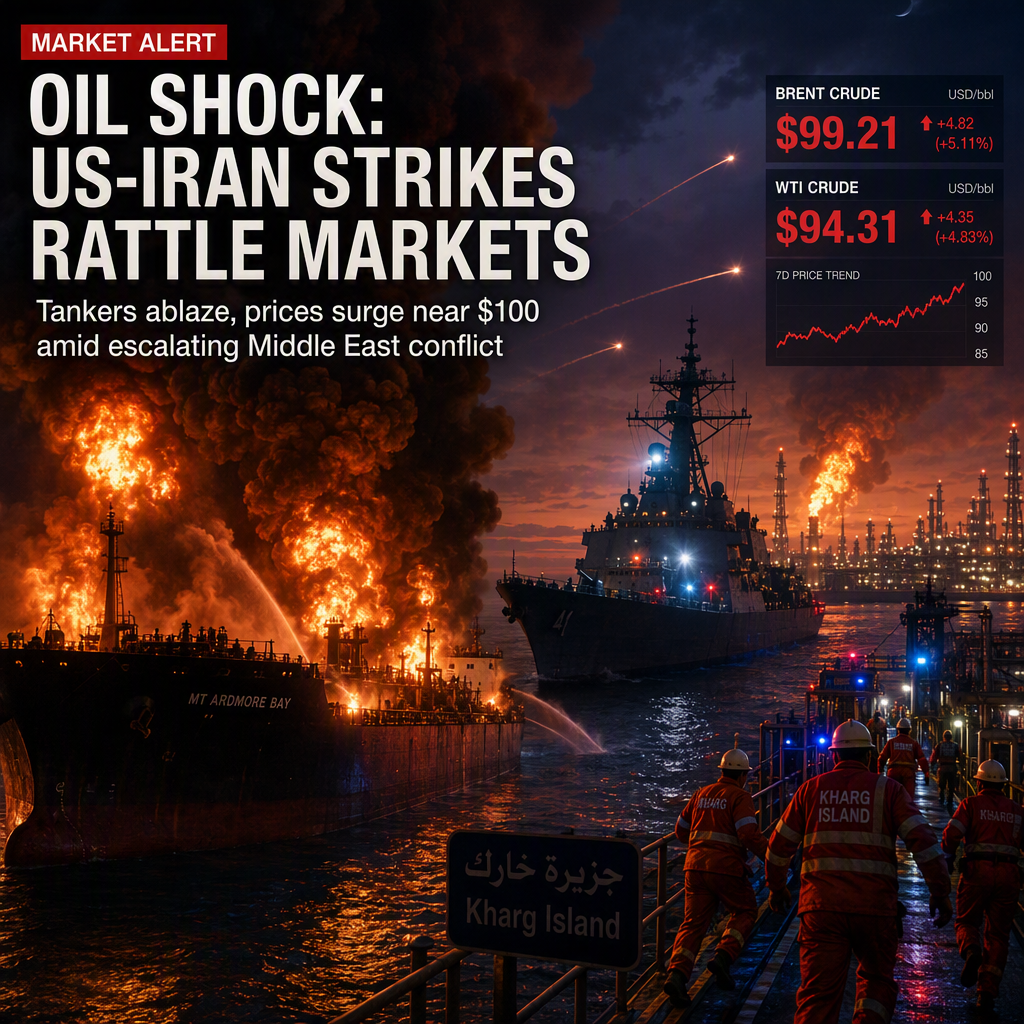
The ongoing conflict between the United States and Iran escalated sharply as U.S. Central Command destroyed five Iranian crude oil carriers in response to attempted Iranian missile attacks on a U.S. Navy warship over the previous two days [1][3]. The strikes occurred near Kharg Island, a major crude export hub, and were accompanied by heightened geopolitical tensions and concerns about further disruptions to global oil supplies [2]. Following the destruction of the tankers, Iran retaliated with a ballistic missile attack on a U.S. base near Al Azraq in Jordan, claiming heavy damage. However, Jordanian authorities reported that their air defenses intercepted 18 out of 20 Iranian missiles, with no casualties [1]. Iranian-backed Houthi militants also attacked four cities in southern Saudi Arabia, wounding 73 people and setting oil installations ablaze, including the 400,000-barrel-a-day Jazan refinery [1][2]. Iran further threatened to target oil tankers in Kuwaiti and Bahraini ports, urging crews to abandon their vessels [1][2]. A liquefied natural gas tanker was reported damaged in the Emirati port of Khor Fakkan, though responsibility remains unclear [1]. The U.S. Treasury Department imposed sanctions on 27 Iranian airlines and other entities to constrain Iran's economy, aiming to increase economic pressure alongside military actions [3]. Oil prices responded sharply to the developments. West Texas Intermediate (WTI) futures climbed to $94.31 in early Asia trade, marking the third consecutive day of gains and trading around $92.30 during Asian hours [2][3]. International benchmark Brent crude futures jumped another dollar per barrel after the Jordanian attack, reaching $99.21 and climbing as high as $99 in extended trading, though prices remained below $100 per barrel [1][3]. The disruptions in the Strait of Hormuz forced refiners to seek alternative supplies, with stronger Chinese oil demand pushing up prices for African, Canadian, and Latin American crude [2]. The conflict, now over six months old, has been characterized by cycles of pauses and flare-ups, with Iran still able to launch missile and drone strikes on its neighbors [1][3]. Washington maintains that economic pressure will help bring the war to an end, but military actions continue [3].
CONCLUSION
The destruction of Iranian oil tankers by the US and subsequent Iranian retaliation have significantly heightened geopolitical risks and driven oil prices closer to the $100 per barrel mark. Market participants are closely watching for further disruptions to global energy supplies, as both military and economic measures intensify. The situation remains volatile, with oil prices and regional stability at risk.