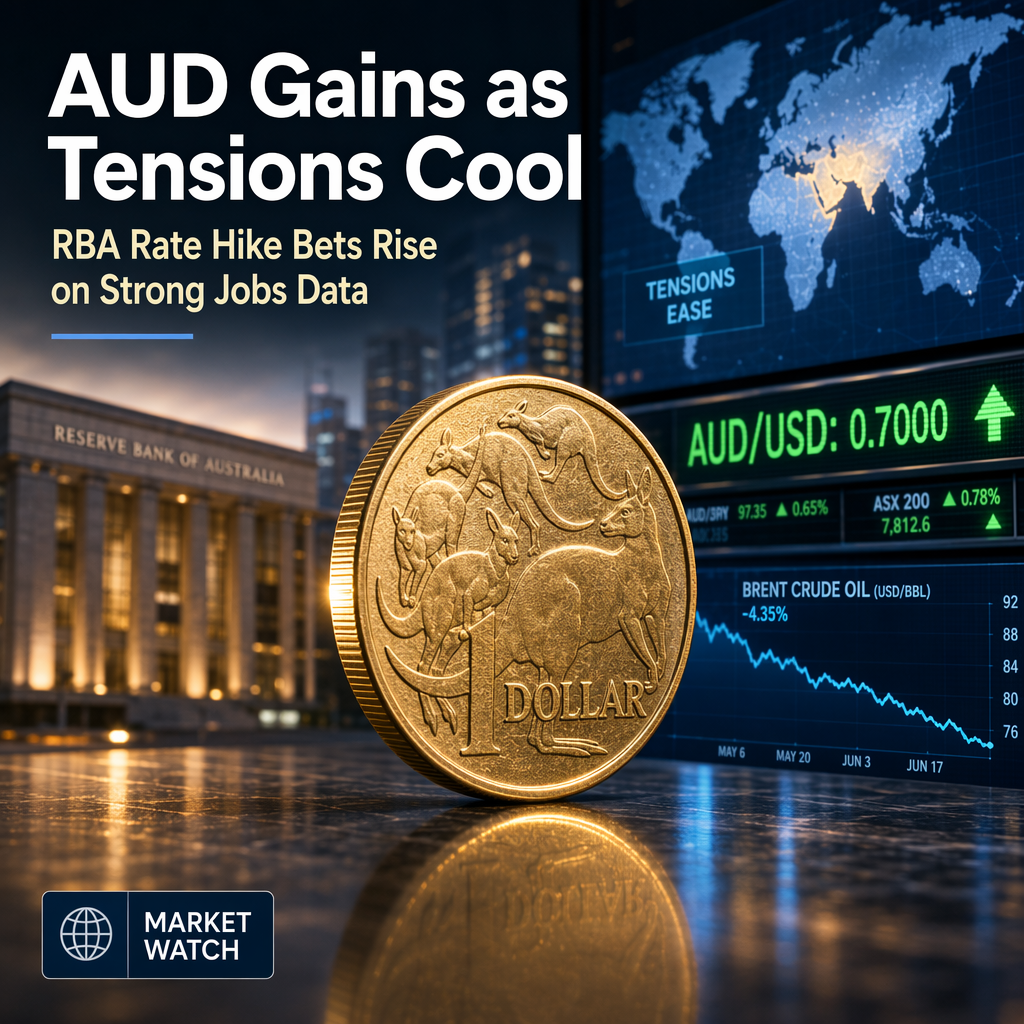
The Australian Dollar (AUD) extended its gains for the second consecutive trading day, with the AUD/USD pair hovering near 0.7000 during Asian hours on Monday. This appreciation was driven by a decline in the US Dollar (USD) and a sharp drop in oil prices, following the United States' decision to refrain from striking Iran over the weekend and Tehran's suspension of retaliatory strikes. This pause in US-Iran hostilities came after 13 days of escalating conflict, though market participants remain cautious due to ongoing risks, as Iran-backed Houthis in Yemen claimed responsibility for attacks on Saudi Arabian facilities along the Red Sea [1].
The US did not officially disclose its reasons for halting the strikes, but reports suggest concerns over depleting interceptor supplies and a shortage of viable targets within Iran. General Dan Caine, Chairman of the Joint Chiefs of Staff, reportedly warned President Trump that continuing the campaign could severely strain critical munitions reserves [1].
On the monetary policy front, investors are preparing for the upcoming Federal Reserve policy meeting, where the Fed is widely expected to keep interest rates unchanged on Wednesday. However, a minority of market participants anticipate a possible surprise move at this week's meeting, with expectations for rate hikes to resume in September [1].
In Australia, strong June employment data has reinforced expectations for further monetary tightening by the Reserve Bank of Australia (RBA), which has already raised rates three times this year. Investors are closely monitoring the upcoming June and Q2 inflation figures, as persistent price pressures continue to shape the local economic outlook [1].
CONCLUSION
The Australian Dollar's recent gains reflect easing geopolitical tensions and rising expectations for further RBA rate hikes, supported by robust employment data. While the Fed is expected to hold rates steady, upcoming inflation data in Australia will be crucial for the AUD's direction. Market sentiment remains cautious due to lingering risks in the Middle East.