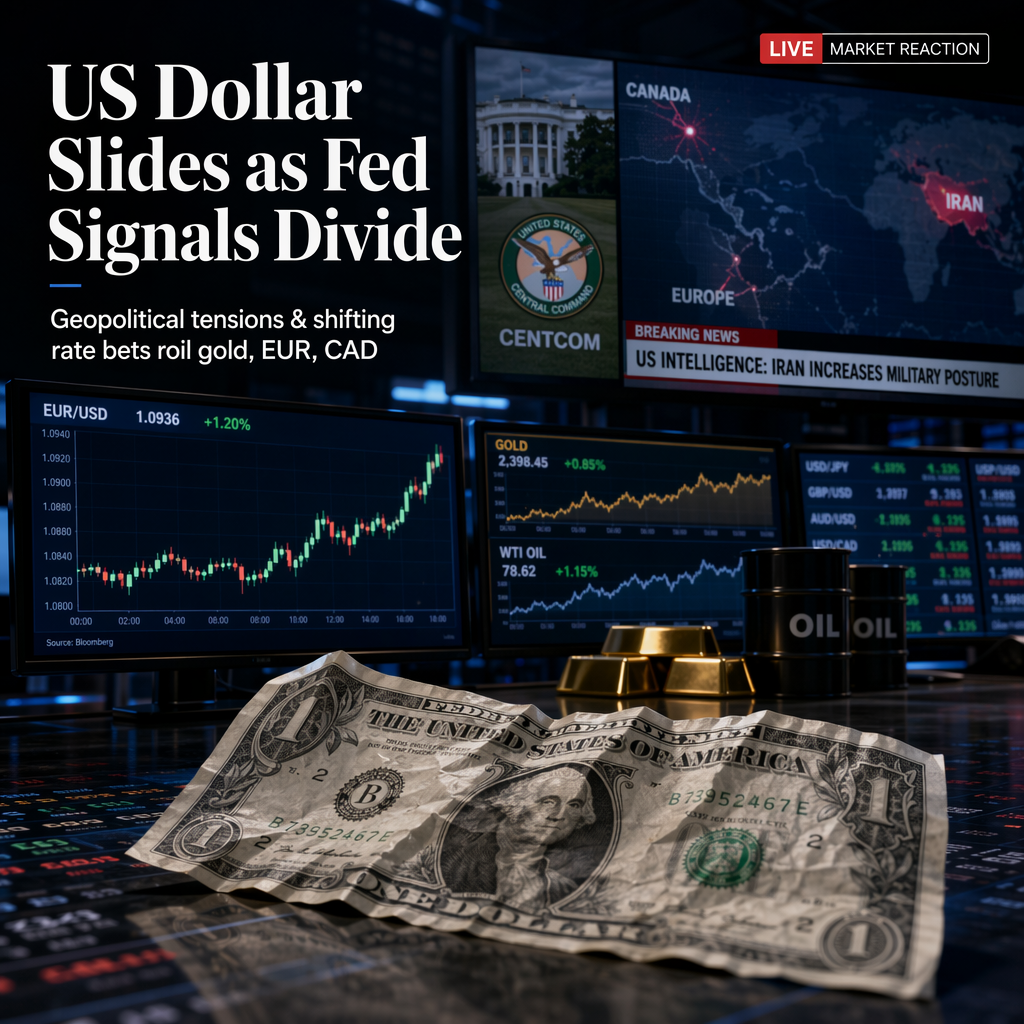
The US Dollar (USD) experienced a notable decline for the third consecutive day, driven primarily by less hawkish signals from the Federal Open Market Committee (FOMC) Minutes released on Wednesday, which indicated policymakers were divided on the direction of interest rates. Many participants suggested the federal funds rate would remain within or slightly below the current target range by year-end, though some policy firming may be warranted due to elevated inflation risks [2][3]. According to the CME Group's FedWatch Tool, traders are pricing in an 85% probability of at least one Fed rate hike by year-end, but expectations for a 25 basis point hike at the July meeting have eased to 24.6% from 31% in the prior session, and September hike odds have dropped to 62.3% from 66.6% on Wednesday [2][3].
The EUR/USD pair benefited from the USD weakness, reaching a fresh weekly high around 1.1460 during the Asian session on Friday. However, persistent geopolitical uncertainties, particularly involving US-Iran tensions, limited further USD losses and capped spot prices. Technical analysis shows EUR/USD struggling to break above the 23.6% Fibonacci retracement level, with immediate resistance at the 200-period EMA at 1.1491 and channel top at 1.1494. Momentum indicators remain constructive, with the RSI just below 60 and MACD above zero, suggesting downside pressure is limited as long as the pair holds above the trend-channel support near 1.1400 [1].
Gold (XAU/USD) reversed a modest dip to the $4,109-$4,108 region but lacked bullish conviction. The commodity remains vulnerable below the 200-day SMA and descending channel resistance, with the upper boundary near $4,156.03 and the 200-day SMA around $4,493.66 acting as structural barriers. Despite improving momentum, gold is on track for modest weekly losses as market focus remains on US-Iran developments. The US Central Command (CENTCOM) carried out airstrikes on Thursday, hitting 90 Iranian military targets, followed by Iranian retaliation with missile and drone attacks on US installations in Bahrain and Kuwait. Market anxiety eased after US President Donald Trump stated Iran had called to make a deal, and a White House official reaffirmed commitment to the memorandum of understanding with Iran, but mixed signals keep investors cautious [2].
The USD/CAD pair lost momentum, trading near 1.4145, as the USD weakened against the Canadian Dollar (CAD) due to receding Fed rate hike expectations. Elevated crude oil prices, driven by shopping traffic slowdown in the Strait of Hormuz and multiple explosions in southern Iran, including near the Bushehr nuclear facility, supported the CAD. Canada, being a major oil exporter, typically benefits from higher oil prices. New York Fed President John Williams commented that despite renewed hostilities in the Middle East, he does not expect a sustained rise in energy prices for the remainder of the year [3].
CONCLUSION
The US Dollar's decline, prompted by less hawkish Fed minutes and ongoing geopolitical tensions, has supported gains in EUR/USD and CAD while keeping gold prices subdued. Market sentiment remains cautious as traders weigh Fed rate hike probabilities and monitor developments in the US-Iran conflict. The overall impact is medium, with currency pairs and commodities reacting to shifting expectations and geopolitical risks.