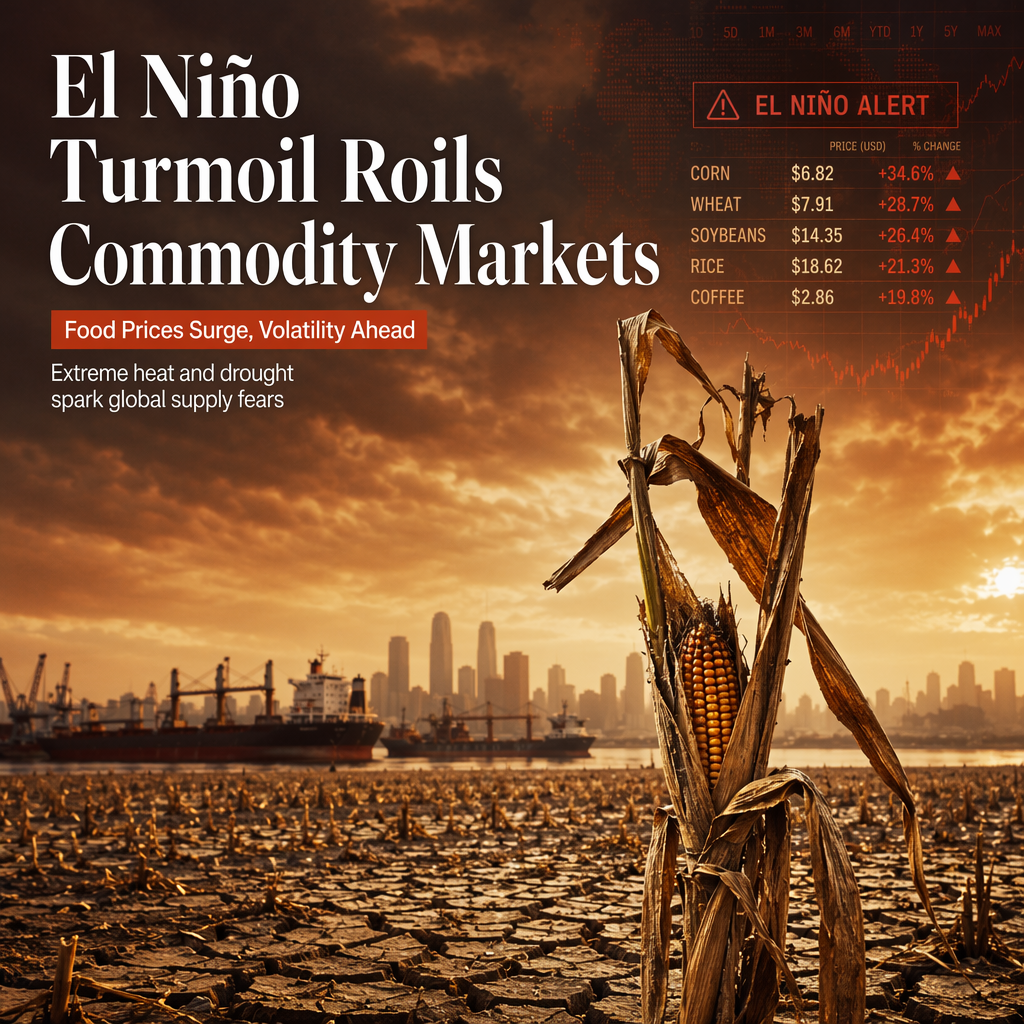
Commodity strategists are warning that markets may be underestimating the impact of extreme weather events, as Europe experiences intense heatwaves and meteorologists predict a potentially powerful El Niño this year [1]. The World Meteorological Organization expects a 'strong El Niño event' in the tropical Pacific between July and September 2026, a climate pattern known for raising sea surface temperatures and triggering extreme weather globally [1].
Agriculture is identified as the most exposed sector, with crops such as corn, coffee, cocoa, and wheat particularly vulnerable to heat stress, drought, and shifting rainfall patterns [1]. Societe Generale reports that agricultural commodity prices have risen 7% this month, with 'softs' like cocoa, coffee, and wheat up 8% over the past week [1]. According to U.S. Department of Agriculture data, food prices were 3.1% higher year-on-year in May, and Man Group analysts warn that a stronger El Niño could push food inflation into double digits by 2027 [1].
Albert Chu, portfolio manager for natural resources at Man Group, estimates crop yields could fall by 5%-12% in affected regions, with staples such as rice potentially declining by 2%-8% due to warmer conditions, further driving prices higher [1]. The impact on commodities is expected to be uneven; while some markets could see significant price increases, others—such as natural gas—could experience declines if the northern winter is warmer than usual [1].
Europe's persistent heatwave has already led to a near two-week stretch of temperatures above 30°C in parts of the U.K. and three heatwaves in France, resulting in the cancellation of some Bastille Day events [1]. South Korea has also issued its first 'grave heat wave' warnings for certain regions after adopting a new alert system in June [1]. Dan Leonard, director of forecasting for the U.S. at Metdesk, suggests the upcoming 'super El Niño' could potentially surpass the major events of 1982, 1997, and 2015 [1].
Investment strategists emphasize that the higher temperatures, drought, heavy rainfall, and other extreme weather events associated with El Niño are set to disrupt commodity asset bets, with agriculture facing the greatest upheaval and food prices likely to rise further [1].
CONCLUSION
Extreme weather and the anticipated 'super El Niño' are already driving volatility in global commodity markets, particularly in agriculture. Analysts warn that food prices could rise further, and market participants may be underestimating the risks. The situation is expected to remain dynamic, with uneven impacts across different commodities.