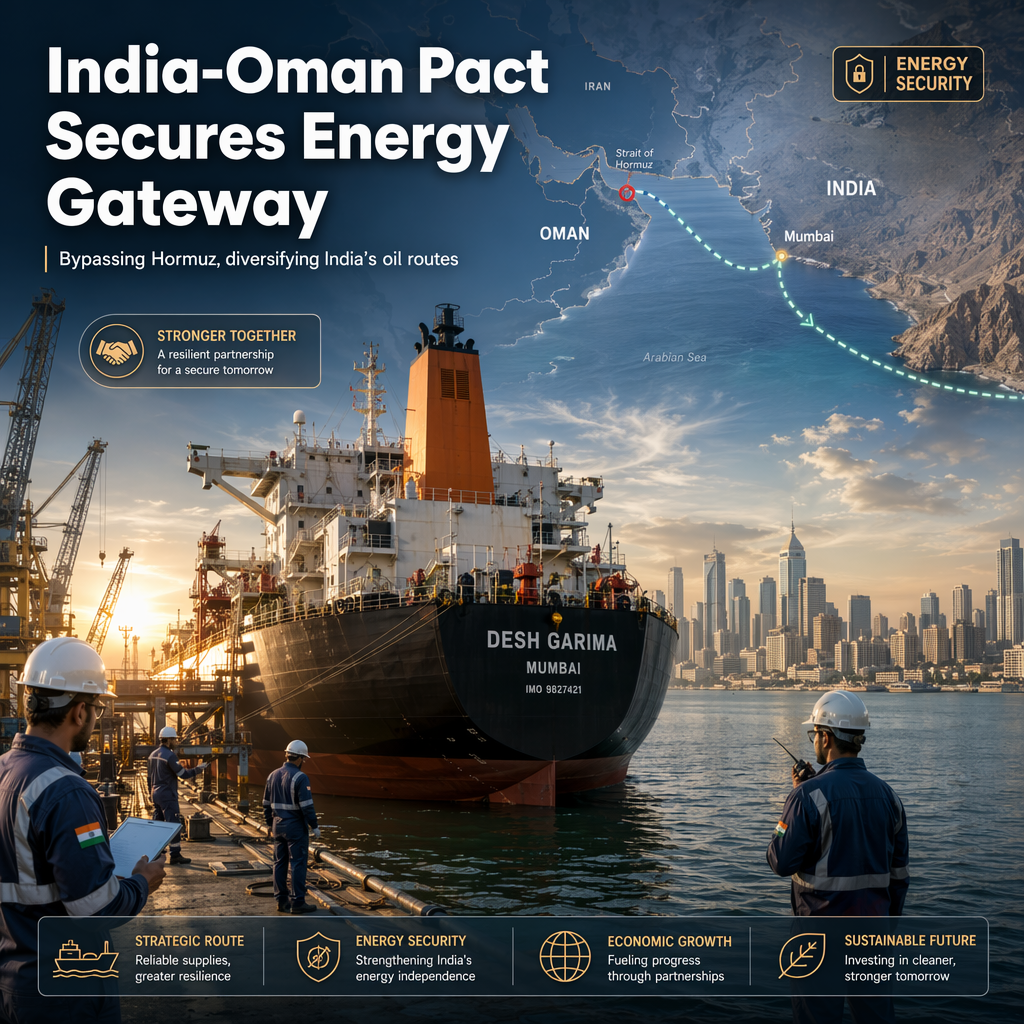
India has operationalized a trade deal with Oman this month, providing an alternative and reliable energy gateway outside the Strait of Hormuz, which has been subject to frequent disruptions due to ongoing geopolitical tensions, including the U.S.-Israeli conflict with Iran [1]. The India-flagged tanker Desh Garima successfully unloaded crude oil in Mumbai on April 30 after transiting the Strait of Hormuz, highlighting the challenges faced by Indian oil imports through this route [1].
The activation of the trade pact is viewed as a significant boost to India's oil security, allowing the country to reduce its reliance on the conventional Hormuz passage and instead leverage Oman as a strategic energy partner [1]. Industry analysts emphasize that this new gateway will help India mitigate risks from geopolitical instability, ensuring more stable energy supplies. An oil industry expert in New Delhi stated, "The Oman deal is a critical move for India's energy security. It diversifies import routes and reduces exposure to conflict zones" [1].
Although the article does not provide specific price levels or trading advice, market sentiment is positive regarding India's improved energy resilience. Technical indicators suggest that the move will support India's oil import strategies in the medium to long term, especially as disruptions in Hormuz are expected to persist [1].
Indian refiners are actively seeking alternative sources and routes for crude oil imports, and the government is exploring further partnerships to bolster strategic reserves and ensure uninterrupted supply for domestic requirements [1].
CONCLUSION
India's trade pact with Oman is seen as a strategic step to enhance energy security and reduce reliance on the volatile Strait of Hormuz. Market sentiment is positive, with analysts expecting improved stability in India's oil imports. The move is likely to support India's energy strategies in the medium to long term.