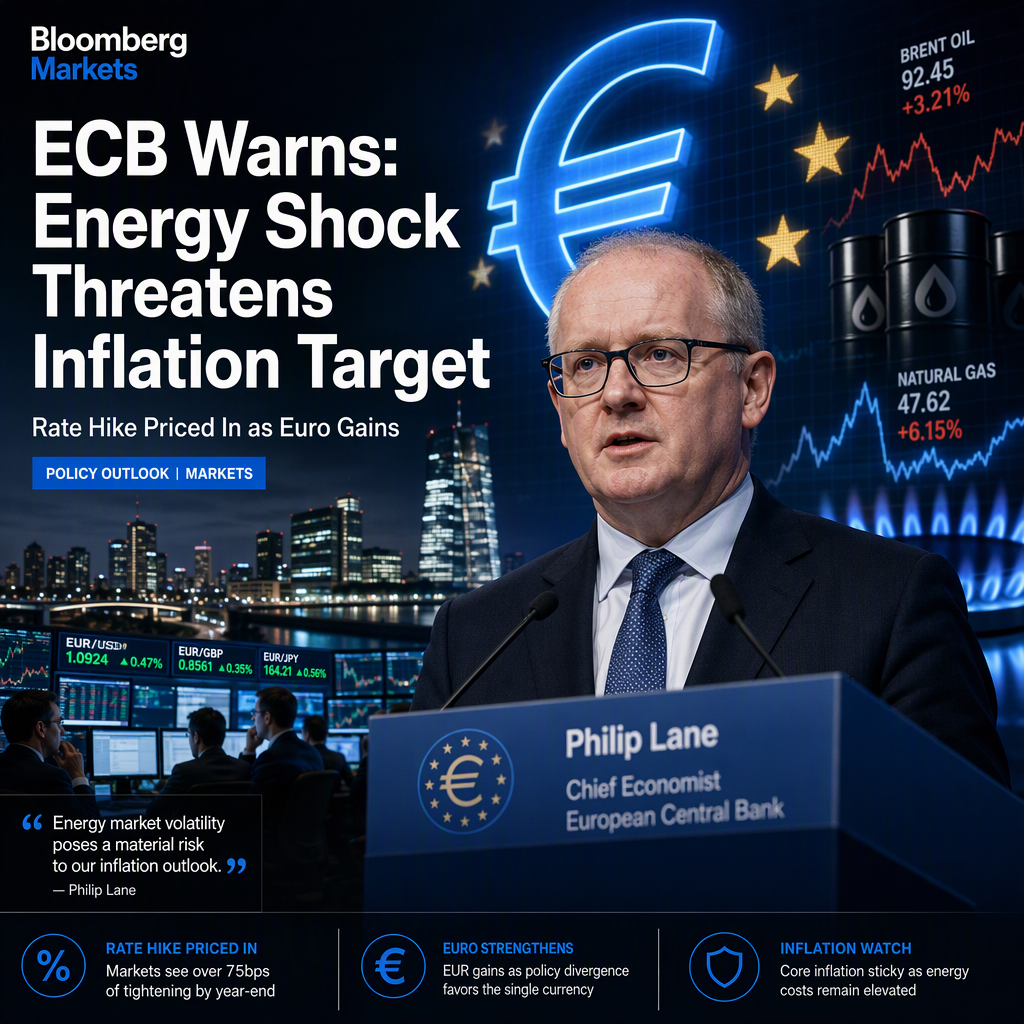
European Central Bank (ECB) Chief Economist Philip Lane stated that the European economy is expected to expand at a moderate pace, provided that energy shocks subside. However, Lane cautioned that a renewed surge in energy costs could push inflation higher, potentially delaying its return to the ECB’s 2% target until mid-2027 or later [1].
Money markets have responded to these concerns, with nearly 35 basis points of tightening priced in by year-end. Furthermore, markets have fully priced in a rate hike by the ECB’s December 17 meeting, according to data from Prime Terminal [1].
On the currency front, the Euro showed relative strength, particularly against the Canadian Dollar, as indicated by the latest percentage changes among major currencies. The Euro was up 0.34% against the Swiss Franc and 0.18% against the US Dollar, reflecting market reactions to the ECB’s policy outlook and inflation concerns [1].
The ECB’s primary mandate remains price stability, aiming to keep inflation around 2%. Lane’s comments highlight the central bank’s ongoing vigilance regarding inflation risks, especially those stemming from energy price volatility [1].
CONCLUSION
ECB Chief Economist Lane’s remarks underscore the risk that another energy shock could delay the return of inflation to the 2% target, influencing market expectations for further tightening. Money markets have already priced in a rate hike by December, and the Euro has shown strength against several major currencies. The ECB’s policy stance remains closely tied to inflation developments, particularly in the energy sector.