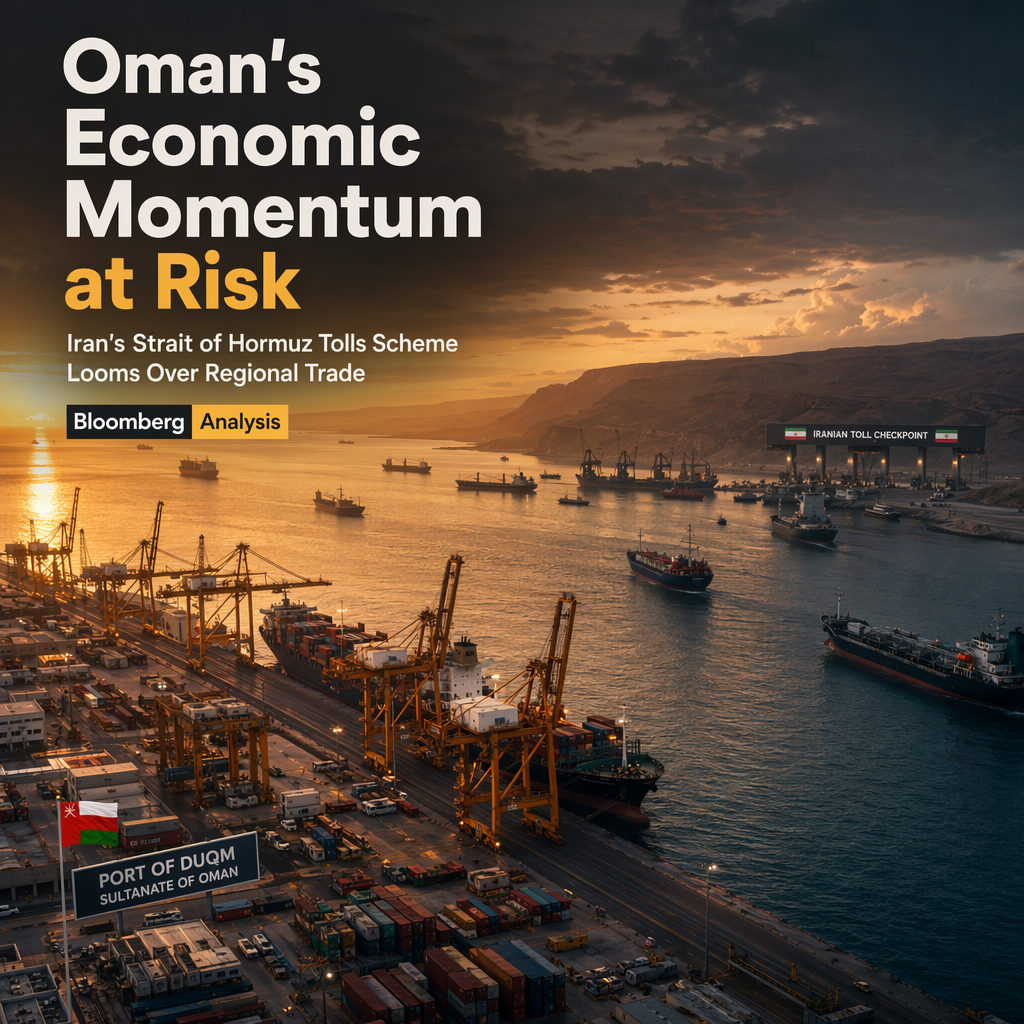
The article discusses the potential impact of Iran's proposed scheme to impose tolls on shipping through the Strait of Hormuz, highlighting the risks this poses to neighboring Oman, which lies on the opposite side of the contested waterway [1]. While Oman has acted as a mediator with the United States and shown some openness to Iran's plans, the article argues that such a rapprochement would be detrimental to Oman's interests, given its recent economic successes [1].
Oman has demonstrated significant economic progress, as evidenced by its performance in the 2026 edition of The Heritage Foundation’s Index of Economic Freedom, where it achieved the second-best score improvement globally, moving up 19 places to rank 39th [1]. This advancement is attributed to ongoing economic expansion under the Oman Vision 2040 framework, fiscal consolidation, improved public finance management, and legal reforms that have reduced debt to less than 40% of GDP and combated corruption [1]. The International Monetary Fund estimates Oman’s GDP per capita at $21,645, a 19% increase over 2025, further underscoring the country's economic momentum [1].
In contrast, Iran's economy is described as being in severe decline, with inflation rising from 7% a decade ago to around 50% currently, and food prices increasing by nearly 100% [1]. Unemployment is officially estimated at about 10%, but independent assessments suggest it exceeds 25%, particularly affecting young people [1]. Iran’s GDP per capita stands at $3,415, a 6% decrease from 2025 and less than half of Oman’s figure [1].
The article warns that Oman's openness to Iran's toll scheme could undermine its promising economic trajectory, especially given the stark contrast between the two countries' economic fortunes [1]. No specific market reactions or analyst opinions are provided, but the implication is that regional stability and Oman's continued economic reforms are crucial for maintaining its positive outlook [1].
CONCLUSION
Oman's recent economic reforms and growth have positioned it as a regional success story, but potential cooperation with Iran's Strait of Hormuz toll scheme could jeopardize these gains. The article underscores the importance of Oman maintaining its current path of transparency, fiscal discipline, and openness to foreign investment to secure its future prosperity.