
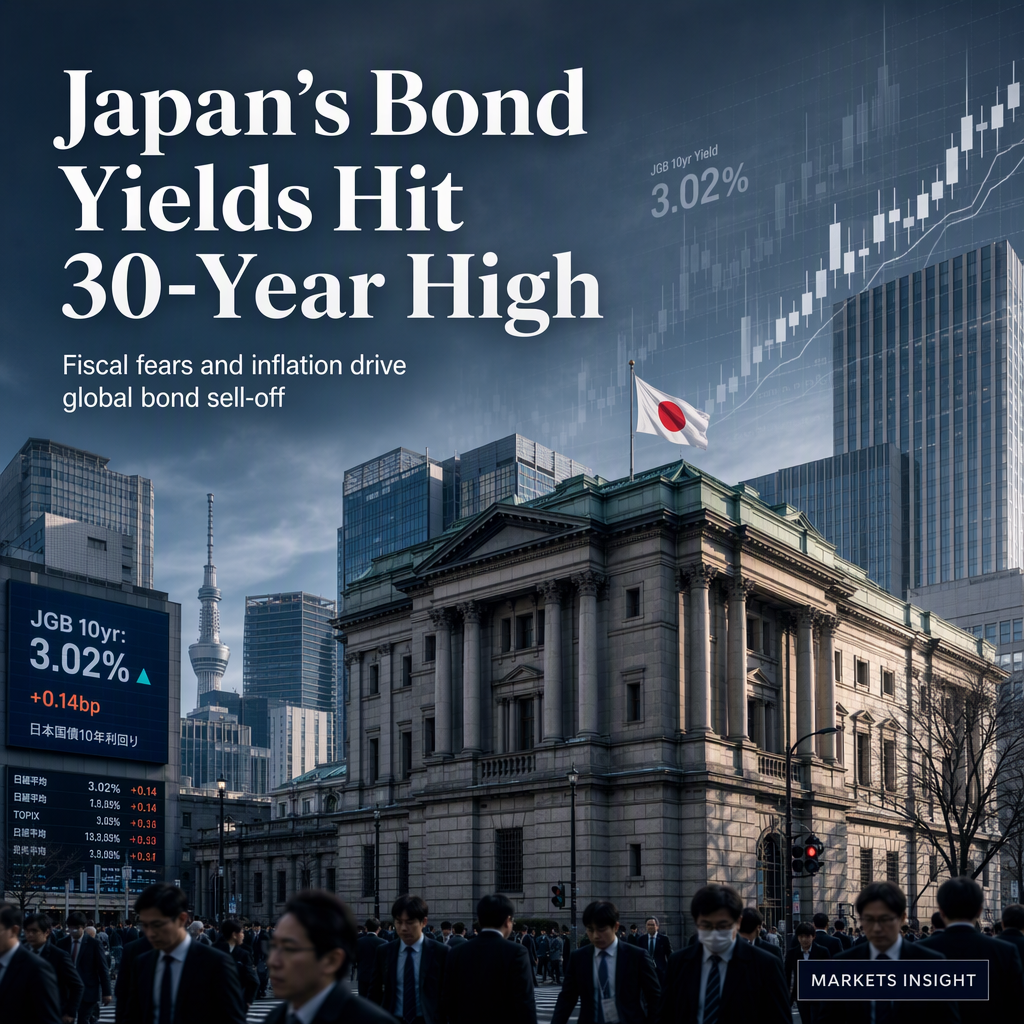
The coupon rate on Japan's benchmark 10-year government bonds (JGBs) has surpassed 3% for the first time in three decades, marking a significant milestone as yields continue to climb in the secondary market due to global concerns over government debt and inflation [1]. Despite a smooth bond auction, investor sentiment remains uneasy, driven by persistent inflation linked to the ongoing conflict in the Middle East and apprehensions about Japan's fiscal trajectory [1].
The rise in JGB yields reflects a broader global bond sell-off, with investors demanding higher returns to offset increasing fiscal risks and inflation expectations [1]. Technical analysis shows that JGB yields are testing resistance levels not seen since the mid-1990s, with upward momentum fueled by both international and domestic fiscal anxieties [1]. Market participants are closely monitoring inflation trends and fiscal policy, as sustained inflation pressures could force the government to issue bonds at even higher rates [1].
A Tokyo-based bond strategist described the current environment as challenging for fixed income investors, noting that Japan is no longer insulated from global rate movements [1]. The uncertainty surrounding inflation and fiscal discipline has contributed to a risk-off sentiment, with some analysts advising caution in bond allocations until clearer policy guidance emerges [1]. Trading strategies are divided, with some advocating for short positions in anticipation of further yield increases, while others see tactical buying opportunities if rates stabilize [1].
Investors are also watching the government's response to rising rates, as higher debt servicing costs could impact future spending and fiscal stability [1]. The combination of technical and fundamental factors suggests the potential for heightened volatility in the JGB market in the coming months [1].
CONCLUSION
Japan's 10-year JGB coupon reaching a 30-year high underscores mounting fiscal and inflation concerns, both domestically and globally. Market sentiment remains cautious, with expectations of continued volatility as investors await clearer signals from policymakers.