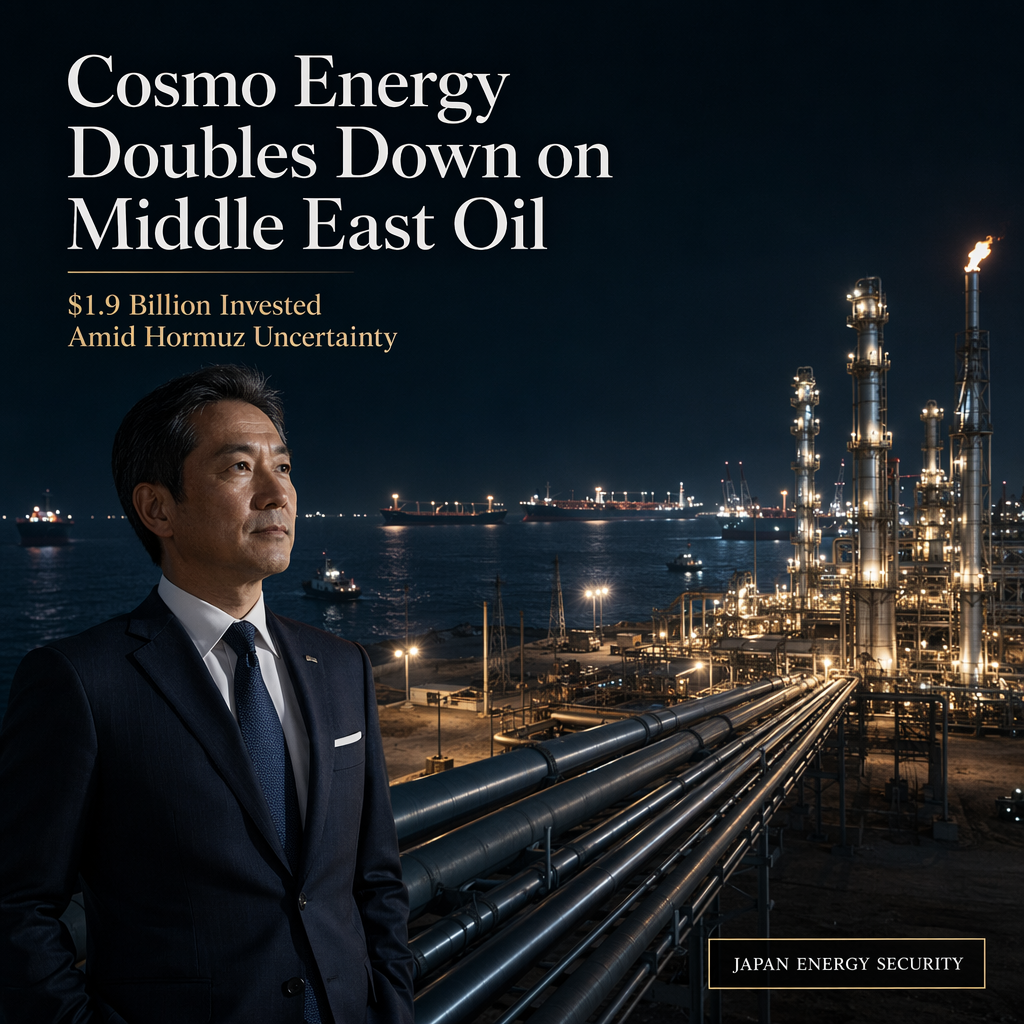
Cosmo Energy Holdings, a major Japanese energy company, has announced its intention to continue investing in oil production in the Middle East, despite ongoing supply risks and recent disruptions in the region. The company is allocating $1.9 billion for resource development projects, demonstrating its commitment to maintaining a stable oil supply from the Middle East and its confidence in the eventual reopening of the Strait of Hormuz, a vital passage for global oil shipments [1].
This strategic decision comes in the wake of a 50% plunge in Japan's crude oil imports following the Iran war, which highlighted the country's dependence on Middle Eastern oil. While other Japanese refiners have diversified their sources by turning to Russian or US crude, Cosmo Energy is maintaining its focus on the Middle East, with a company executive stating, "We believe the Middle East will remain a cornerstone of Japan's energy security" [1].
Cosmo's approach is notable given the current volatility in energy markets and the ongoing search for alternative sources. The company is closely monitoring oil price levels and market sentiment, and is prepared to adjust its trading strategies if the situation in the Middle East changes. Cosmo's market analysis suggests that energy prices could remain elevated for months due to geopolitical tensions, but the company views the long-term fundamentals in the region as attractive for continued investment [1].
The company's commitment to the Middle East signals confidence in eventual market normalization and the reopening of key transport routes like the Strait of Hormuz. Cosmo continues to assess technical indicators and support/resistance levels in the oil market to inform its investment and trading decisions [1].
CONCLUSION
Cosmo Energy Holdings is doubling down on its Middle East oil strategy with a $1.9 billion investment, betting on the reopening of the Strait of Hormuz and long-term market stability. While other Japanese refiners diversify, Cosmo remains focused on the region, reflecting its belief in the enduring importance of Middle Eastern oil for Japan's energy security. The company's stance suggests cautious optimism amid ongoing geopolitical risks.