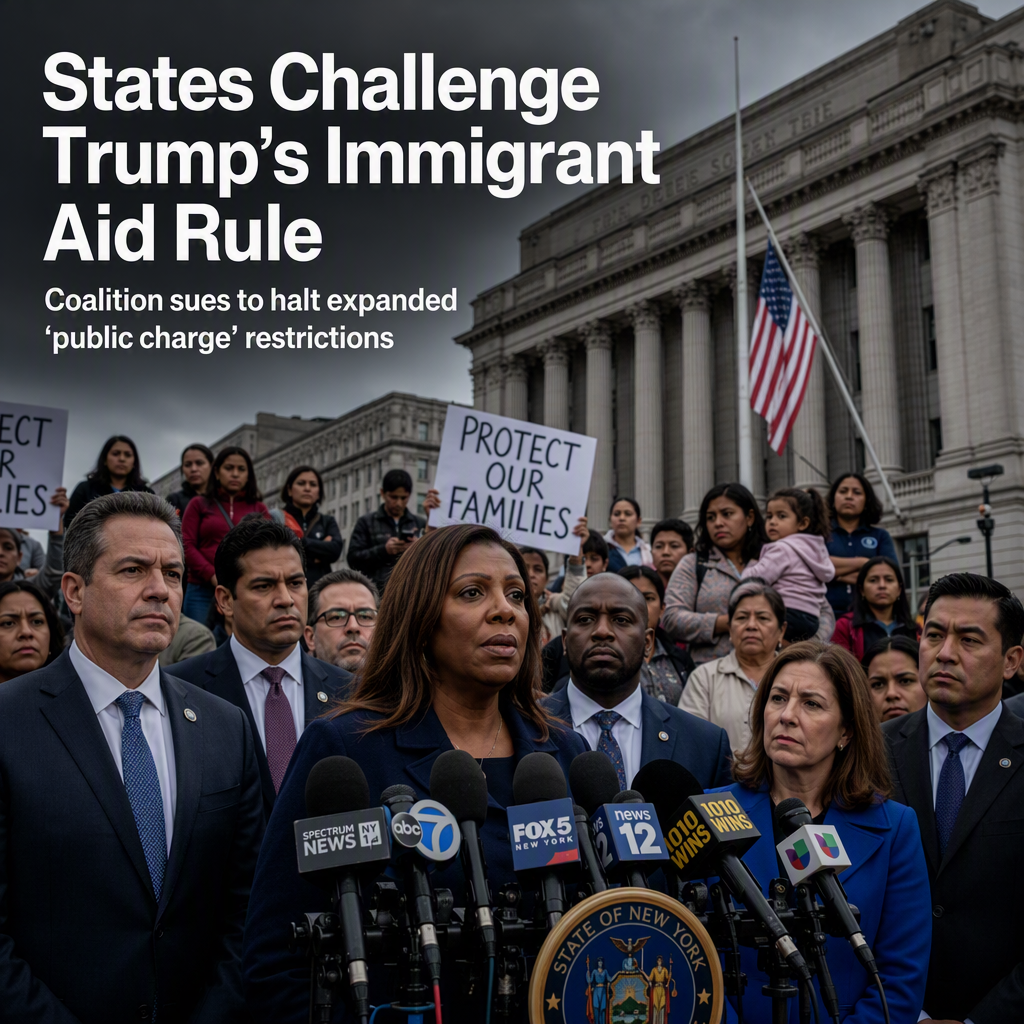
A coalition of 21 states and Washington, D.C., led by New York State Attorney General Letitia James, has filed a lawsuit against the Trump administration to block a new Department of Homeland Security rule that would make it more difficult for immigrants to obtain visas or green cards if they are deemed likely to become dependent on government assistance [1]. The rule, scheduled to take effect on Friday, expands the types of government aid that immigration officials can consider when determining whether an applicant qualifies as a 'public charge,' including benefits such as Medicaid, the Supplemental Nutrition Assistance Program (SNAP), and school meal programs [1].
New York City Mayor Zohran Mamdani also led a separate lawsuit on behalf of a coalition of cities challenging the same DHS rule [1]. Attorney General James argued that the rule would create fear among immigrant families, discouraging them from accessing public benefits to which they are legally entitled, and could result in billions of dollars in lost federal funding for the states if immigrants withdraw from these programs [1]. James stated, 'Hardworking families should not be forced to go without the support they need because they fear asking for assistance will get them deported' [1].
The lawsuits seek to have the courts declare the rule unlawful and prevent its implementation [1]. Under the Biden administration's 2022 public charge rule, only cash assistance for income maintenance and government-funded long-term institutionalization were generally considered, whereas the new rule gives immigration officials broader discretion to consider any means-tested public benefits [1]. The rule does not specify a fixed list of benefits, further increasing the discretion of immigration officers in these determinations [1].
The states and cities involved in the lawsuits argue that the expanded rule would harm immigrant families and state budgets, and they are seeking judicial intervention to halt its enforcement [1].
CONCLUSION
A coalition of states and cities is taking legal action to block the Trump administration's expanded public charge rule, citing potential harm to immigrant families and state finances. The outcome of these lawsuits could have significant implications for immigration policy and public benefit programs.