
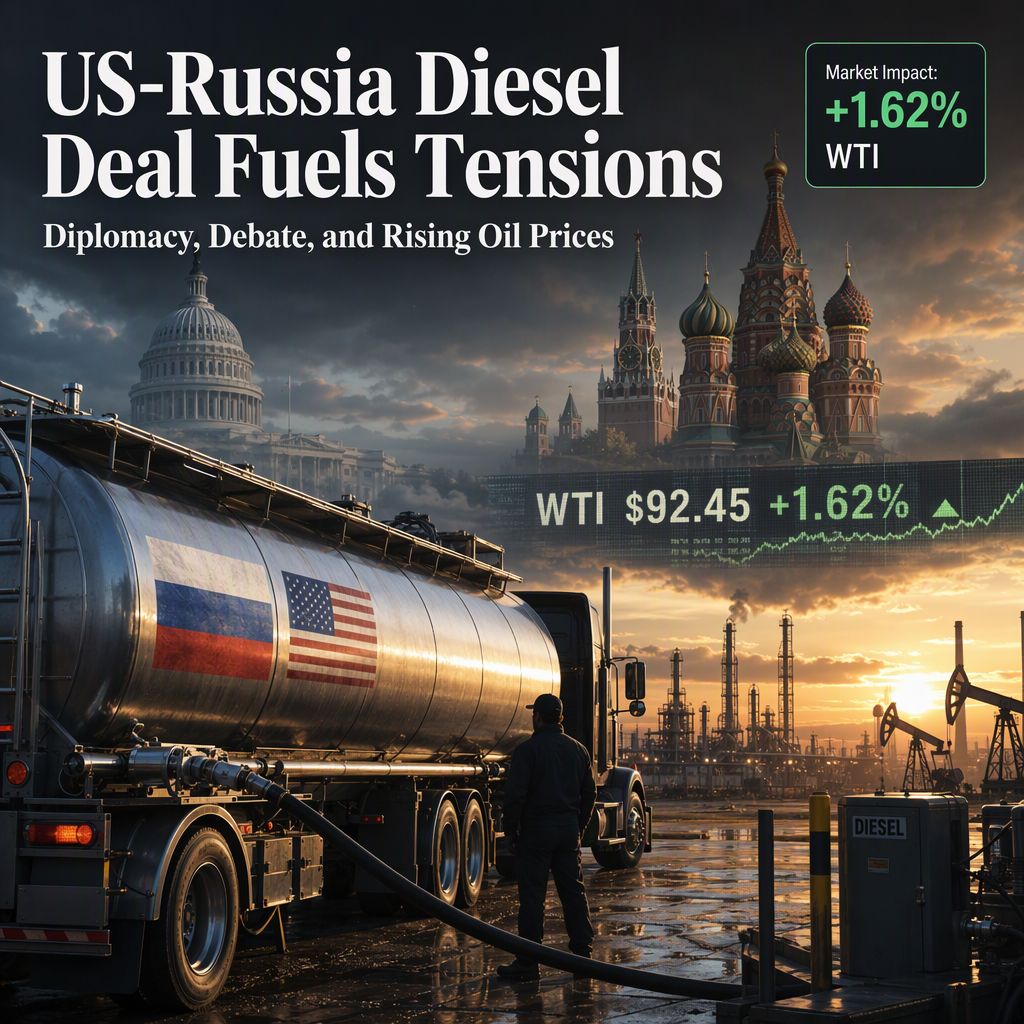
US special envoy Jared Kushner stated that a deal permitting Russian diesel exports is intended to encourage Russia to return to negotiations following unsuccessful attempts to initiate sustained talks to end the war, according to Reuters as cited by fxstreet [1]. Washington communicated to Ukrainian officials that the diesel deal could help 'soften' Moscow's stance, partly because it 'sends a signal that Trump is open to doing things' with Russia [1].
The agreement involves Russia delivering over 2.25 million barrels of diesel to the US and global markets [1]. However, the deal has faced criticism from some US lawmakers, who argue that it would provide Moscow with cash to continue its war efforts without compelling President Putin to make concessions toward ending the conflict [1].
On Monday, former President Trump defended the agreement, describing it as 'the right choice for the American people' [1]. In response to the news, the price of West Texas Intermediate (WTI) crude oil rose by 1.62% on the day, reaching $92.45 [1].
No forward-looking statements or analyst opinions beyond those of Kushner and Trump are provided in the article.
CONCLUSION
The US-Russia diesel deal is positioned as a diplomatic effort to bring Russia back to negotiations, but it has sparked political debate in the US. The announcement coincided with a notable rise in WTI oil prices, reflecting market sensitivity to geopolitical developments. The long-term market impact remains uncertain, pending further developments.