
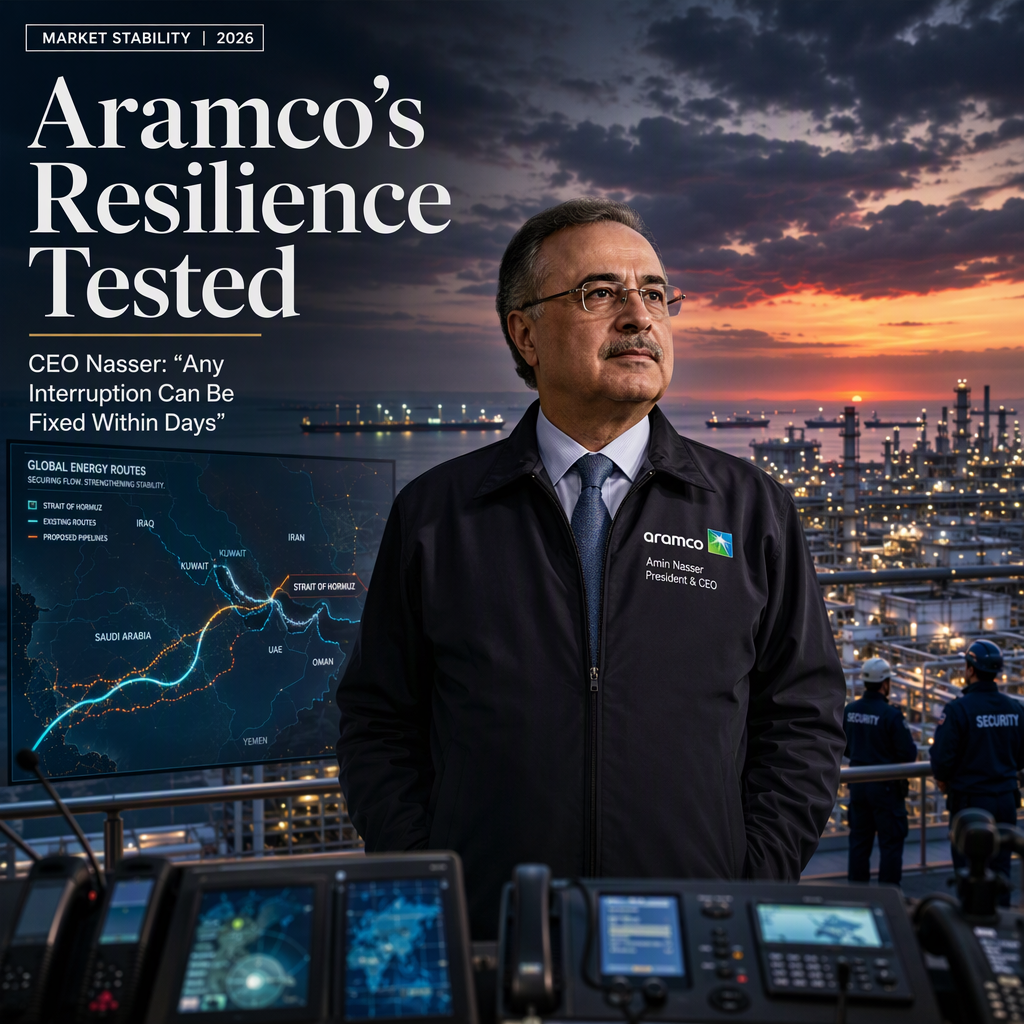
Saudi Aramco President and CEO Amin Nasser stated in an interview in Tokyo on September 24, 2026, that the company is capable of restoring any disrupted operations within days, even as it faces increased threats of attacks linked to the ongoing Iran war [1]. Nasser emphasized the company's resilience, saying, "Any interruption can be fixed within days," in reference to potential disruptions in oil production or export caused by regional tensions [1].
To ensure continuity of supply, Saudi Aramco is actively preparing for possible disruptions by exploring the construction of new pipeline routes and alternative export paths, particularly to mitigate risks associated with the Strait of Hormuz, a critical chokepoint for global oil shipments [1]. This proactive approach is a direct response to the heightened instability in the region and the increased threats to energy infrastructure and shipping lanes [1].
Market analysts note that the Iran war has amplified concerns about oil supply security, resulting in heightened volatility in crude prices [1]. While Nasser did not comment directly on price levels or technical analysis, his reassurances are expected to provide some support to oil markets by reducing fears of prolonged disruptions [1]. Traders view Aramco's exploration of alternative routes as a positive development that could help stabilize prices and reduce speculative premiums linked to geopolitical risks if successful [1].
The company's swift response capability and contingency planning are seen as key factors in limiting downside risk for oil markets amid ongoing regional tensions [1].
CONCLUSION
Saudi Aramco's leadership has sought to reassure markets by emphasizing its ability to quickly restore operations and by actively pursuing alternative export routes. These measures are expected to help stabilize oil prices and reduce market fears of prolonged supply disruptions amid the ongoing Iran war. The company's contingency planning is viewed as a positive factor for market stability.