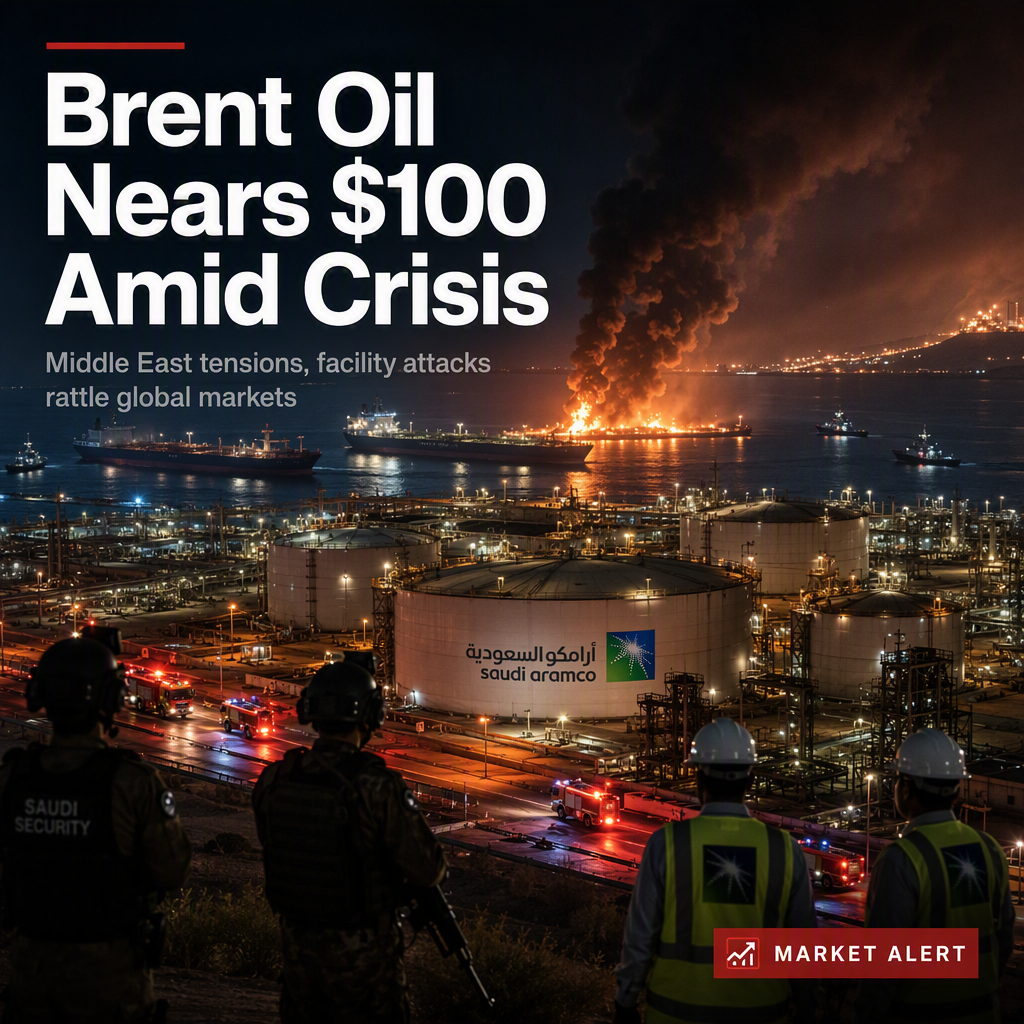
Brent crude oil prices surged towards the $100 per barrel mark, trading over $97 a barrel in early Tuesday trade, as escalating tensions in the Middle East and recent attacks on Saudi Aramco oil facilities rattled global energy markets [1]. West Texas Intermediate also climbed above $93 a barrel, marking a six-week high for crude prices [1]. The rise in oil prices comes amid a series of tit-for-tat strikes, including the U.S. military hitting three Iranian oil tankers and subsequent attacks on Saudi Aramco, as reported by the Financial Times [1]. These developments have contributed to a spike in U.S. gasoline prices, which have topped $4 per gallon and reached a record high for the Labor Day holiday [1].
The geopolitical situation remains tense, particularly around the Strait of Hormuz, a critical chokepoint for global oil supply. Commodity veteran Jeff Currie warned that expectations for a 'return to normalization' in the Strait are 'very, very optimistic,' highlighting the ongoing risks to energy markets [1]. Iran has also criticized Canada for supporting U.S. actions in the region, with Tehran's Foreign Ministry spokesperson Esmaeil Baghaei accusing Canada of appeasing the U.S. [1].
In addition to energy market volatility, Canada's new tariffs on approximately $20 billion worth of U.S. goods took effect on Tuesday, with Bombardier becoming a focal point after U.S. President Donald Trump called for a halt to Bombardier sales in the U.S. unless the company increases its American manufacturing presence [1].
Despite these geopolitical shocks, global equity markets have shown resilience, with U.S. futures mixed following the Labor Day break and Japanese equities under pressure due to currency movements [1]. However, HSBC analysts noted that certain developments could potentially disrupt this market calm [1].
CONCLUSION
Brent crude's rally towards $100 underscores the market's sensitivity to Middle East tensions and supply disruptions. Record-high U.S. gasoline prices and new trade frictions between Canada and the U.S. add to the uncertainty. While equity markets have largely shrugged off these shocks so far, analysts warn that further escalation could have broader market implications.