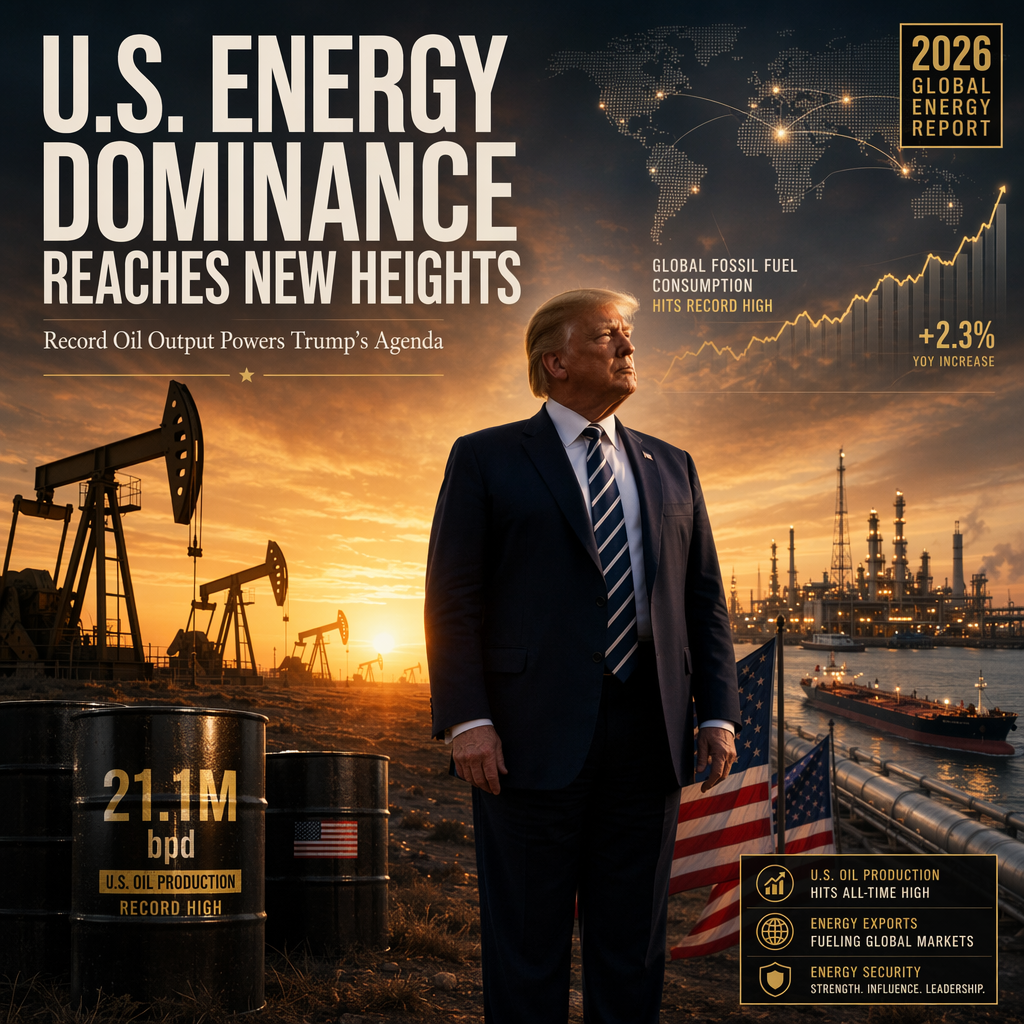
The world consumed more energy than ever before in 2025, with fossil fuels—oil, natural gas, and coal—accounting for 86% of global energy use, according to the Energy Institute's 2026 Statistical Review of World Energy [1]. This record-setting consumption occurred despite significant growth in renewable power, highlighting the continued global reliance on fossil fuels to power homes, businesses, transportation, and industry [1].
President Donald Trump has made the expansion of U.S. oil and natural gas production a central pillar of his economic agenda, arguing that domestic energy production is essential for lowering prices, strengthening national security, and boosting economic growth [1]. The report's findings support the Trump administration's stance, with White House spokeswoman Taylor Rogers stating, "Even left-wing studies are finding that President Trump’s energy dominance agenda has been undeniably successful in unleashing reliable, affordable, and secure energy" [1]. She further noted that increased U.S. production benefits American families and businesses by lowering prices, creating jobs, and enhancing energy security [1].
In 2025, U.S. oil production reached a record 21.1 million barrels per day, nearly matching the combined output of Saudi Arabia and Russia [1]. The United States also maintained its position as the world's largest natural gas producer and the leading exporter of petroleum products [1]. These achievements underscore America's dominant role in global energy markets, a point emphasized by the Trump administration as it heads into the next year's midterm elections, where the economy and inflation are expected to be central issues [1].
The report also highlights ongoing geopolitical risks, noting that the conflict with Iran has renewed concerns about energy security and the safety of shipping through the Strait of Hormuz, a critical chokepoint for global oil and liquefied natural gas shipments [1]. Economist Steve Moore commented that such conflicts reinforce the importance of expanding U.S. domestic energy production [1].
CONCLUSION
Record global energy consumption and U.S. production highs reinforce the Trump administration's push for expanded domestic oil and gas output. The data and official statements suggest that U.S. energy dominance is seen as a key factor in lowering prices, supporting economic growth, and mitigating geopolitical risks. Market implications are significant, with energy security and supply stability remaining top priorities.