
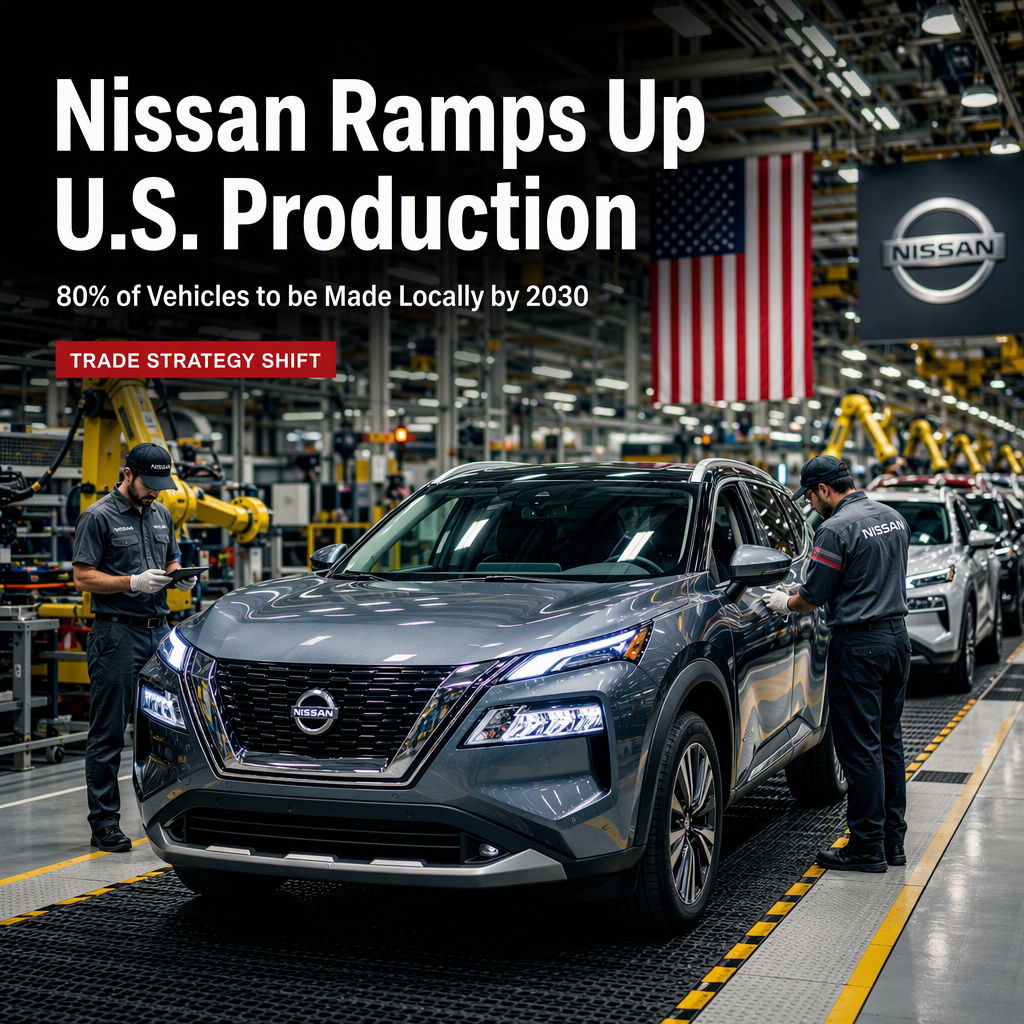
Nissan Motor has announced its intention to manufacture 80% of the vehicles it sells in the United States locally by the end of 2030, a significant increase from its current level of 65% local production, according to an executive statement made on Monday [1]. This strategic shift is part of Nissan's broader response to tariffs and changing trade policies that are affecting the automotive sector [1]. As a component of this localization strategy, Nissan has ceased production of its plug-in hybrid model for the North American market [1].
The company aims to mitigate risks associated with potential tariffs and supply chain disruptions by adjusting its manufacturing footprint, thereby enhancing resilience in the face of evolving trade environments [1]. No specific financial figures, analyst opinions, or detailed market reactions were provided in the article [1].
While the article does not mention any immediate market implications or reactions, Nissan's move to increase local production is positioned as a proactive measure to address uncertainties in international trade and regulatory conditions [1].
CONCLUSION
Nissan's decision to boost local production in the US reflects a strategic response to tariff risks and supply chain challenges. Although no financial data or analyst commentary was provided, the move signals a medium-impact shift for the automaker's North American operations. The market takeaway is that Nissan is prioritizing resilience and adaptability amid changing trade policies.