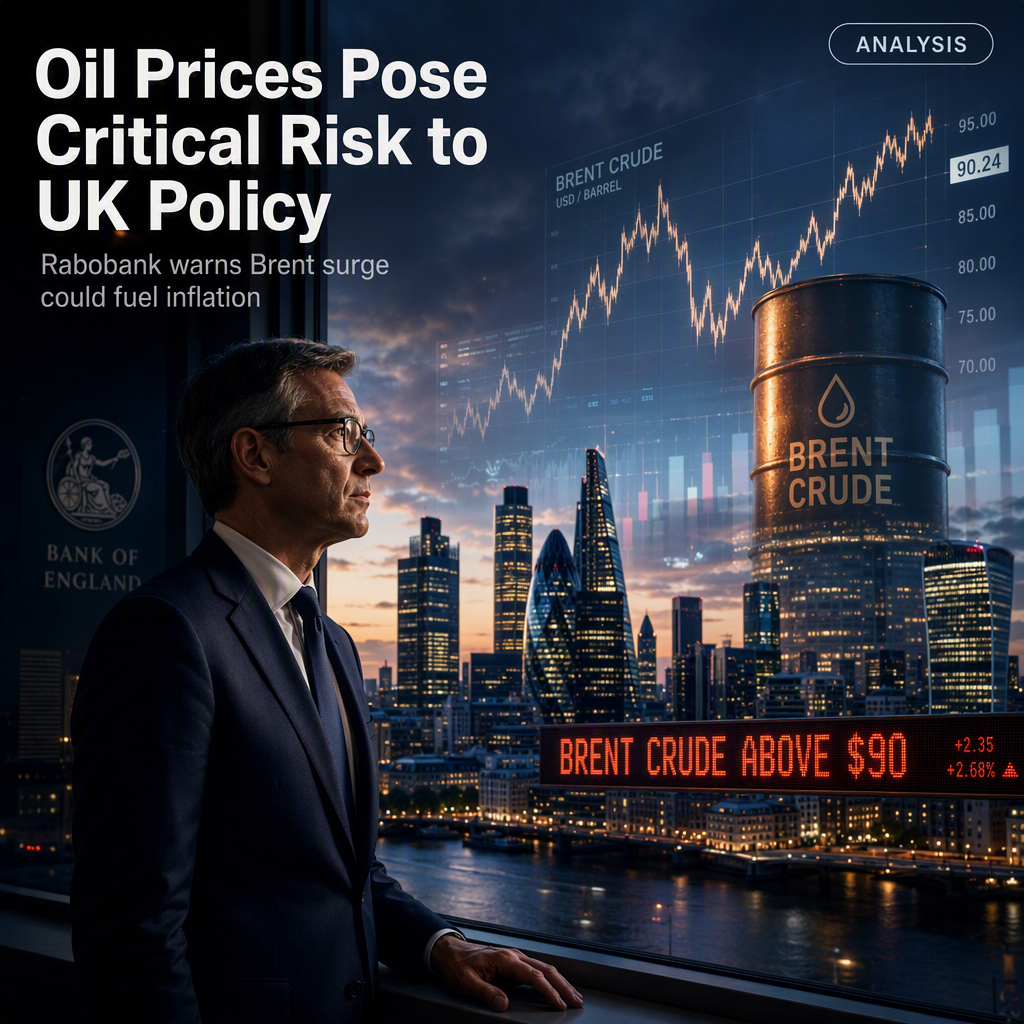
Rabobank's RaboResearch identifies oil prices as the dominant factor influencing UK inflation scenarios and, by extension, the Bank of England's (BoE) monetary policy outlook [1]. The BoE's central forecast assumes oil prices will decline from $76 in the third quarter to approximately $71 by the end of the forecast period, resulting in inflation peaking near 3.2% [1]. However, Brent crude is currently trading above $90, which is significantly higher than the central forecast's assumptions [1].
In a more severe scenario, where oil prices rise to $100 and remain at that level, Rabobank projects UK inflation could reach 4% or higher, highlighting substantial upside risks for UK assets [1]. The report emphasizes that oil is both a critical and unpredictable variable, and its trajectory is beyond the UK's control [1].
Rabobank notes that while oil remains the key swing factor, the likelihood of a Bank of England rate hike in September remains low unless a sustained energy shock begins to affect wages, prices, or inflation expectations [1]. The analysis underscores that monetary policy adjustments will only be considered if there is clear evidence of energy-driven inflation feeding through to broader economic indicators [1].
CONCLUSION
Rabobank underscores that oil prices are the most significant and unpredictable input for UK monetary policy, with current Brent levels already exceeding the Bank of England's central forecast. The risk of higher inflation persists if oil prices remain elevated, but the bar for a near-term rate hike remains high unless energy shocks translate into broader inflationary pressures.