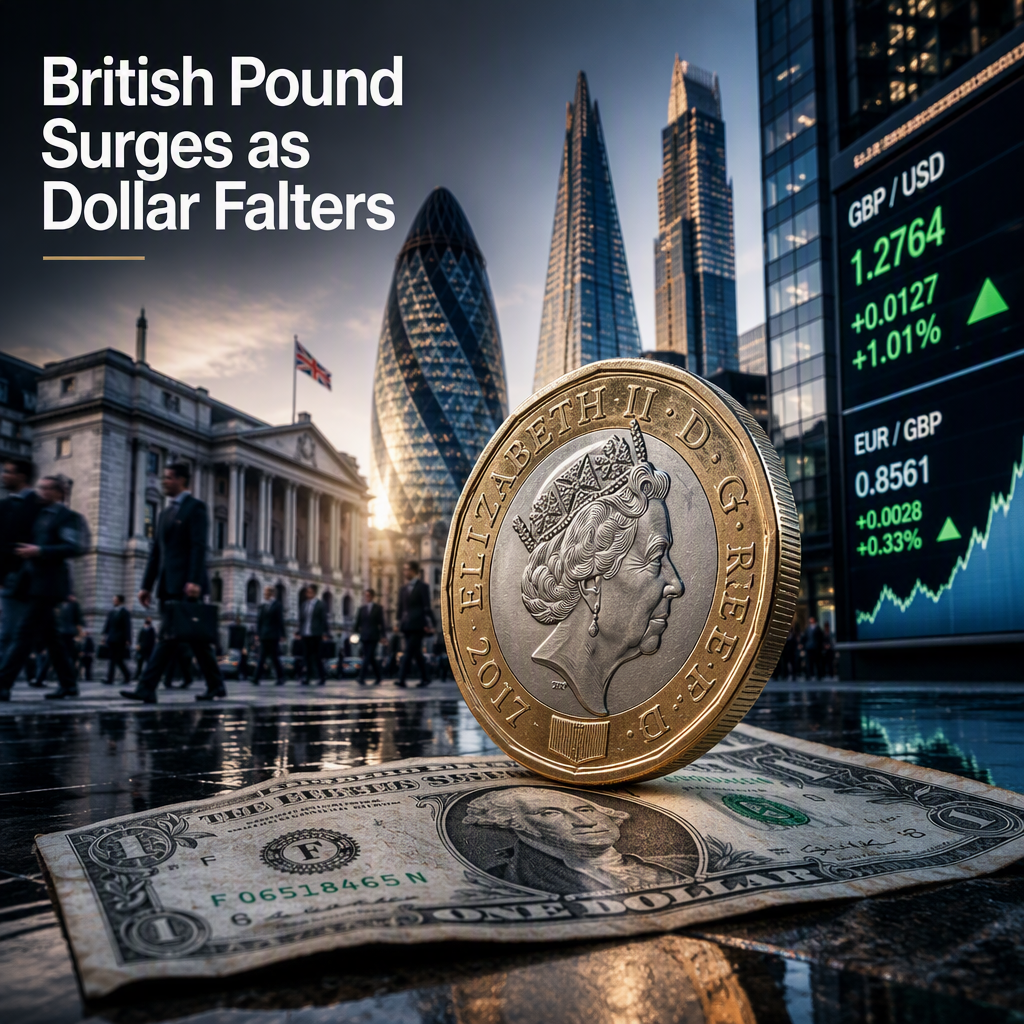
The British Pound (GBP) gained against the US Dollar (USD), with GBP/USD trading around 1.3520 during Asian hours on Monday after minor losses the previous day [1]. This move comes as the US Dollar struggles, potentially influenced by a Goldman Sachs report highlighting the importance of this week's inflation data. Goldman Sachs expects that a benign Consumer Price Index (CPI) reading would keep the Federal Reserve (Fed) on hold, despite strong August job numbers removing a key obstacle to a potential rate hike [1].
The US Bureau of Labor Statistics reported that Nonfarm Payrolls (NFP) increased by 162,000 in August, surpassing market expectations of 56,000 and accelerating from an upwardly revised 21,000 in July. The Unemployment Rate remained steady at 4.1% [1]. Following this robust labor market data, traders raised their expectations for a Fed rate hike in September, with the CME FedWatch tool showing the odds of a 25-basis-point increase rising to nearly 58.3%, up from 50.2% before the jobs report [1].
In the UK, markets are fully pricing in a Bank of England (BoE) rate hike by the end of the year, with another increase anticipated by March 2027. This outlook is driven by ongoing concerns over UK fiscal sustainability and persistent inflation [1]. Analysts at Scotiabank note that recent BoE commentary has turned more hawkish, particularly citing Chief Economist Huw Pill's efforts to manage market expectations while still leaning toward further hikes. This hawkish tone is seen as supportive for the British Pound and underpins expectations for additional policy tightening [1].
CONCLUSION
The British Pound's recent gains are supported by a combination of US Dollar weakness, strong US labor data, and a more hawkish tone from the Bank of England. Market participants are closely watching upcoming inflation data, which could influence central bank policy decisions on both sides of the Atlantic. Overall, expectations for further rate hikes remain elevated, providing a constructive backdrop for GBP performance.