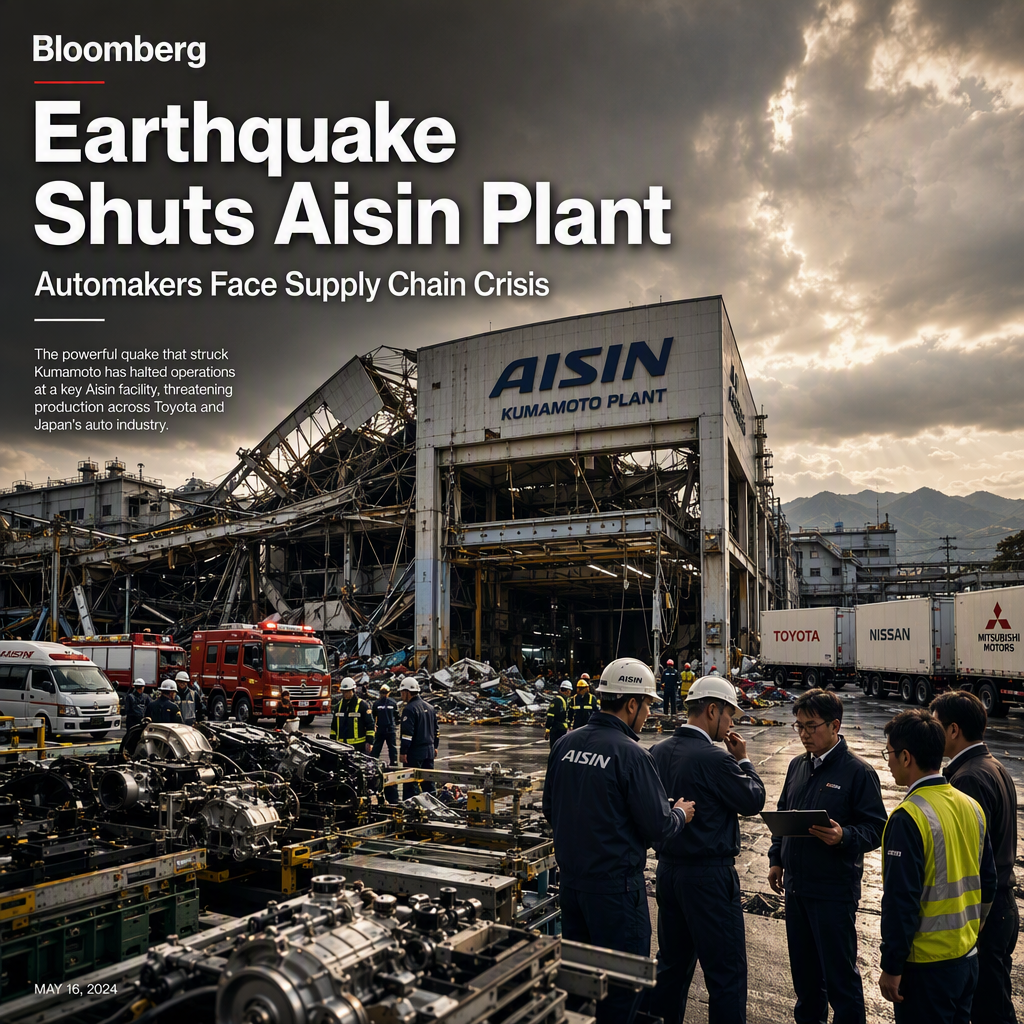
A major earthquake struck Japan's southern island of Kyushu, causing significant damage to an Aisin plant in Kumamoto that manufactures door parts for the automotive industry. Aisin is a key supplier to Toyota Motor, and the plant's shutdown has already led to halted production at Toyota, Nissan, and Mitsubishi, highlighting the interconnectedness and vulnerability of Japan's automotive supply chain [1].
As of July 31, 2026, there is no timetable for resuming operations at the affected Aisin plant. The uncertainty surrounding the plant's reopening has prompted industry analysts to warn that a prolonged outage could trigger further production suspensions, delayed vehicle shipments, and financial losses across the automotive ecosystem [1]. Analysts estimate that if production delays persist, potential losses could reach tens of millions of dollars [1].
The incident has intensified scrutiny of Japan's reliance on specific suppliers for critical automotive components. In response, companies are reevaluating their sourcing strategies and contingency plans to better withstand future disruptions caused by natural disasters [1]. Market watchers are closely monitoring updates from Aisin, Toyota, and other affected automakers regarding recovery efforts and production resumption schedules [1].
Industry leaders are expected to accelerate initiatives aimed at diversifying supply chains and reinforcing logistics networks to mitigate the risk of similar shocks in the future. The event underscores the urgent need for improved disaster preparedness and supply chain resilience within Japan's automotive sector [1].
CONCLUSION
The earthquake-induced shutdown of Aisin's Kumamoto plant has caused immediate production halts at major Japanese automakers and raised concerns about supply chain vulnerability. With no clear timeline for recovery, the automotive sector faces potential financial losses and is under pressure to enhance risk management and diversify sourcing strategies.